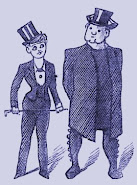
HARRY HAZLETON is an interesting author to me because he has for many years been said to have written Charley Wag, the New Jack Sheppard by the author of “The Woman with the Yellow Hair,” “Somebody Else’s Wife,” &c. first published by the London Romance Company in November 1860. All these titles were written by London penny dreadful author Charles Henry Ross and/or Ernest “Uncle Inkpen” Warren.
The attribution to Harry Hazleton, whose source I have never been able to identify, is made by the British Library and appears in their catalogue as: Charley Wag [by Savage, George, pseud. [i.e. Harry Hazleton] and refers to the George Vickers re-issue in 1865 which stated ‘by George Savage’ on the title page. Ross/Warren’s Fanny White is also attributed to Harry Hazleton by the British Library, probably because it was ‘by the author of “Charley Wag.”’
Muddying the waters is another Charley Wag attribution to FREDERICK HAZLETON, a British actor and dramatist. Jay writes of Frederick Hazleton in Peeps into the Past: “Fred Hazleton, author of “Charley Wag,” “Captain Jack,” and “The Pirate King,” wrote a drama entitled “Sweeney Todd, the Barber of Fleet Street; or, The String of Pearls,” in three acts, founded on the popular work of the same title, which was produced at the Old Bower Theatre, Stangate, Lambeth, during 1862, Mr. Richardson taking the character of Sweeney Todd.”
With all due respect to Frank Jay some of this is balderdash. I happen to own a copy of Captain Jack; or One of the Light Brigade and it states right on the title-page that the author is George Emmett. Jay was probably basing his story on In My Life (1917) by George R. Sims, who says that when the play “Sweeney Todd” was produced “it was announced as “Sweeney Todd, the Barber of Fleet Street, or The String of Pearls, a Drama in three acts founded on the popular work of the same title by Fred Hazleton, Esq., Author of ‘Edith The Captive,’ ‘Charley Wag,’ etc.””
The Bower Theatre is key to this conundrum. H. Barton Barker wrote of the Bower in The London Stage (1889): “Between twenty and thirty years ago it was nothing better than a “gaff,” to use a slang theatrical word for which there is no equivalent, and the audience was principally composed of the gamins of the New Cut and the back slums of the Surrey side; the actors were on a par with their patrons, while every kind of entertainment was given, from Maria Marten to Macbeth. The managements were usually extremely brief, the actors seldom paid, and the theatre more frequently closed than open. The Bower Saloon finally disappeared in 1879, but long previous to that it had been a thing of the past.”
One Bower production was Felix Heron; or, the Early Days of Blueskin, an adaptation of James Malcolm Rymer’s penny dreadful Edith the Captive. Fred Hazleton was featured in the play as an actor (he played Blueskin), and presumably authored the play as well. The British Museum Catalogue gives the name of Fred Hazleton as the author although it was certainly Rymer. Almost all the plays produced at the Bower in the sixties were based on popular penny dreadfuls and from 1855 to 1876 it was managed by Victor Hazelton (note slightly different spelling which is also used on some registered plays by Frederick). What seems obvious is that if Hazleton had anything to do with writing Charley Wag it concerned the stage adaptation, which also played the Bower in 1866. Summing up: Frederick Hazleton was probably the house dramatist at the Bower where he spent all his time ‘nailing up’ dramas from current penny dreadfuls.
The mystery here (and one I can’t answer) is how HARRY HAZLETON, an American author, became associated with Charley Wag and its associated titles. Harry Hazleton wrote Civil war and frontier stories for Beadle Dime Novels, American Tales and the Fireside Series. The Dime Novel Companion lists ‘Lieut. Col. Hazeltine’ as a pseudonym used by the author. There was also another dime novel author publishing during the same period named HARRY HAZEL whose real name was supposedly Justin Jones.
Hazleton is mentioned in the Putnam County Courier, Carmel, NY, on 27 Aug 1870:
“WITHDRAWN.
The Monitor announces the withdrawal of Mr. C. H. Byington from the position of Associate Editor of that paper. Mr. B. is a spicy, pungent writer and we think the readers of the Monitor will miss the effusions of his ready pen. We understand it is the intention of Mr. B. to continue in Carmel, and to resume his labors as a contributor to the popular literary periodicals of the day, in which field he is not “unknown to fame”, under his nom de plume of Harry Hazleton.”
The Buffalo Courier had a short note on Hazelton on 4 Sept 1872:
“Charles Weeks, who gained considerable reputation as a novelist, under the nom de plume of Harry Hazleton, obtained work in Albany at his trade -- a printer -- some five weeks since, and worked steadily until Sunday last, when he left for New York. After his departure it was discovered he had forged the name of the proprietor of the New York Mercury to a check for fifty dollars, and Daucby & Co., of New York, to a check for twenty dollars.”
And so we learn that ‘Harry Hazleton’ and ‘Lieut. Col. Hazeltine’ were pen names used by a check-forger named Mr. C. H. Byington or Charlie Weeks. Was Byington/Weeks the well-known author Harry Hazleton, or was a drifting con man using Harry Hazleton's identity?
Newspaper Work:
The Cobbler of Gotham, by Harry Hazleton (serial) The Parlor Casket story paper, 1856
The Bloody Rescue, an Incident of Ocean Life, by Harry Hazleton (short story) 4 Aug 1858, Northern Journal, Lowville, New York
The Terrible Recognition, a Tale of the Ocean Wildness, by Harry Hazleton (short story), 21 May 1859, Genessee Weekly, Batavia, New York
The Female Spy of Algiers, by Harry Hazleton (serial), 21 Dec 1867, Putnam County Courier, Carmel, New York
*These may have been reprints. Advertisements (Sept 1859) show that Harry Hazleton wrote serials for Street & Smith’s New York Weekly alongside Justin Jones (Harry Hazel), and Augustine J. H. Duganne. Harry Hazel had top billing. He also wrote for George Munro’s Fireside Companion story paper (15 Aug 1868) alongside Kenwood Philp, “The Old Trapper,” Capt. Carleton and Capt. Mayne Reid.
Other Harry Hazleton titles from COPAC and WORLDCAT >
The Trail of Blood, a Tale of New York, Glasgow,1867
Reggolio the Renegade; or, the Minstrel Girl of Mexico, a Spanish American Tale, New York,1867 (originally published Frank Leslies Pleasant Hours, Vol. I. No. 1 Aug 1866 HERE).
The Gambler's Last Pledge, a Revolutionary Tale, Ward & Lock 1885, Fireside Series no. 8 Glasgow, 1867
Life among the Red Indians: an Indian Romance, Fireside Series no. 9 1867 Glasgow
Quindaro; or, The Heroine of Fort Laramie, a Tale of the Far West, NY: Beadle, 1865
The Silver Bugle; or, The Indian Maiden of St. Croix, NY: Beadle 1864
The Mad Hunter; or, the Mystery of a Ruined Life, a Romance of the Great West, NY: Ornum & Co. (Munro)
Venetia, or, the Gambler's last Pledge, a Revolutionary Tale, American News Co., 1865
*The Fireside Series were published in Glasgow by John S. Marr.
From The Era:
August 19, 1866. Bower Theatre. Lessee Mr. Victor Hazleton.- This Elegant Little THEATRE TO BE LET for Amateur Performances, on the most reasonable terms. Dresses &c., provided without extra charge. Saturday, August 18th and Monday, 20th, the performance will commence with the New Drama, entitled FELIX HERON; or, The Early Days of Blueskin. Felix Heron, Mr. Alfred Raymond; Blueskin, Mr. Fred Hazleton; Jonathan Wild, Mr. D. Richardson; Lord Warringdale, Mr. Frank Gordon; Sir John Tarleton, Mr. F. Dorrington; Sir Dominick Brown, Mr. H. Freeman; Ogle, Mr. J. W. Warlow; Snackman, Mr. J. Lovett; Toby, Mrs. Ellington; Bill Whalley, Mr. Walters; Jacobson, Mr. Ellis; Jailor, Mr. J. Sharpe; Edith Tarleton, Miss Hemmings; Mary, Miss Ida Sinclair. To be followed by the Third Act of THE CORSICAN BROTHERS. Fabian Del Franchi, Mr. F. Hazleton; Chateau Renaud, Mr. Alfred Raymond; Montgiron, Mr. Frank Gordon. To conclude with a farce. Tuesday for the Farewll Benefit of Mr. F. Hazleton. Wednesday, Thursday, and Friday, Amateur Performances. Doors open at Quarter to Seven; commencing at Half past Seven.
August 26, 1866. Bower Theatre. Lessee, Mr. Victor Hazleton.- This Elegant Little THEATRE TO BE LET for Amateur Performances, on the most reasonable terms. Dresses &c., provided without extra charge. Saturday, August 25th, and Monday, 27th, the performances will commence with the great Drama entitled THE SKELETON HORSEMAN; or, The Shadow of Death. Lord Glendore, Mr. Alfred Raymond; on Monday, Mr. D. Richardson; - (the Skeleton Horseman), Mr. F. Hazleton.
Tuesday, December 20, 2011
Monday, December 19, 2011
Odds and Ends of Caricature
Sunday, December 18, 2011
Morbid Books for Babes

Little Willie from the mirror licked the mercury right off.
Thinking in his childish error it would cure the whooping cough.
At the funeral Willie's mother sadly said to Mrs. Brown:“ ’Twas a chilly day for Willie when the mercury went down.”
MORBID BOOKS FOR BABES
By
E.M. Sanchez-Saavedra
G. K. Chesterton once said that “Literature
is a luxury; Fiction is a necessity.” Unfortunately, many forms of authority
have denied this basic truth, while simultaneously propagating their own
self-serving myths. H. L. Mencken defined a Puritan as a man living in constant
fear that “somewhere, someone was having fun.” Although many “Puritan”
reformers of the seventeenth century advocated the enjoyment of life and
nature’s gifts, the harsh creed of Oliver Cromwell and the community leaders in
early New England came to be associated with the term forever after. A rigid
theocracy that flourished among the austere hills and stony ground of the
Massachusetts Bay colony, with its occasional descent into hysterical madness
and witch hunts, has flavored American education well into the present time.

Education has been an important part of North
American life since the first Europeans stepped ashore and began wresting the
continent from its original inhabitants. The question was, what sort of
education? To seventeenth-century Englishmen, the answer was self-evident:
spiritual instruction trumped everything else. After all, life was short and
Eternity was, well, eternal. Given the high infant mortality of the
times, such instruction couldn’t come any too soon; infants learned their ABCs
from hornbooks containing the alphabet and the Lord’s Prayer. The famous New
England Primer – “In Adam’s fall, we sinned all,” etc. – first appeared in
the late 1680s and remained in print for two centuries. A few years earlier,
the oddly-titled Spiritual Milk for Boston Babes in Either England: Drawn
out of the breasts of both Testaments for their Souls nourishment provided
a catechism in verse for young children. (In those days, milk, reeking warm
from the cow’s udder, was familiar to people of all ages, instead of the
pasteurized, homogenized, lowfat, vitamin-enriched liquid in a plastic jug that
children now pour over sugary, overprocessed breakfast cereals.) Over the
years, the New England Primer accreted other texts, including the terrifying
verses supposedly written for his children by John Rogers (1500?-1555) the
first English martyr burned at the stake during Queen Mary's reign. In this
sort of cultural atmosphere, coupled with the need to work hard just to
survive, recreational fiction was condemned not only as a spiritual
distraction, but as a waste of time.

By the mid eighteenth century novels, short
stories, ballad sheets and fables became more widely available with the advent
of chapbooks distributed by peddlers, but the only fiction permitted in many
homes was John Bunyan’s allegorical Pilgrim’s Progress and possibly
Daniel Defoe’s Robinson Crusoe (which was considered a moral fable about
overcoming adversity.) A hundred years later, mass-produced paper and
steam-powered printing presses put reading matter within the reach of almost
everyone. As a budding industry in juvenile literature flourished in the early
nineteenth century, very few authors permitted their young readers to get off
scot-free and regularly included a large dollop of heavy-handed moralizing in
their stories. The great English writer of rattling-good adventure yarns, W. H.
G. Kingston (1814-1880) was maddeningly prone to inserting a sermon in the
middle of a thrilling episode. No wonder the homily-free penny dreadfuls and
dime novels attracted such large audiences.

The Victorians dealt with high mortality
rates by converting the trappings of death into an art form. Suburban
cemeteries were laid out by highly-paid landscape designers and became family
destinations for reflective Sunday outings. Mourning wardrobes with a wealth of
lockets, pins, veils, bonnets and other accessories fostered a range of
industries. Elaborate funeral customs wiped out many a middle class family
budget. Poorer people often clubbed together in an early form of burial
insurance. As rural areas lost population to sprawling industrial cities that
had no provisions for the influx, overcrowding and primitive sanitation
increased the spread of contagion. Asiatic cholera swept London and most
European capitals and spread by immigrant ship to America's eastern seaboard.
Epidemics of yellow fever, smallpox and malaria, and later polio, would keep
nineteenth-century people familiar with the specter of death. Popular culture
adequately reflected this. Bathetic novels, engraved prints and weepy
melodramas became mainstays of Victorian entertainment. Readers shivered
happily over the miasmic fantasies of Edgar Allan Poe and his less adroit imitators.


![]() |
| Child Postmortem |

For pure morbid schmaltz and soppy
non-sequiturs, however, my all-time favorite is a tiny chapbook from about
1850, entitled Little Willy the Good Boy. This opus speaks for itself:


Saturday, December 17, 2011
Charles Bragin and the Dime Novel Club Reprints

CHARLES BRAGIN AND THE DIME NOVEL CLUB
REPRINTS
By
E.M. Sanchez Saavedra
In every field of collecting certain
individuals rise head and shoulders above the rest. Dime novels, story papers
and penny dreadfuls are no exception. England’s “Barry Ono” (Frederick
Valentine Harrison, 1876 - 1941), much of whose collection is now in the
British Library, amassed the greatest personal accumulation of “bloods” and
boys’ journals. His American counterpart was “a graying, five-foot-four
Brooklynite with a voice like the roar of a prairie fire” named Charles Bragin
(1891? - 1974). Unlike the dandy, twinkly London music hall performer and “king
of the penny dreadfuls,” Bragin was a solidly working-class businessman -- an
exporter of automobile accessories -- who lived in the Bensonhurst section of
New York City. According to a tongue-in-cheek article by Pete Martin in the Saturday
Evening Post for August 3, 1946, Bragin had three passions in life:
laziness, baseball and dime novels. His success as an exporter enabled him to
realize all three passions when he retired in 1931 at the age of thirty-nine.
He rarely missed a N.Y. Yankees game. He generally took things easy and sent
hired teams of “book scouts” throughout the country to ferret out dime novels,
instead of beating his feet and the boondocks. In the depths of the Great
Depression, many people were glad to get this regular employment. He always
paid cash, so his collection of about 1,000 novels swelled to 20,000+ in a few
years. Eventually, it was reputedly closer to 50,000.

As a small boy, Bragin discovered the joys of reading the thin pamphlets that jostled one another in every newsstand, cigar store and general emporium, their lurid covers competing for customers’ nickels. He never lost his childhood sense of pleasure in handling novels and showing them to anyone who would listen to his anecdotes of authors and publishers.

Most collectors with uncommon interests have a sense that they are probably the only people on the planet with a yen for whatever stirs their collecting passion. Before the Internet, if their quarry was out of the main line of stamps, coins, furniture, pottery or fine art, finding fellow enthusiasts was difficult, if not impossible. Dime novels were given an unexpected boost when in 1920 Dr. Frank P. O’Brien, a New York oral surgeon and fanatical collector of Beadle imprints, sold a large portion of his collection at an auction of “American Pioneer Life.”
The catalogue may be seen online HERE

This sale, at which individual lots went for
unheard-of sums, galvanized book collectors into taking a favorable look at
what was then considered pure trash. A fondness for disreputable
blood-and-thunder tales was akin to confessing a love of pornography or
carnival freak shows. After the success of the auction, Dr. O’Brien then
donated the remainder of his collection to the New York Public Library, thus
cementing their new respectability. Charles Bragin, then starting out in
business, probably grinned his wide grin at the public’s altered attitude to
his favorite collectibles and muttered “I told you so.”

In the spring of 1945, Ralph F. Cummings,
founder and editor of Dime Novel Round-Up, began issuing a modest series
of facsimile reprints with Deadwood Dick and Frank James on the Trail.
Charles Bragin loved the idea of reprinting some of the gems from his own
collection and followed suit several months later. He began by creating a “Dime
Novel Club,” which was more a list of subscribers than an interactive
organization for collectors to socialize and swap. That function was, (and
still is to a certain extent,) handled by the “Happy Hours Brotherhood,” and
its Dime Novel Round-Up. Bragin’s “Advisory Board” of honorary members
boasted an impressive lineup, including Albert Johannsen, George Hess, J. Frank
Dobie, Erle Stanley Gardner, Burton Rascoe, “Ellery Queen,” Robert Moses,
Vincent Starrett and a sprinkling of jurists, journalists, business leaders and
academics. He outlined an ambitious ten-year plan for reprinting facsimiles of
the scarcest and most influential novels in most genres. Within a year, Bragin
was the public face of novel collecting. He was written up in True
Magazine and the Saturday Evening Post. His booming voice was heard on
the radio and he became a local Brooklyn celebrity.

Eventually, Bragin’s enterprise merged with
the “Happy Hours Brotherhood’s” and by 1960, a total of 73 novels had been
reproduced. Their planigraphic printing technique on pulp paper resulted in a
product that closely resembled the original. Bragin was concerned that his
copies would be mistaken for rare antique novels and took some steps to prevent
this. Several reprints are smaller or larger than the originals. Three-color
covers were reproduced in a two-color separation. Novels containing two stories
were abridged to include only the principal yarn. Advertisements for Dime Novel
Club reprints might replace an original Beadle or Tousey advertising page. Most
carry a “Dime Novel Club Reprint No. x” stamp in several places, or a “Charles
Bragin” stamp. Unfortunately, now that the pulp paper reprints are older than some
of the originals from which Bragin worked (in 1945, a 1905 novel was only forty
years old) they have browned to the point that they are difficult to
distinguish from their prototypes at first glance.

About thirty years ago, I purchased a group
of dime novels from the late Edward T. LeBlanc, longtime editor of Dime
Novel Round-Up. Comparing several titles with Dime Novel Club reprints, I
realized that they were the originals from which Bragin had worked! The first
“Gentleman Joe” story by Joseph E. Badger in Street and Smith’s Nugget
Library had been printed on wretchedly acidic pulp, and was heavily patched
by an earlier owner. A shadow of the patch is visible on the reprint, as well
as a retouching of the picture caption, necessitated by an ink smudge. The
Lawyer Detective, in Old Cap Collier Library No. 379, demonstrated
Bragin’s attempt to distinguish between his reprint and the original. For a few
issues, Norman L. Munro enlarged the format of the library and increased the
price from five to ten cents. Bragin reduced the reprint to a smaller size. The
patched spine of the original is just barely visible on the lower left-hand
margin of the reprint’s cover illustration. The reprint of Old Sleuth,
Badger & Co. replaces an ad for George Munro’s Die Deutsche Library
with an ad for the Old Sleuth Library and other Munro booklets.

The Bragin reprints have been both a blessing
and a curse to researchers. On the plus side, they made rare texts available in
a pleasingly nostalgic format. On the negative side, they have skewed the study
sample to include only novels readily available as reprints. Past anthologies,
such as E.F. Bleiler’s Eight Dime Novels (N.Y.: Dover, 1974), relied
heavily on Bragin reprints. In a field comprising literally tens of thousands
of novels, much research and commentary in the past six decades has focused on
a mere 73 items! Without them, however, dime novel collecting research might
nearly have died away altogether. Libraries and historical societies are justly
reluctant to allow the public to handle their fragile treasures and funds are
usually unavailable to microfilm or digitize their holdings. Some shining
exceptions are the Library of Congress, Washington, D.C., Bowling Green State
University, Ohio, Stanford University, California, and Emory University,
Georgia.

For a complete list of reprints, see “Just
Like the Original: The Story of the Happy Hours Brotherhood and Dime Novel Club
Facsimile Reproductions” by Edward T. LeBlanc, Dime Novel Round-Up, Vol.
64, No. 3, June 1995. The University of Dayton, Ohio, has most of
the reprints.
A selection of reprint novels and Bragin
catalogues may be viewed online HERE
Part II Gallery HERE
Subscribe to:
Posts (Atom)


