Thieves’ Literature: Three centuries of Penny Bloods, Sensational Literature & Popular Melodrama — Chapter 1
 |
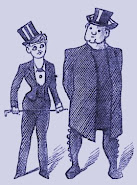
Portrait of Moll Cut-Purse, "Female Humerrist and Kickshaw messe," from a 1793 book. She was an active criminal in 1610. She was infamous as a pipe-smoking prostitute and procuress, a fortune-teller, a pick-pocket, a thief, and a receiver of stolen goods, who dressed and acted like a man. |
♠— by John Adcock —♠
I.
LAST
DYING SPEECHES, BOG-HOUSE MISCELLANIES, AND BLAZING STARS
The condition of an Author, is much like that of a Strumpet (…) and if
Reason be required, Why we betake ourselves to so Scandalous a Profession as
Whoring or Pamphleteering, the same exclusive Answer will serve us both, viz.
That the unhappy circumstances of a Narrow Fortune, hath forc’d us to do that
for our Subsistence, which we are much asham’d of. — A Trip to Jamaica, Ned Ward, 1698
The records of the Old
Bailey and the Accounts of the Ordinary of Newgate, which contain the “great
criminal history of England,” had a lasting influence on English literature. The influence of the Accounts can be found in
the works of Daniel Defoe, John Gay, Henry Fielding, and the visual novelist William
Hogarth. In the nineteenth century, the Newgate Accounts supplied the plots of
innumerable works of literature in 3-volume novels and penny parts, as well as in
the fierce melodramas of the popular stage. In a fascinating book, Ernest
Bernbaum suggested that the origins of the British novel could be found in the
criminal biographies of the seventeenth and eighteenth centuries.[1]
Criminal literature in England
began with the Ordinary of Newgate, the chaplain of Newgate prison, who
recorded the confessions of the condemned and was given free license to publish
accounts of prisoner’s lives, crimes and last dying speeches. Single
broadsheets sold at prices varying between three and six pence. Over time the
format changed from single broadsheets to six, and finally twenty-eight-page
pamphlets.[2]
Occasionally felons refused to confess to the Ordinary and arranged publication
through private printers. Opportunistic publishers rushed into print their own,
mostly fabulous, last dying confessions in cheap broadsheet, pamphlet, or
ballad form. Hawkers sold these penny sheets to crowds directly under the
scaffold on hanging day, oftentimes before the Ordinary’s accounts were
available.[3]
Long-winded titles of dying speeches were bawled through the streets of London
and its suburbs. The day after John Rice was hung for forgery in 1763, as the
hawkers of broadsides and ballads made their perambulations, the good people of
Newington “gave the poor people money not to cry the speeches near her (Rice’s
mother’s) house.”[4]
Criminal biographies of men
and women were published throughout the seventeenth century but the earliest extant
example of “highwayman literature” dated back to 1605. A pamphlet was published
shortly after Elizabethan highwayman Gamaliel Ratsey’s execution and entered on
the books of the Stationers Company on May 2, 1605 by “the celebrated
ballad-bookseller John Trundle.” It contained The Life and death of Gamaliel Ratsey, a famous theefe of England,
executed at Bedford the 26. of March last past, 1605, and a poem titled Ratseis Ghost, or, the second Part of his madde Prankes and Robberies. This was printed by
V.S. to be sold by John Hodgets in Paules Church-yard. The inside first page of
the second part corrected the title to “Ratsey’s Ghost.”
There were two
contemporary ballads, or “ballets,” as well — songs of praise to Gamaliel
Ratsey. George Steevens, commenting on Shakespeare’s plays, mentions once
having in his possession “a pamphlet containing his (Ratsey’s) life and
exploits. In the title-page of it he is represented with this ugly vizor on his
face.”
Thomas Frognall Dibdin wrote
that “Ratsey appears to have been a mad, harum-scarum fellow—in drinking,
thieving, and cheating, &c.; having two comrades, of like propensities, in
Snell and Shorthose.”[5]
Gamaliel, as his biographer painted him, was a light-hearted, theatrical gentleman
highwayman (sometimes called highway-lawyers), who, it was claimed, wore a
hideous feathered owl-mask to terrify his victims into compliance.
Ratsey’s
legend passed into the nineteenth century when similar characters turned up in
penny numbers in Newgate, a Romance
(1846), Blueskin: A Romance of the Last
Century (1863), Tales of Highwaymen;
or, Life on the Road (1865), and Owlet
the Robber Prince; or, the Unknown Highwayman (1871). The Life and death of Gamaliel Ratsey was reprinted in Collier’s Green Series No. 18, sold by
subscription, on March 1866, with an introduction by the antiquarian John Payne
Collier.
Fifty years after Ratsey’s
hanging a highway-woman called Jenny Fox was riding on the King’s highways
waylaying night-coaches by moonlight. She was the subject of The Highway-Woman; or, a True and Perfect Narrative
of the Wicked Life and Deplorable Death of Marcy Clay, Otherwise called Jenny
Fox, Who being Condemned to be Hanged, with other Malefactors, at Tyburn, on
Wednesday, the 12th of April, Instant, did on the Tuesday
fore-going, Poyson herself, to avoid the Shame of that kind of Death. The
Highway-Woman was printed by T.L. in 1665, and went through several
editions. A portrait of Jenny Fox was sold separately.
Fox was the daughter of
a chapman and his wife, who followed the fairs around the kingdom selling their
stock of books. At fifteen she went to London and became a practiced
shoplifter, as an adult she took on highway-robbery, switching between male and
female attire to remain undetected. One evening, well mounted and in men’s
apparel, she met a man with his sword drawn and a pistol in his hand, crying Deliver, Deliver, as he approached her.
She being well acquainted with that language, though she knew not him,
drew her sword, saying, If thou canst
beat me, take all I am worth: Whereupon discharging their pistols at each
other, without much hurt on either side, they both handling their swords, fell
fiercely to it; but the Captain being somewhat in drink before he met her, and
receiving a violent blow on his hand, tumbled to the ground: whereupon she
alighted, and only took from him one half of what he had in his pocket ( …)
Whereupon, with an undaunted spirit, she invited him to drink with her, and
made herself known to him, and continued with him, as a half-sharer, for the
space of two Months, because he was better acquainted with the Road, than she
was: during which time, there was many Robberies committed, but no Hue and Crys could ever overtake them.[6]
A book was registered in the
Stationers’ registers in 1610 called The
Mad Prankes of Mery Mall of the Bankside, with her Walkes in Mans Apparill and
to what purpose, written by John Day. This “notorious baggage” was the
subject of a play by Middleton and Dekker called The Roaring Girle, Or Moll Cut-Purse, acted onstage at The Fortune
in 1611. The frontispiece to the latter “contains a full length of her in man’s
clothes, smoking tobacco.”[7]
A writer in the Universal Magazine of
Knowledge wrote in 1775 that it was at that time “almost as rare a sight to
see a woman with a pipe as to see one of the sex in male apparel.”
Mary Frith, or Moll Cut-Purse, a woman of a masculine spirit and make,
who was commonly supposed to have been a hermaphrodite, practised, or was
instrumental to, almost every crime, and wild frolick, which is notorious in
the most abandoned, and eccentric of both sexes. She was infamous as a
prostitute and procuress, a fortune-teller, a pick-pocket, a thief, and a
receiver of stolen goods; she was also concerned with a dexterous scribe in
forging hands. Her most signal exploit was robbing General Fairfax, upon
Hounslow Heath, for which she was sent to Newgate; but was, by the proper
application of a large sum of money, soon set at liberty.[8]
The year 1621, in the reign
of Charles the First, a work was published which novelist Henry Fielding,
writing in The History of the Life of the
Late Mr. Jonathan Wild the Great, called “that excellent book.” John
Reynolds, a merchant of Exeter, was the author of The Triumphs of God’s Revenge against the Crying and Execrable Sin of
Murder. “There were five subsequent parts; all six were printed together in
folio in 1635; and there was a reprint, with additions, in 1679.”[9]
The 1679 edition was published by J.
Bennett for Thomas Lee, and was the first to add the portion God’s Revenge Against Adultery, by Sam.
Pordage, to the text. Reynolds wrote another title on the same subject in 1661,
with Blood for Blood, or Murthers
Revenged; to which are added K. Charles the Martyr, &c. by T.M.
Of all the volumes, those of popular entertainment are soonest injured.
It would be difficult to find four folios that are oftener found in dirty and
mutilated condition than this first assemblage of Shakespeare’s Plays, God’s
Revenge against Murder, the Gentleman’s Recreation, and Johnson’s Lives of the
Highwayman.[10]
Over many years the title
was passed from publisher to publisher. The editions printed by Sarah Griffin
for William Lee, “sold at this Shop in Fleet-street, at the sign of the
Turks-Head, near the Mitre-Tavern,” began in 1656, retitled God's Revenge for Murder, The Triumphs of
God's Revenge Against the Crying and Execrable Sin of Murther, Expressed in
thirty several Tragicall Histories (digested into Six Books) which contain
great variety of mournful and memorable Accidents, Amorous, Moral, and Divine. The
third edition (1657), the first with plates, bore an “engraved title-page by
Io: Payne, in compartments, depicting a hanging, execution, breaking on the
wheel, burning, duel, etc., and upwards of 30 further engravings in
compartments at the head of each history, representing murders, duels, etc. (…)
whereunto are added the lively Pourtraictures of the several persons, etc.”
Charles
Lamb owned a copy of the third edition with handwritten notes by Samuel Taylor
Coleridge. These Griffin/Lee editions survived to posterity in large quantity,
probably due to the popularity of its lurid illustrations. A critic of fine art
described them in 1838 as “of the lowest grade (…) and at the same time prove
the public taste to have been at a very low ebb.”[11]
The illustrations might have
been inspired by the seminal sensational work Foxe’s Book of Martyrs. The first folio edition was originally
published in 1563 bearing the title Acts
and Monuments of these Latter and Perilous Days &c. by John Foxe. It
was chiefly remembered for the copious illustrated editions, some with as many
as 150 horrific cuts. Dickens had his character David Copperfield sit mesmerized
over a large quarto edition of Foxe’s
Book of Martyrs found in Peggotty’s house. “This precious volume, of which
I do not recollect one word, I immediately discovered and immediately applied
myself to; and I never visited the house afterwards, but I kneeled on a chair,
opened the casket where this gem was enshrined, spread my arms over the desk,
and fell to devouring the book afresh. I was chiefly edified, I am afraid, by
the pictures, which were numerous, and represented all kinds of dismal
horrors.”
The popularity and influence
of God’s Revenge against Murder, with
its horrific pictures, was enormous. There were editions in 1621, 1635, 1656,
1657, 1667, 1670, 1679, 1704, 1753 and 1778. A Dutch translation, Tonneel der Wereldtse Rampsaligheden
vertoonende Godts Wraake, was published in Amsterdam by G. Van Goedesburgh
in 1677, each copperplate engraving showing eight scenes. God’s Revenge Against Murder and Adultery was serialized in John Wesley’s
Arminian Magazine in twenty instalments
between May 1787 and December 1788. As late as 1840 God’s Revenge against Murder was being published for T. Read with
an engraved frontispiece by I. Carwitham and numerous plate representing
murders, etc.
Next in popularity to
criminal biographies were accounts of wonders, devils, monsters, and ghosts. An
auction “catalogue of the choice, curious, and extensive library of the late
George Nassau” was published in 1824. Item no 1176 was a pamphlet which bore
the extraordinary title The WONDER of
Suffolk; Being a TRUE RELATION; Of one that Reports he Made a League with the
DEVIL for Three years to do Mischief; And now breaks open houses, robs people
daily, destroys Cattel before the owners faces, strips women naked, &c. and
can neither be Shot nor Taken; but leaps over walls fifteen foot high, runs
five or six miles in a quarter of an hour, and sometimes vanishes in the midst
of multitudes that go to take him. The manuscript was “Faithfully written
in a Letter from a Sober person, dated not long since, to a friend in Ship yard
near Temple Bar, and ready to be attested by hundreds that have been Spectators
of, or Sufferers by his Exploits, in several parts of Suffolk, London: Printed
for D.M. 1677.”
In 1837-38 London was
startled by the appearance of a similar creature, dubbed Steel Jack by the
penny-a-liners of the press, “disguised in a bear-skin, and wearing
spring-shoes.” Steel Jack would evolve into Spring-Heeled Jack, the name we
know him by today. Jack was another aspect of the Devil of folklore as we see
in the title of another early tract printed by E. Mallet; A Strange, True, and Dreadful Relation of the Devil’s appearing to
Thomas Cox, a Hackney Coach-Man; Who lives in Cradle Alley in Baldwin’s Garden,
first in the habit of a Gentleman with a Roll of Parchment in his hand, and
then in the shape of a Bear, which afterwards vanish’d away in a flash of Fire,
at Eight of the Clock on Friday Night, October 31st, 1694.A
pamphlet published about 1838, probably by B.D. Cousins, was titled The Apprehension and Examination of
Spring-Heel’d Jack, who has appeared as a Ghost, Demon, Bear, Baboon, etc.
Another form of literature
took root in the eighteenth century — criminal anthologies composed of short
biographies of highwaymen, pirates, and footpads. The celebrated Captain
Alexander Smith wrote The History of the
Lives of the most Noted Highway-men, Foot-pads, House-breakers, Shop-lifts, and
Cheats, of both Sexes, in and about London, and other Places of Great-Britain,
for above Fifty Years last past.
The first two volumes were printed for J.
Morphew and Sons, near Stationers-Hall, by A. Dodd, without Temple-Bar, in 1714
and a third volume was added in 1720. A historical Captain Alexander Smith has
never been traced but the Historical
Register mentions one “Captain Alexander Smith try’d for killing Lieutenant
Constantine, and found guilty of Manslaughter” on July 15, 1715. In addition, The Spectator announced the wedding of Agnes
Smith, the eldest daughter of “the late Captain Alexander Smith, of Limehouse,”
in 1838.
Captain Charles Johnson, a
rival who pirated portions of Captain Smith’s work, wrote The Lives and Adventures of the most Famous Highwaymen and Pyrates
&c. It was published in weekly and monthly parts throughout 1733, and
circulated once again in 1734, each number carrying a “Curious Copper Plate.”
News-carriers delivered the parts to subscribers who “live out of town.” William
Jones wrote An Account of Highwaymen in
1774, and Charles Whitehead’s Lives and
Exploits of English Highwaymen appeared in two volumes in 1823.
For the educated classes,
ample criminal material was found in The
Newgate Calendar; or Malefactors’ Bloody Register, published about 1774 and
running to five volumes. Between 1824 and 1826 Knapp and Baldwin,
attorneys-at-law, issued four volumes of The
Newgate Calendar comprising interesting memoirs of the most notorious
characters, and followed up with six volumes of The New Newgate Calendar.
The most enduring hero of
criminal literature stepped into history in 1724. His name would become
familiar to the public from newspaper accounts, criminal biographies,
chap-books, and, on the stage, in harlequinade and fierce melodrama. That was Jack
Sheppard, who was born in 1702 and raised at Bishopsgate Workhouse before
apprenticing to a carpenter where he learned to pick locks. The real Jack
Sheppard looked longingly into the light from the barred window in the painting by Sir James Thornhill,
R. A., painted from life in the condemned hold of Newgate Prison on the 13th of
November 1724.[12]
Sheppard had a large bullet-shaped head on a slight muscular body (he was five
foot four) and a boyish face with enormous dark eyes. He was to be hung, at the
tender age of twenty-two, not for murder or highway robbery, but for stealing
“108 yards of woollen cloth, two silver spoons and other things.” His criminal
career lasted eight short months. His posthumous fame rested not on his crimes,
which were paltry enough, but on his miraculous escapes, first from St. Giles
Round-House, then from Clerkenwell Prison, next the Condemned Hold in Newgate,
and finally from the Castle in Newgate Prison. He had even planned an escape
from the cart carrying him to Tyburn, and, when foiled, had hopes that his
friends would cut him down in time to resuscitate him after the hanging. In
this he was mistaken and the young thief was slowly strangled for a quarter of
an hour, his light weight putting him to a disadvantage. He showed more courage
than his sometime partner Blueskin who was hanged after weeping and trembling
and “shewed all the signs of a timorous confusion.”[13]
John Applebee published a 40
page six-pence biography called The True
and Genuine Account of the Life and Actions of the late Jonathan Wild; not made
up of fiction and fable, but taken from his own mouth, and collected from
papers of his own writing in 1725. There was an engraved plate illustrating
Wild in the gaol-house and an advertisement at the back of the pamphlet
promoting Applebee’s next work, a biography of the celebrated pirate Captain
John Gow. Interestingly the first printing of Jonathan Wild appeared on 8 June 1725 and the Captain Gow pamphlet on 11 June, three days later. Both works have
been attributed to “Applebee’s man,” Daniel Defoe.[14]
Before me is the accredited version of the hero’s Adventures: — “A Narrative of all
the Robberies, Escapes, &c., of John Sheppard: giving an exact description
of the manner of his wonderful escape from the CASTLE in Newgate, and of the methods he took afterward for his security. Written by himself during his Confinement
in the Middle Stone-room, after his being
re-taken in Drury Lane. To which is
prefixed a true Representation of his Escape from the Condemn’d Hold, curiously engraved on a Copper Plate. The whole
publish’d at the particular request of the Prisoner. The Third Edition, London: Printed
and sold by John Applebee, a little
below Bridewell-Bridge, in Black-Fryers, 1724. (Price Six Pence.)” — This
pamphlet, somewhat rare, and for which we have paid half-a-crown, is dated
“Middle-Stone Room in Newgate, Novem. 10, 1724.[15]
There was something inevitable
about Sheppard’s execution. After every marvellous escape Sheppard, instead of
fleeing London, was drawn back to his old haunts like a moth to the flame. He
was “oftentimes in Spittle-fields, Drury-lane, Lewkenor’s-lane, Parkers-lane,
St. Thomas-Street, &c.” In A Narrative Sheppard recalls walking in
the Hay-market where he “mixt with a Crowd about two Ballad-Singers; the
Subject being about Sheppard. And I remember the Company was very merry about
the Matter.”
The penny dreadful illustrator Robert Prowse drew a woodcut of
Sheppard joining a street crowd to buy an Account of his escape from Newgate
for Blueskin: A Romance of the Last
Century.[xvi] Jack
Sheppard was also the hero of the earliest Newgate stage drama on record, The Prison-breaker, or the Adventures of
John Shepherd, of 1725, a farce “intended to be acted at the Theatre Royal,
Lincoln’s Inn Field.”[17]
Daniel Defoe had published
several criminal novels: The King of
Pirates in 1719, The Life, Adventures,
and Piracies of Captain Singleton in 1720, The Fortunes and Misfortunes of Moll Flanders in 1721, The History of the most remarkable Life and extraordinary
Adventures of Colonel Jacque, vulgarly called Colonel Jack in 1722 and The Fortunate Mistress (Roxana) in 1724. William Hazlitt
compared Defoe’s realism in Colonel Jack
to Henry Fielding’s “most amusing but imaginary being, whom we have never met
with” — the fictional Jonathan Wild.[18]
In like manner, ‘Colonel Jack’ is a common thief; one of the multitudes
that infest the streets of the metropolis, and every session sees him hung at
Tyburn. But ‘Jonathan Wild’ is a compound of elaborate villainy, whom nature
never made; the materials, indeed, she furnished, but the workmanship is
Fielding’s, and his alone. An acquaintance with one or two of the tribe, a
slight study of the ‘Newgate Calendar,’ or an occasional visit to the office in
Bow street, would suffice to enable the inventive genius of Defoe to delineate
the features of an ordinary pickpocket; but the rogue of Fielding is the
production of one who has made villainy his study and contemplated it in every
possible variety.[19]
César de Saussure, a French
visitor to London in 1726, noticed that “all Englishmen are great newsmongers.
Workmen habitually begin the day by going to coffee-rooms to read the latest
news. I have often seen shoe-blacks and other persons of that class club
together to buy a paper. Nothing is more entertaining than hearing men of this
class discussing politics and news about royalty.”[20]
Already newspapers covered the sensational
criminal cases of the day. The Daily
Gazetteer, August 5, 1735, reported that “Joseph Emerson, the noted
Highway-man and Horse-stealer, was removed by a habeas corpus from Worcester
Jail to the New Jail in Southwark, in order to take his Trial at the ensuing
Assizes for Surry, for several Robberies committed in that County.”
John Gay’s The Beggar’s Opera (1728) was the
foremost Newgate literature of the eighteenth century. His first play, The Mohocks, was acted at Covent Garden
in 1712. The Beggar’s Opera was acted
at Lincoln’s Inn Fields in 1728.
The novelist Henry Fielding set up a
theatrical booth at Bartholomew Fair in 1725 and his production of The Beggar’s Opera was played there in
George Yard in 1728.[21]
William Howitt noticed the influence of the play on cheap literature in 1846 — “(…)
the songs of The Beggar’s Opera have begun again to be sung, and a manifest
tendency has been produced to exalt into this admiration of the multitude,
highwaymen and women of the town. Neither can it be denied that it has given
birth anew, in the shape of novels, to Newgate literature.”[22]
The word “hack” was in use
from at least 1731 when The Gentleman’s
Magazine described the semi-literate writing of a “Grubstreet hackney.”
Daniel Defoe used the phrase “hackney author,” a word derived from hackney
coach. The derogatory term denoted one in harness and was eventually shortened
to “hack.” One resourceful hack told his story in a letter to The Connoisseur in 1755, signed “Orator
Higgins.”
I was next promoted to the garret of a printer of bloody murders, where
my business was to invent terrible stories, write Yorkshire tragedies, or
Christmas carrols, and occasionally to put the Ordinary of Newgate’s Account of
Dying Speeches into lamentable rhyme. I was afterwards concerned in works that
required a greater fund of erudition, such as bog-house miscellanies, and
little books for children; and I was once engaged as the principal compiler of
a two-penny magazine. Since that I followed the occupation of an Eves-dropper,
or Collector of News for the daily papers; in which I turned a good penny by
hunting after marriages and deaths, and inventing lyes for the day. Once
indeed, being out of other business, I descended to the mean office of a
ballad-singer, and hawked my own verses; but not having a good ear for music,
and the tone of my voice being rather inclined to whining, I converted my
ballads into penitential hymns, and took up the vocation of Methodist Preacher.
One impecunious wretch who
turned his hand to last dying speeches was poor Jack Funnel (possibly a
fictional being), who became an author in 1707, and described his lifestyle in
1732.
My first Appearance as an Author, says Jack, was in a horrid, barbarous,
and bloody Murder. The Profits of that was just enough to turn me a Coat and
mend my Shoes. The next was a strange and surprising Appearance of the Murder’d
Person’s Apparition. This fetched my Waistcoat out of Pawn and payed my Laundry
Woman. By writing accounts of Monstrous Fish, Last
Dying Speeches, Robberies, Earthquakes and Blazing Stars, Last Wills and
Testaments, Interpretations of Dreams, High-Winds, and Dreadful Fires, I keep
my Cloaths in Repair, pay my Barber, Alehouse Scores, and Landlady, and buy
Firing Pipes and Tobacco. When my Works go stale, I vamp them with a new Title
Page; ransack old Novels and pals them for Secret History and Court Intrigues.
Now and then I make a Song or an Ode, and am paid for letting others father it.
With these and other Auxiliaries, as Epitaphs, Elegies, Epithalamiums, Ballads,
Bellman’s verses, &c. I make a Shift to pick up a Livelihood; but am much
chagrin’d to see writers of worse Parts supported in Ease and Affluence.[23]
At the same time Jack Funnel
was lamenting his lot in life William Hogarth, the painter, published six
prints by subscription in April 1732 titled The
Harlot’s Progress, the first of Hogarth’s ‘Modern Moral Subjects.’ The prints
sold by subscription for one guinea. The purchaser was supplied with a bonus in
the shape of an illustrated ticket. Hogarth’s famous pictorial novels had a
tremendous effect on the emergent novel, the drama, book illustration, single
and sequential caricature, and even social reform.
The familiarity of the subject and the propriety of the execution made it
tasted by all people. Every engraver let himself to copy it, and thousands of
imitations were dispersed all over the kingdom. It was made into a Pantomime
and performed on the stage.[24]
The public’s appetite for
crime showed no signs of abating. By 1733 a theatrical critic lamented that
“Genteel Comedy has now left the Stage, as well as the nobler Tragic Muse; and
all our Heroes and Heroines of the Drama have been fetched from Newgate and Bridewell.”
But now the horrid Pantomime, and wicked Dumb Shew, the famous Harlequin-Mimickery,
introduced only to shew how to cozen, to cheat, deceive and cuckold; together
with the wretched Group of Rogues formed from the characters of Sheppard, Jonathan Wild, Blueskin and
others, remarkable for their superlative Wickedness, are exhibited, not for the
sake of Poetical Justice in their Execution, but to divert the Audience by
their Tricks and Escapes.[25]
The famed highwayman Dick
Turpin was “turned-off,” along with one John Stead, both for horse-stealing, on
April 7, 1739. Turpin spoke a few parting words then launched himself into
eternity, expiring in five minutes. “The Mob having got Scent that his Body was
stole away to be anatomiz’d, went to the Place, and brought it away almost
naked on Mens Shoulders, and filling the Coffin with Lime, buried it in the
same Grave.”[26] The
bodies of the condemned were usually conveyed to Surgeon’s Hall for dissection.
The publisher’s Ward and Chandler supplied The
Tryal of Richard Turpin, a criminal biography, for 6d.
A favourite of the Newgate Calendars, later resurrected for
the penny bloods, was the pick-pocket Jenny Diver, also known as Mrs. Jane
Jones, real name Mary Young, who was hanged at Tyburn on March 18, 1740. It was
a shocking spectacle with over twenty persons publicly strangled in one day. During
the commission of her crimes Jenny pretended pregnancy by wearing a false belly
which she would fill with booty. She was twice transported and in her final
captivity was kept in style at Newgate by her many admirers.
She appeared gaily dressed until the last, yet deeply affected by her
approaching Fate. Her Concern was so sensibly expressed, when she took Leave of
her little Child, a few days before her Execution, that (a weekly Writer says)
it drew Tears into the Eyes of the Turnkey.[27]
A two-volume publication
called The Adventures of William Bradshaw
Commonly Stiled Devil Dick was issued in 1754. The publisher was Crowder
and Woodgate, and the price was 9s.
The Monthly Review’s notice was
blunt, the “author must, certainly, be deeply read in the Newgate memoirs, and
Tyburn history, a collection of these he has jumbled together, and published,
to plague us, in the form of DEVIL DICK.” A work of 1824 says “None of our
diurnal novelists or biographers have yet given us any real or imaginary
memoirs of chimney-sweepers. But they have given us the lives of persons who,
in the eyes of reason, were of a much lower rank. Devil Dick was, in the
strictest propriety of speech, of a much blacker,
and consequently a meaner character than any chimney-sweeper.”[28]
It was remembered as a notorious book. Francis Place described the contents as
consisting of “lying, cheating, robbery and debauchery.”[29]
Another title noticed by the Monthly
Review was The Adventures of Dick
Hazard, “a history of the gaming table and its consequences,” whose chief
merit was “that it exceeds not one volume.” The reviewer complained that it was
necessary to read every publication printed, “submit to the whole drudgery of going
through those loads of trash which are thrown upon us under the denomination of
Lives, Adventures, Memoirs, Histories
&c.”[30]
Sixteen String Jack, who
wore breeches with eight strings at each knee, was a pickpocket turned
highwayman. His Life was titled A Genuine Account of the Life of Jack Rann,
Alias Sixteen-String Jack: Who was executed November 30th, 1774, for
a Robbery on the Highway, near Brentford. Containing his Adventures and
Enterprises, his numerous Escapes from Justice, and his Amours with several
Ladies. Among which is introduced Some Curious Anecdotes of Miss Smith and Miss
Roche, his favorite Dulcineas. To which there is added Some Strictures on the
Penal Laws, and a particular Account of Lane and Trotman, now under sentence of
Death for the Barbarous Robbery of Mr. Floyd, in a Coach, near Chelsea, printed
by Bailey in 1774. Coloured portrait etchings of Sixteen-String Jack, together
with Miss Roche, were produced and sold to the public.
Another biography was The Genuine life of Jack Rann, otherwise
Sixteen-strings Jack; Who is now under Sentence of Death for Robbing Dr.
William Bell, Chaplain to R.H. the Princess Amelia. Containing a great number
of interesting details of which it highly concerns the public to be informed.
Together with Anecdotes of Miss Roche, and several other Persons connected with
Rann, issued by E. Johnson, 1774. This one had a frontispiece portrait of
Rann. In 1823 The life of Jack Rann:
otherwise Sixteen-String Jack, the noted Highwayman: who was executed at
Tyburn, November 30, 1774 was published as a chap-book by Hodgson and Co.
with a hand-coloured frontispiece believed to be by Robert Cruikshank.
A Summary Account of the Life, Trial and Confession
of John the Painter alias James Hill. Alias James Hind, alias James Actzen,
alias James Aitken, tried at Winchester Assize, March 6, 1877, for setting fire
to the Rope-House in Portsmouth Dock-Yard, December 7, 1776, and who was
executed March 10, 1777 (With an accurate Likeness) was published under the masthead of The London Magazine in March 1777. This
was a five-page magazine reprint of the officially sanctioned Trial, which had
been published by permission of the Judges. James Hill, deserter, rapist, and
thief was able to order his own Confessions printed up but it was said they
differed in many particulars from the facts. A notice in the Monthly Review was admiring. “There was
something so very extraordinary in the story of this wretch, and his desperate
undertakings, that his trial (…) will in course, be perused, as a matter of
singular curiosity, in its kind.”
Devil Dick publisher Crowder was still publishing in 1778 when
he issued The Trial of James Boulter and
James Caldwell, the two noted Flying Highwaymen, who have, for some time past,
committed numerous Highway robberies in all parts of this Kingdom at 6d. At
the back of the pamphlet was an advertisement for the Life of Boulter, a separate publication. James Boulter came from a
thieving stock, his father had been transported and his uncle convicted for
highway robbery. The speed with which he rode from place to place on his dashing steed
earned him the sobriquet of the Flying Highwayman.
There was another type of
criminal literature that sprang up about this time, strangers’ guides to London,
which warned the country bumpkins, known as “flats” against the cons, tricks, and
depredations of the sophisticated London “sharps.” The criminals had their own
street-language known as Pedlar’s French or St. Giles Greek which was later adopted
by the pugilistic “Fancy,” the Corinthians of Pierce Egan’s day. Flash language
was common to France and Spain before migrating to England about the middle
half of the sixteenth century.
As this expressive language was originally invented, and is still used,
like the cipher of the diplomatists, for purposes of secrecy, and as a means of
eluding the vigilance of a certain class of persons, called flashicè, Traps, or
in common language Bow-street-Officers, it is subject of course to continual
change, and is perpetually either altering the meaning of old words, or adding
new ones, according as the great object, secrecy, renders it prudent to have
recourse to such innovations.[31]
One of the earliest
strangers’ guides, with something for every interest, was called Blackguardiana: or, A Dictionary of Rogues,
Bawds, Pimps, Whores, Pickpockets, Shoplifters, Mail-robbers, Coiners,
House-breakers, Murderers, Pirates, Gipsies, Mountebanks, &c., &c. Illustrated
with eighteen portraits of the most remarkable professors in every species of
villainy. Interspersed with many curious Anecdotes, Cant Terms, Flash Songs,
&c., the whole Intended to put Society on their guard against Depredators;
and was picked up by an Inhabitant of St. James's, who was a Spectator of a
grand Scuffle, on a Birth-day night. Copied for the inspection of the Curious;
and the Original ready to be returned (on describing the binding, &c.) to
the loser, published by James Caulfield in 1793, printed for J. Shepherd.
Popular gothic novels,
issued in three or four expensive volumes, were abridged, and stuffed into 36
pages at sixpence, sometimes 72 pages for a shilling, by the cheap press of
Thomas Tegg and others. These popular piracies, linear descendants of chap
books, were designated “bluebooks” for their flimsy blue covers. Most issues
were given startling new titles but occasionally original titles like Fatherless Fanny or The Old English Baron were retained. Thousands of volumes of these
little gothic bluebooks, with engraved frontispieces and catchpenny titles such
as The Secret Oath; or, The Blood-stained
Dagger, a Romance (1802), were published between 1799 and 1820. Several monthly
magazines, The Marvellous Magazine, The Tell-Tale, and Radcliffe’s New Novelist’s Pocket Magazine published these
compressed gothics as well.
In 1881 Charles Henry Ross revived the bluebooks
method in C. H. Ross’s Penny Library.
For one penny, the buyer received a “cut and paste” version of popular works in
32-page pocket books. Titles included The
Hunchback of Notre Dame, The
Confessions of Harry Lorrequor, The
Mysteries of Paris and Oliver Twist
by Charles Dickens. Charles Dickens junior lambasted the productions, “of which
the scissors of Charles H. Ross have been called into requisition,” in Household Words.
To publish a garbled version of a novel, and to let it go forth to the
public with a title-page calling it “The Story of Oliver Twist, by Charles
Dickens,” is nothing more or less than fraud. It should be enough for the
publisher that he is able to lay hands on a story, owing to the expiration of
the ridiculously short period of copyright with which the English Parliament
rewards literary men. But, if we must have this sort of thing at all, the book
ought at least to be honestly announced as “Oliver Twist, abridged by Charles
H. Ross from the novel by Charles Dickens.”[32]
Henry Fielding, author of The History of the Life of the Late Mr
Jonathan Wild the Great, was the first to publish crime news and
advertisements for wanted felons and Navy deserters in a newspaper called The Public Advertiser. In 1786 the Bow
Street magistrates, under Henry’s brother John Fielding, (known as “the blind
beak,”) converted a weekly posted crime bulletin into a newspaper called the Public Hue and Cry. The Public Hue and Cry was later renamed The Hue and Cry and Police Gazette,
under the printer T. Wright, then, in 1828 transformed into the Police Gazette, selling weekly 30,000. In
1828 new printing machines were purchased which could throw off 4000
impressions an hour, thus speeding the spreading of criminal alarms.[33]
Therefore, if the information of robberies, murders, horse-stealing,
&c., were printed off every night, the Hue and Cry could be delivered with
all the papers to taverns, public houses, pawnbrokers, horse dealers, and hung
up in all the coach offices in London, and also be distributed by the mails to
the post offices of the principal places in the country; the paper is not very
large, and would be considerably reduced if the above plan were pursued.[34]
In the year 1802, “when
immorality had spread all over Europe, owing to the demoralizing effects of the
French Revolution,” The Society for the Suppression of Vice was formed. The objects
to which the attention of the Society was directed were prevention of the
profanation of the Lord’s day, blasphemous publications, obscene books, prints,
etc., disorderly houses and fortune-tellers. The Seditious Publications Act was
enacted in 1820, introducing a tax of fourpence on periodicals containing
“news.” Utilitarian’s called it a “tax on knowledge.” Reading, writing, and
self-improvement became part of the working-class struggle.
The radical publisher William
Hone published several expensive criminal biographies and trials, in boards, in
1821. One, from a page advertising Works Published by William Hone, was The Trial of Eliz. Fenning, Charged with Administering Poison with Intent to Murder
and the other was a follow-up, The
Mysterious Case of Elizabeth Fenning, which was written after her
execution. Hone sold celebrity portraits as well as his scabrous political
caricatures and tracts; portraits of Byron, Napoleon and Elizabeth Fenning.
The
most interesting portrait was that of William Norris, the Insane American,
“riveted alive in iron” and confined in a cell at Bethlem “as he was seen there
in 1815 by W. Hone and etched by Cruikshank.” George Cruikshank did a steady
business in portraits of criminals, participants in trials for Crim. Con etc.,
for the publisher Fairburn. In his own library was a pamphlet entitled Bedworth (Thomas) Trial for Murder of
Elizabeth Beesmore published in 1815. On the folding frontispiece,
Cruikshank had written “Drawn and etched in two hours by Geo. Cruikshank.”
The Terrific Register; or, Record of Crimes,
Judgements, Providences, and Calamities was taken in weekly numbers by precocious
thirteen-year-old Charles Dickens in 1825. G.A. Sala said of Dickens that he
liked to discuss “the latest new piece at the theatres, the latest exciting
trial or police case, the latest social craze or social swindle, and especially
the latest murder and the newest thing in ghosts.”[35]
The Terrific Register had its origins
in John Reynolds serially published 1656 work, God’s Revenge Against Murder. An illustration of a skeletal hand
turning the pages of an open book with the title God’s Revenge Against Murder featured prominently on the volume
covers of The Terrific Register. The
contents revolved around tales of crime, murder, execution, torture, freaks of
nature and disasters. Titles illustrated by ghastly engravings included Sawney Beane the Monster of Scotland and
Horrible Murder of a Child.
The most celebrated criminal
of 1824 was John Thurtell, who lured William Weare to Gill’s Hill Cottage,
owned by William Probert, shot him once, beat his brains in with a pistol, then
slit his throat. All this over a 300-pound debt. The body was weighted with
stones and thrown into a pond. Thurtell and his two accomplices, Probert and
Joseph Hunt, were taken in custody by the capable and celebrated Bow-street
runner Thomas Joseph Ruthven and confined in St. Alban’s gaol. Thomas Abel
Ward, a Watford surgeon, described the horrible injuries to the body of William
Weare.
Part of the skull was beaten into the brains. There was another wound
under the protuberance of the right cheek-bone, which had the appearance of a
common gun or pistol-shot wound, and the ball repelled by the cheek-bone. I am
of the opinion that the wound on the right cheek was not of a nature to cause
death; but that the deceased died from the beating on the skull with the pistol
barrel. The injury was of that nature, that I conceive the pistol barrel must
have been punched with desperate violence into the skull of the unfortunate
man. — [Witness here produced a piece of deceased’s skull bone, which he had
extracted from the brains of the deceased on opening the head.] I also observed
a wound cut by a sharp instrument on each side of the throat; the jugular on
the left side was divided, and the wound was sufficient to occasion death. The
wound on the right side of the throat did not injure any parts of vitality, but
merely severed the flesh under the ear.” Coroner: It seems that after the
deceased was shot, he was able to struggle with his murderer, and that he
received the blows on the head when resisting, and to make sure, as “dead men
tell no tales,” his murderers completed their horrid work by cutting his
throat.
In 1824 Thomas Kelly of
Paternoster-row published The Fatal
Effects of Gambling exemplified in the Murder of William Weare, and the Trial
and fate of John Thurtell, the Murderer, and his Accomplices; with Biographical
Sketches of the Parties Concerned, and a Comment on the Extraordinary
Circumstances developed in the Narrative, in which Gambling is proved to be the
source of Forgery, Robbery, Murder, and General Demoralization. To which is added, the Gambler’s Scourge; a
Complete Expose of the Whole System of Gambling in the Metropolis; with Memoirs
and Anecdotes of Notorious Blacklegs. This was illustrated by Portraits
Drawn from Life, and other Copper-plate Engravings of Peculiar Interest. “Weare,
Thurtell, Hunt and Probert,” the author relates, “were all sporting blades,
ultra-flash men, and gamblers — preying alike upon each other, and upon society
in general.” John Thurtell was an amateur pugilist.
(…) Hickman, the notorious fighting gasman was in training for one of his
pitched battles, at Wade’s Mill, in Hertfordshire, Thurtell, in company with
one Elliot, of sporting notoriety, spent a good deal both of time and money
with him. The fate of these three men is at once singular and awful. In less
than thirteen months, Elliot died by his own hand; Hickman, returning from a
prize-fight, in a state of intoxication, was thrown from a chaise, and his head
literally crushed to atoms — and Thurtell died by the hands of the common
hangman for a cold-blooded and deliberate murder.
One of the mourners at
Hickman’s funeral was the journalist Pierce Egan. An extraordinary feature of
the trial was the defence delivered in person by John Thurtell, in which he
read out “in a firm and distinct voice, and in a most impressive manner,” the
whole contents of seven cases on wrongful convictions based on circumstantial
evidence, from the Percy Anecdotes
and the Newgate Calendar (possibly
this was read from a recent Thomas Kelly publication of Theodore Wilkinson’s New Newgate Calendar Improved.) His
protestation of innocence was of no avail, Thurtell was sentenced to death, and
following a bow to a friend and a few final words with the governor of the gaol,
he was hung. His body was removed to the Theatre of Anatomy where it remained
on public view for three or four days. “Among the persons who availed
themselves of this opportunity of viewing the remains of Thurtell, were about
twenty persons belonging to the establishment of Mr. Kelly, the publisher of
this work; with whom an eminent artist attended for the purpose of verifying to
the extremest possible point of fidelity our portrait of the great criminal.”
William
Probert turned King’s Evidence and got off scot-free. Joseph Hunt was also
sentenced to be hanged, fortunately for him this was commuted to transportation
for life. One enterprising rogue went about London and environs exhibiting the
purported head of Thurtell. “The flesh of the face was removed, probably to prevent
detection by anyone who might chance to know Thurtell; the hair, ears, and
teeth were still attached to the skull.”
Another of Thurtell’s
biographers was Pierce Egan, the famous author of Life in London: or, the Day and Night Scenes of Jerry Hawthorn, Esq.,
and his Elegant Friend Corinthian Tom, accompanied by Bob Logic, the Oxonian,
in their Rambles and Sprees through the Metropolis, first issued in July
1821 in shilling numbers. Life in London
introduced the characters of Tom and Jerry into popular culture. Corinthian Tom
takes his country cousin, Jerry, on an illustrated tour of London gin houses,
monkey and dog fights, street brawls, the Bow Street Police Court and finally
to prison.
The book was illustrated by Isaac Robert and George Cruikshank, sons
of a Scottish artist who had settled in London. The first of many stage
versions produced in London was a musical farce called Tom and Jerry; or, Life in London, dramatized by William T.
Moncrieff. There were many sequels including Tom and Jerry in Paris, Nautical Tom and Jerry, and Tom and Jerry in New York. Another of
Egan’s books, The Life of an Actor,
was staged at the Adelphi Theatre on January 11, 1825.
Life in London inspired The
English Spy, an illustrated book by notorious blackmailer, slanderer, and
libeller Bernard Blackmantle (Charles Molloy Westmacott), illustrated by Isaac
Robert Cruikshank. The illustrations in the original were colour copperplate
aquatint etchings, all by Robert Cruikshank, excepting one plate contributed by
the aging caricaturist Thomas Rowlandson.
The scenes were placed in real
taverns, gambling hells, and London landmarks. Included were caricatures
representing many of the famous men and women of the day from high and low
society, such as Madame Vestris, Charles Kemble and Townshend the Bow Street
Runner. Blackmantle and Robert Cruikshank (known as “Bob Transit” in the text)
were depicted in most plates. Robert Cruikshank himself claimed (in Finish to the Adventures of Tom, Jerry, and
Logic in their pursuits through Life in and out of London) that Life in London was a book originated by
himself and not Egan. The vicious pastimes of the Mohocks were revived that same
year, 1821, when Pierce Egan published his celebrated Life in London.
At that time the well-known farce of “Tom and Jerry” became the vogue in
London; and, in imitation of the freaks of its personages, hundreds of young
men enrolled themselves under the banners of the Mohocks and sallied forth at
midnight in search of adventures. The prime achievement of that day was “boxing
the Charlies,” — by which name we are to understand the watchmen, — and it was
accounted the very acmeé of spirit, the height of gallantry and bravery among
some young men, to carry off a watchman, and deposit, him box and all, in a
neighbouring horse-pond. Of late years, however, headed by two aristocratic
leaders, they have re-appeared in all their pristine splendour. Around them
they have rallied honourables and right-honourables, barons, baronets, and knights,
with no inconsiderable number of shop-men and apprentices, who make it their
glory to resemble in their defects, those above them in their station. They
principally confine their operations to one quarter of the town, occasionally
sallying forth to the villages in the neighbourhood of London upon expeditions
of mischief.[36]
Egan was a master printer,
and self-described “scribbler,” held in high esteem by the sporting crowd for Boxiana: Sketches of Antient and Modern
Pugilism by “One of the Fancy.” The first volume was published in parts by
G. Smeeton in 1812 and the last series ended in 1829. Pierce Egan launched a
newspaper (“For King and Country”) on February 1, 1824 called Pierce Egan’s Life in London and Sporting
Guide. By 1826 Pierce Egan’s newspaper was in trouble and on December 19,
1827 was incorporated with Bell’s Life in
London which began giving out inserted sheets of Cruikshank’s comicalities
with each number, beginning the following week. In Pierce Egan’s role of a
penny-a-liner he covered boxing and sports for other newspapers than his own,
among them Bell’s Weekly Messenger.
Egan’s wife Catherine also contributed to Bell’s
Weekly.
American author Otto Dix
described Egan when he was near seventy years of age, when he was still eking
out a living by his pen, “(…) feeble and shaky, as might be expected but there
was a sort of jauntiness about the old gentleman still, his grey eye was quick
and vivacious, and his brown wig had the old sporting “cock,” the eyebrows were
large, the nose a little hooked, and the lower lip so projected as to give a
rather severe expression to his countenance. The old boy was wrapped in a large
camlet cloak with a red collar, and he hobbled with a stick.”[37]
Knight and Lacey, publishers
at 24 Paternoster-row, provided Pierce
Egan’s Account of the Trial of John Thurtell and Joseph Hunt, With an Appendix,
Disclosing some Extraordinary Facts, Exclusively in Possession of the Editor with
Portraits and other Illustrative Engravings. This was a straightforward
account of the trials of Thurtell, Hunt and Probert taken verbatim from Pierce
Egan’s Life in London newspaper
columns. It was not half as entertaining or absorbing as The Fatal Effects of Gambling exemplified in the Murder of William
Weare. However, the Appendix with its promised anecdotes was missing from
the copy I consulted. The Appendix would have proved an interesting read because
Pierce Egan happened know Thurtell personally, and interviewed him in prison.
The Account carried only one illustration showing the heads of the murderous
trio of blackguards. Mason Jackson, in The
Pictorial Press, its Origin and Progress, 1885, pointed out the close
relationship between criminals and their biographers.
In those days’ prize-fighting was in much favour, and a great fight was
coming off between Spring and Langham, two noted pugilists. To show the ruffian
and impenitent character of Thurtell, it is related that he said, a few hours
before his execution, “It is perhaps wrong in my situation; but I own I should
like to read Pierce Egan’s account of the great fight yesterday.”
The Fatal Effects of Gambling gives Hunt’s account of the last moments of
Thurtell with a slightly different version of events.
After we had taken the sacrament, and about a quarter of an hour before
he went out to suffer, Thurtell said to Mr. Wilson, ‘I have one more favour to
request of you, if you can oblige me.’ Mr. Wilson asked what it was? Thurtell
said, ‘It is to tell me how the great fight terminated?’ Mr. W. said he did not
know, but he would go out and inquire; he did so, and on his return, he said,
‘It has been a hard-fought battle, it lasted for two hours and five minutes,
and Spring was a great deal punished, but he has won it.’ On which Thurtell
said, ‘I am glad of it; God bless him, he is an old friend of mine.
Pierce Egan’s Life in London newspaper for February 1, 1824 featured the
following advertisement.
THURTELL’S HEAD. Special permission having been given to the Editor of
the Medical Adviser to examine the body of Thurtell immediately after the
Execution, the PECULIAR CRANIOLOGICAL appearances on his Head will be fully
described in No. 7, accompanied by illustrative engravings, including a correct
likeness of Thurtell taken after his decease.
The Medical Adviser was published by Knight and Lacey who also
published Pierce Egan’s Account of the
Trial of John Thurtell and Joseph Hunt. It must have been a curious
magazine. The editor of the Medical
Advisor, accompanied by publisher Kelly’s representatives and several
phrenologists (a ‘science’ sneered at in Fatal
Effects of Gambling) examined the body of Thurtell after the execution.
The visitors of each
succeeding day were witnesses of the gradual dilapidation, if not the decay, of
the body. On one day a finger, on another an eye, was missing; and as the
surgeons, in the intervals of their admission of the public proceeded with
their work, the body progressively presented such appearances as to render it
both a matter of prudence and of public decency finally to close the door
against further admission.[38]
PREVIOUS:
Thieves’ Literature: Three centuries of Penny Bloods, Sensational Literature & Popular Melodrama — an Introduction HERE
♠♠♠
—NOTES—
[1] The Mary Carleton Narratives, 1663-1673, a Missing Chapter in the
History of the English Novel, Ernest Bernbaum, 1915
[2] The Ordinary of Newgate and His Account, Crime in England
1550-1800, P. Linebaugh, p.247
[3] From 1698 to 1719 the Ordinary of Newgate was Paul Lorrain. His
confessions were issued at eight o’clock on the morning of executions.
[4] The New Newgate Calendar: or, Malefactor's Bloody Register, London:
Alexander Hogg, c. 1773, p.256
[5] Bibliotheca Spenceriana, 1822, p.36
[7] The Plays of William
Shakespeare, p. 173
[8] Portraits, Memoirs, and Characters, of Remarkable Persons, James Caulfield,
1813
[9] The Collected Writings of Thomas De Quincey. Vol. XIII, Tales and
Prose Phantasies. By David Masson. London: A. & C. Black, Soho Square,
1897. “Murder as one of the Fine Arts” footnote page 56.
[10] The Shakespeare Folios, American Bibliopolist, June and July, 1870,
p.180
[11] Arnold's Magazine of the Fine Arts Vol. 3, 1832. p.379
[12] Thornhill’s painting was reproduced as an etching and sold to the public
through print-sellers. Jonathan Wild’s Portrait in Newgate was another popular
etching of the time. Sir James Thornhill was purportedly accompanied by William
Hogarth and James Fig, first bareknuckle champion of England, when he drew the
celebrated portrait of Jack Sheppard in the condemned cell. It has been
suggested that Daniel Defoe interrogated Sheppard in prison, resulting in the
pamphlet titled A Narrative of all the Robberies, Escapes, &c., of John
Sheppard.
[13] History of the Lives and Actions of Jonathan Wild, Thief-taker,
Joseph Blake , alias Blueskin, Footpad, and John Sheppard , Housebreaker, 1750
[14] The attribution remains contentious. According to Defoe
De-Attributions: Critique of J.R. Moore's Checklist (1994), there is no
evidence that Defoe wrote for Applebee.
[15] Jack Sheppard, The Literary World, Vol. 2 No. 32, 2 Nov 1839, p.66.
The first Applebee edition was published 19 Oct 1724, the second 26 Oct 1724,
the third 12 Nov 1724.
[16] Blueskin: A Romance of the Last Century, London: E. Harrison, 1863,
Vol. 1, No. 35, p.273
[17] The Companion to the Play-House, David Erskine Baker, 1764
[18] The History of the Life of Mr. Jonathan Wild the Great, Henry
Fielding, 1743
[19] The Works of Daniel Defoe, with a memoir of his life and writings,
William Hazlitt, London: John Clements, 1840, Vol. I, p.cl
[20] A Foreign View of England in the Reigns of George I & George
II, César de Saussure., 1902
[21] The Old Showmen, and the Old London Fairs, Thomas Frost, 1874, p.
104
[22] Homes and Haunts of the Most Eminent British Poets, William Howitt,
1849, p.143
[23] The Gentleman’s Magazine or Monthly Intelligencer, Vol. II, April 1732, p. 713
[24] Memoirs of the Celebrated William Hogarth, The Universal Magazine,
Nov 1780, p.225
[25] Weekly Miscellany No. 52, 8 Dec 1773
[26] Gentleman’s Magazine, April, 1739, p.7
[27] The Gentleman’s Magazine, Vol. XI. March 1741, p.100
[28] A Biographical History of England from Egbert the Great to the
Revolution, Rev. J. Granger, 1824, p.174
[29] Francis Place quote from Victorian Prelude, Maurice James Quinlan,
1904
[30] The Monthly Review, Vol. XI, 1754, p.470
[31] Tom Crib's Memorial to Congress, Thomas Moore, Third Edition, 1819,
Preface, p. xxvii
[32] The Editor’s Note Book, Household Words, Vol. 2, 1881, p.450
[33] Introduction, Patrick Pringle, Memoirs of a Bow Street Runner, Henry
Goddard, Museum Press, 1956
[34] The Tocsin; or a Review of the London Police Establishments, with Hints
for their Improvement and for the Prevention of Calamitous Fires &c., 1828,
p.23
[35] Things That I Have Seen, G. A. Sala, Vol. I, 76.
[36] Ancient and Modern Mohocks, Charles Mackay, Bentley’s Miscellany,
Vol. VI, 1839, p. 357
[37] Lions: living and dead; or, Personal Recollections of the Great and
Gifted, John Ross Dix, aka John Dix Ross and John Ross, London: Partridge and
Oakey, 1852, p.289
[38] The Fatal Effects of Gambling Exemplified in the Murder of William
Weare, 1824, P.333
♠♠♠


 Posts
Posts