Friday, December 4, 2015

Wash Tubbs – Twenty-one Damned Dailies by Roy Crane


by Huib van Opstal

WASH TUBBS. Plenty lip service nowadays for good old Roy Crane (1901-77) and plenty reprints of Crane’s Wash Tubbs comics in bold black and white — in bad covers and cramped interior designs.

See here Yesterday’s Papers’ 21 tear sheets of some great Crane dailies. Suspenseful daily comic strips which a nationwide American public devoured from December 1929 to January 1930 when his Wash Tubbs was at its nicest. In the 1930s Crane would take on larger full-page full-colour adventure strips too, his Captain Easy and Buzz Sawyer series, but
‘I got the feeling Roy Crane took greater delight in his Wash Tubbs work. Perhaps he felt that in the early days the comics looked their best in six- or seven-column wide format.’Bob Zschiesche, cartoonist

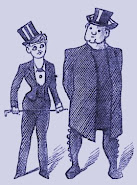
JUST CALL ME EASY. Since its launch on April 21, 1924, Crane’s daily Wash Tubbs strips were designed and syndicated in ‘split’ or ‘break’ format, with a fixed gutter in the middle. The newspapers that ran it could retain the single row of panels, or split it up and print it as a square box, in two rows of panels placed on top of each other. His little hero George Washington Tubbs II, a boyish shop clerk becoming an adventurer, was soon nicknamed Wash Tubbs and turned into the sidekick of a stronger, more adult more mysterious hero — ‘Easy, Just call me Easy’ or Captain Easy‘formerly chief of the Kandelabran Intelligence Service (…), beach-comber, boxer, cook, aviator, seaman, explorer, and soldier of artillery, infantry, and cavalry.’ — whose name would eventually become the strip’s title.

1929 [1] 27 DecFriday!
1929 [2] 28 DecSaturday!
1929 [3] 30 DecMonday!
1929 [4] Dec 31Tuesday!
1930 [5] Jan 1Wednesday!
1930 [6] Jan 2 — Thursday!
1930 [7] Jan 3 — Friday!
1930 [8] Jan 4 — Saturday!
1930 [9] Jan 6 — Monday!
1930 [10] Jan 7 — Tuesday!
1930 [11] Jan 8 — Wednesday!
1930 [12] Jan 9 — Thursday!

‘In Crane’s hands, letters did not merely combine to form words. The very style of lettering suggested a mood; their display revealed a voice; even their size conveyed actual emotions.’Richard Marschall, 1989

1930 [13] Jan 10Friday!
1930 [14] Jan 11 — Saturday!
1930 [15] Jan 13 — Monday!
1930 [16] Jan 14 — Tuesday!
1930 [17] Jan 15 — Wednesday!
1930 [18] Jan 16 — Thursday!
1930 [19] Jan 17 — Friday!
1930 [20] Jan 18 — Saturday!
1930 [21] Jan 20 — Monday!
PAGEWIDE OR BOX. In the 1910s and 20s huge page-wide or near-page-wide strips and cartoons in daily newspapers in the US were no exception, some to stunning effect. But judging by the Crane Wash Tubbs strips in box-format layout I’ve seen, the effect is even better. I’d really like to see a square Wash Tubbs book published — fat, large, soft, and definitely not in hardcover — with just one daily strip per page, just two per spread. Not as single rows of panels as shown here, but as a box in two rows of panels on top of each other — as a boxed double-decker strip. It would be a lovely page-turner and bring present-day readers decidedly closer to the daily rhythm and suspense that Crane delivered in endless succession since the mid-20s.

NOSTALGIA PRESS. The bad example set by Woody Gelman’s oblong books from 1977 (with old Scorchy Smith dailies by Noel Sickles, Nostalgia Press reprints, 3 daily strips per page) still wreaks havoc in our modern reprint business. Reprinted Wash Tubbs dailies continuously end up in unpleasant books, with too little horizontal space on the page, and with a nefarious split in the middle killing their overall design.

DOWNSIZED. Roy Crane himself, during his long career, already witnessed the sad shrinking in size of US newspaper comics.

A DAILY DOSE OF CRANE. Analyse the 21 samples above, originally published from December 1929 to january 1930. Only three-and-a-half weeks of a five months-long story. A veritable Daily Crane Theatre, with — besides comical characters — strong shots of suspense and realism, action, adventure, loud sounds, virtual voice-overs in newspaper headline-style, courtroom drama, night scenes, tough guys, lying dames, a crashing plane, fistfights, pistol shots, killings, mayhem, shouts, nightmares — all told in pen and ink and crayon, completely drawn, written and hand-lettered by the author himself, and filled to the brim with graphic and typographic effects. 

DAMNED STRIPS. Unbelievable but true: this particular sequence of strips by Roy Crane was one of several thrown-out sequences in a 1974 Luna paperback reprint — a book titled Roy Crane’s Wash Tubbs; The first adventure comic strip. A book with more damned sequences — simply served off in mid-story under the banner ‘A minimum number of strips are omitted.’ With no reason given.

GEORGE STORM. A label with ‘first’ in it stays tricky. In a reprint of two daily comic strip series by George Storm, the adventures of Phil Hardy (1925-26) and Bobby Thatcher (1927-37), historian Bill Blackbeard documented how the ‘grimmer aspects of realism’ entered the American adventure strip with Storm’s work in the mid-1920s. Storm was from 1893, Arkansas, Crane from 1901, Texas. Both artists had a soft spot for swashing pen lines and grainy crayon-line effects. The first 19 episodes of Phil Hardy had rounded panel corners too, but Storm’s earliest strips could not be split in the middle. This oblong Hyperion Press reprint of 1977 based on Blackbeard’s tear sheets of Phil Hardy and Bobby Thatcher is still unique. And a great eye-opener — George Storm in his seemingly comical strip style could be wondrously realistic. A more complete series of Wash Tubbs reprints began in 1987, based also on Blackbeard’s collection. 

1920s, 40s, 70s [22] Roy Crane in photos and self-portraits.
1929 [23] Nov 29 — Tuesday evening! An earlier scene from the same story; Crane’s Wash Tubbs among the other large-sized strips and cartoons in the Greensboro Daily Record.
1970s [24] Roy Crane self-portrait.
‘Have wife [Ebba], 2 daughters, 2 grandsons, 2 orange groves, 3 assistants and ulcers. If I had to do it over, I’d never do a Sunday. It’s the straw that breaks backs.’ — Roy Crane

FURTHER ANALYSIS. Nineteen of these strips are taken from five mysterious, large oblong sheets, numbered 1 to 10, in greyish offset, from the 1970s. Sheets that were probably printed privately by an American collector. Reproduced from tear sheets of an unknown newspaper that around 1930 maltreated syndicated source material. Pictures are partly cut off or repasted into badly redrawn frames, strips were in the wrong order, and one was missing altogether. Halfway this sequence the strips carry daily titles. Crane’s consistent rounded panel corners at the time could be dissimilar too. For our analysis we corrected some corners and gutters and pepped the whole lot up a bit, but some details were beyond saving. Two of these strips, [1] and [14], are taken from volume 4 of The Complete Wash Tubbs and Captain Easy, with comments by Bill Blackbeard, a reprint series of publishers NMB in 18 volumes (1987-92).

A SCENE A DAY. One of the first conclusions, based on just this batch, is that the following order of Roy Crane’s Wash Tubbs daily strip episodes — sometimes consisting of just one stand-alone scene a day — can be changed without damaging plot, story or continuity. Some strips can even be left out.

 
1920s [25] Roy Crane self-portrait

THANKS TO:
Rob Stolzer,
Alex Jay,

Ron Goulart,
Richard Marschall,
R.C. Harvey,

Lucy Shelton Caswell,
John Adcock,
Cyril Koopmeiners,
Bill Blackbeard,
NCS National Cartoonist Society,
NEA Newspaper Enterprise Association
.

For a 2015 Fantagraphics Wash Tubbs reprint see HERE.


Wednesday, December 2, 2015

Krazy Kat in France – Volume Four


“My opinion is that, if George Ade, Velasquez, the Brothers Grimm, and Lord Dunsany had got together and collaborated, they might have turned out something about as good as Krazy Kat, but I think even then that Mr. Herriman would have the edge over them. I raise the old Wodehouse brown hat to him.”P.G. Wodehouse 

         
by John Adcock

LAST June we reviewed French publisher Les Rêveurs three fat volumes of Krazy Kat Sundays translated into French by Marc Voline, using the same boards as the recent English-language Fantagraphics series. I now have the final volume (1940-1944) in hand which allows readers a long view of the collected Sundays from 1925 to 1944.


CHANGE OF SPACE. During the early black and white period the landscapes are more naturalistic, the characters inhabit a wider white space. A change comes with the color Sundays, the wide open spaces are tightened and there is more of an emphasis on full pages as designs in their own right. 

WINDBLOWN. As the comic strip aged, Herriman’s characters lost a lot of the free and easy windblown quality they presented in the 20s. Images were constricted by heavy-lined panel borders, probably to better hold the color. Scratched out figures were solidified by the use of heavy brush lines on one side of the characters bodies and the potted trees often resembled props rather than naturalistic parts of Herriman’s strange universe.


PAST THOUSAND. The French Krazy Kat volumes are nearly twice the size of the Fantagraphics editions (26.5 x 37 cm, or 10 5/8 x 14 3/4 inches) which used the same material. The only book to reproduce larger pages was the 2010 Sunday Press volume Krazy Kat A Celebration of Sundays which reproduced 135 full-page Sundays from 1916-1944 at 14 by 17 inches. 

The fourth volume in Les Rêveurs edition runs to 265 pages. All four volumes present 1074 glorious Sundays, all in Voline’s French translation — altogether a massive collection and a stupendous achievement to revive Herriman’s comics.


KOKO LAND. For kat kompletists Les Rêveurs also published Les Aventures de Krazy Kat et Ignatz Mouse à Koko Land, a reprint of an oblong children’s book originally published by the Saalfield Publishing Company in 1934.

Vol. 4 [1940-1944] Articles and Notes Les Animaux Comiques Appartiennent à un Seul Homme by Damon Runyon (1939)  George Herriman Fabuleux Fabuliste by Marc Voline  Ronds Dans L’eau, Dans la mare de la BD, je n’ai jamais fait plus qu’une ride – Letter from George Herriman to journalist Roy Wilder  Krazy Notes 1940-1944 [similar to the ‘Ignatz Mouse Debaffler Page’ in the Fantagraphics volumes] by Marc Voline


Saturday, November 28, 2015

Before Ever After – the Disney Lectures


 1   The Lost Lectures. Now in print. 

NEARLY half a century has gone by since the passing of Walter Elias Disney (1901-66). The latest Disney blockbuster at the time was the live-action song and dance film Mary Poppins from 1964. Generations that followed probably associate the name “Walt Disney” with a massive faceless corporation rather than the beloved uncle figure who so intimately affected the lives of millions of children and parents.

US NEWSPAPERS. Young Disney learned his reading and drawing and coloring and clowning in the early 1900s from the great comics in the US newspapers — especially the weekly supplements in color. Early on his aunt Maggie presented him with a Big Chief drawing tablet and pencils. Then, as a nine-year old schoolboy he was forced to work for his father’s newspaper delivery service. The Kansas City Star had to be folded first and then delivered to the homes of roughly 650 customers in Kansas City, seven days a week — with a double load on Sundays: 

“Walt and his older brother Roy had to get up every morning at three thirty in order to begin the delivery. Late in life Disney recalled: ‘The papers had to be stuck behind the storm doors. You couldn’t just toss them on the porch. And in the winters there’d be as much as three feet of snow. I was a little guy and I’d be up to my nose in snow. I still have nightmares about it.’” Leonard Maltin, 1973

CARTOONS & COMICS. For six years Walt Disney was on his father’s paper route, on a bicycle from year two. He also started selling papers at a Kansas City trolley because his dad kept all the money. “The upshot of it I was working all the time. I mean, I never had any real play time.” But Walt surely had his eyes on all of the national papers and newspapers with cartoons and comics. And without a doubt loved The Intellectual Pup in the Kansas City Star on Sunday by Harry Wood (1871-1943) — the cartoon adventures of a scruffy terrier and other funny dogs, in his paper since late 1907.

 2   A scruffy dog. The Intellectual Pup; Extracts From His Diary by Harry Wood. In books from G.W. Dillingham Co. and the Kansas City Star since 1908.
The Kansas City Star itself had a “restrained appearance” and featured practically no comic strips until the 20s.

★ ★ ★

FIRST SYMPHONY. Professionally, Walt Disney began doing cartoons and animation in the early 1920s, working together with Ub Iwerks. In 1928-29, a year after the launch of Mickey Mouse, they produced a new series of animated films with sound, musical shorts under the title Silly Symphonies, beginning with The Skeleton Dance.

LECTURES. At the time Disney was dreaming of making a feature-lenght animated film and his Silly Symphonies became the petri dish fueled by innovations in technique and new technology. In November 1930 Canadian born Don Graham began teaching life-drawing classes on Disney’s sound stage; soon Disney artists were attending classes at the Chouinard Art Institute. In order to train the large number of recruits Disney required to make the feature Snow White and the Seven Dwarfs — first shown just before Christmas 1937 — Disney partnered with Chouinard and set up his own in-house art school. Notes were taken of the lectures organized by Don Graham in 1935-39. These notes have now been made available, their full texts nicely facsimiled as photographic reproductions of the original typewritten sheets.
I really don’t know where the hell to start…’” — Bill Tytla’s first lecture opening line, 1936

 3   An inspirational drawing. Snow White and the Seven Dwarfs by Albert Hurter, mid-1930s.

The 448-page Before Ever After book shows the following texts and miscellanea:

Art Babbitt, Character Analysis of the Goof, and another by Ted Sears Art Babbitt, Interview with Babbitt, conducted by Dr. Morkovin, Notes on a Gag Manual Project Walt Disney, Inter-Office Communication to Don Graham, concerning  proposed “systemic training course for young animators” and a “plan of approach for our older animators.” December 15, 1935 Don Graham, Action Analysis, February 22, 1937 Don Graham, Action Analysis, March 1, 1937 George Drake, Notes and Suggestions for Animators and Assistants, April 22, 1935 George Drake, Notes on Disney-Chouinard Series, May 26, 1937 Les Clark, Training Course Lecture, Discussion of Mickey, August 17, 1936 Phil Dike, Class for Layout Men Bill Tytla, Action Analysis Class, conducted by Don Graham, December 10, 1936 Bill Tytla, Action Analysis Class, conducted by Don Graham, June 28, 1937 Ham Luske, Character Handling, October 6, 1938 Wilfred Jackson, Jaxon’s Lecture on “Musical Stories”, January 12, 1939 Ted Sears, Mickey, introducing the next lecture by Fred Moore: Fred Moore, Analysis of Mickey Mouse, illustrated Dave Hand, Action Analysis, February 27, 1936 Dave Hand, “Staging” As Applied to Presentation of Story and Gag Ideas, October 13, 1938 Dick Huemer, Timing”, February 20, 1936 Tom Codrick, Layout Training Course, November 19, 1936 Boris Morkovin, Technique and Psychology of the Animated Cartoon, November 14, 1935 Faber Birren, Color Preferences, April 20, 1939 Robert Feild, Lecture, Hollywood Las Palmas theatre, August 9, 1938 Ted Cook, Guest Talk, November 11, 1938 Jean Charlot, Pictures and Picture Making, A series of lectures, April 12, 1938 Ferdinand Horvath, Surprise in Gags, February 22, 1937 Frank Lloyd Wright, Lecture, February 25, 1939 Alexander Woollcott, Lecture, March 28, 1939 Roland Young, Interview, April 11, 1939 Mary Weiser, Bible Reading, an addition to the printed Painter’s Bible Samuel Armstrong, Multiplane Technique and Color Reproduction, November 25, 1938 Sam Blyfield, “Sound Recording”

★ ★ ★

RADICAL SCHOOLING. At the time the idea of a school for animators was so radical that Bill Tytla, who offers the two most incisive lectures in the book, began his 1936 speech with “I really don’t know where the hell to start.” Alexander Woollcott and Frank Lloyd Wright seemed bewildered by the subject of animation but managed entertaining and informative lectures. The student animators in turn were bewildered by the pompous labored musing of film scholar Boris Morkovin.

 4   Animators on strike. One of the strike actions of Disney animators, united in the American Federation of Labor Screen Cartoon Guild, between late-May and Fall 1941.

THE END OF TIME. The animator’s strike of 1941 and World War II put an end to the “wonderful time” restored to memory by Before Ever After. Many of the techniques birthed during this period are probably redundant in the 21st century. Even so, in this digital age there is much to be learned from these historical lectures — about painting, timing, drawing and action, acting and gag-writing. The lost lectures, illustrated by powerful archival photographs and artwork, preserve for posterity a very personal, often humorous, fly-on-the-wall viewpoint of a revolutionary period in the history of animation.
Before Ever After, The Lost Lectures of Walt Disney’s Animation Studio by Don Hahn & Tracey Miller-Zarneke, Disney Editions, Los Angeles/New York, 2015, 448 pages in hardback binding
★ ★ ★

Pictures [2] to [4] are not in the book. Photo [4] courtesy of Los Angeles Times Photographic Archives, UCLA.

Wednesday, November 25, 2015

Molly and the Bear


Disney artist Bob Scott announces that his syndicated webcomic Molly and the Bear will have its first compilation hardcover book published March 2016. Molly and the Bear, a spirit-lifting comic strip for all ages about an 11 year old girl and a 900 pound scaredy-cat bear, is available for preorder now HERE. 


The strip can be read HERE.


Monday, November 16, 2015

Concerning Sol Hess


‘Concerning Sol Hess, Unsung Pioneer of the 
Continuity Comic Strip: New Findings from 
America’s Historical Newspapers’


Wednesday, November 11, 2015

Frans Masereel — La Grande Guerre par les artistes

      
[1]
FRANS MASEREEL — world famous now for his personal woodcut style in novel form — also penned these documentary sketches of Belgian World War I refugees, published in the book La Grande Guerre par les artistes (1914-15), a book with war art by many more artists.

[2] Masereel, La Grande Guerre par les artistes, 1914-15
[3]
When I think back to that extraordinary period, it strikes me that Masereel was really the only man who day by day did something sensible, something good and to be thankful for.” — Herman Hesse on WWI

[4]
[5]

I don’t at all see what is political about [my work]. Politics is a matter of factions — in Italian, combinazione, which is a lot prettier. But there are no ‘factions’ in my work. There is, I believe, great sincerity. It is a direct enough matter, consequently, which is not at all political. On the contrary, it is humanist.” — Frans Masereel


FRANS MASEREEL’s full name was Frans Laurent Wilhelmina Adolf Lodewijk Masereel (31 July 1889, Blankenberge, Belgium - 3 January 1972, Avignon, France). As a Belgian Dutch-speaking Belgian, Masereel was raised in Blankenberge and Ghent in the province of East Flanders. He was the son of a textile manufacturer who struck it rich, but his father already died at 47 when he was 5. Frans grew up in wealthy circumstances with a second father who liberated his mind. He learned French and German and began studying art.

[6] Masereel by himself, 1909
      
“Very early, as soon as I could hold a pencil, I began to draw. I travelled abroad and lived in various countries, in England, Germany, Tunisia, and later in Switzerland. In 1911, after my marriage, I settled in Paris.” — Frans Masereel, Nice, 1965

In 1907 he was advised to leave in his second year at the Academy of Fine Arts in Ghent. “You’ve learned nothing here. Go… Travel.” In 1910 he first took the train to Paris. Living there since 1911 with his wife, he befriended Parisian Henri Guilbeaux, director of L’Assiette au Beurre, in the Fall of 1912, just around the time the satirical weekly was closed down. The drawings Masereel offered L’Assiette au Beurre came too late.
   
[7] “Enough!” Masereel front page of les tablettes, 1916-19
PARIS WOODCUTS. It was in Paris Masereel began making etchings and woodcuts. Filled with intense horror by the war of 14-18 he followed Henri Guilbeaux to Geneva, Switzerland, at the time a meeting-place of “French, Russian and German pacifists, conscientious objectors, deserters and revolutionairies of many different nationalities, but chiefly French, Russian and German.” He met many anti-war militants. In 1915 he was a translator of letters for the International Red Cross there. Forty-eight of his earliest woodcuts were done in 1916-19 for the monthly les tablettes (a little paper he cofounded with anarchist French workman Jean Salives, whose penname was Claude Le Maguet).

[8] “Among accomplices.” Daily editorial cartoon by Masereel, brush-drawing on front page of La feuille, 1917-20

BRUSH-DRAWING. Masereel’s now world famous personal woodcut style was almost immediately there, done in striking blacks and broad fields and lines. Similar Masereel visuals appeared on the front of the pacifist daily La feuille (subtitled: ‘bulletin quotidien de la nation,’ Geneva, 1917-20), executed as rough brush-drawings in Indian ink to beat the daily deadlines — most days he delivered them in time.

[9] “Cinema–Iron–Fire–Blood–Emotion.” Another brush-drawn editorial for La feuille, 1917-20
[10] Cutting a block in early ’25

La Grande Guerre par les artistes HERE.

Thanks to Antoine Sausverd at Töpfferiana. 

Biographical data from Roger Avermaete, ‘Frans Masereel’ (1975).

Reported by Huib van Opstal.