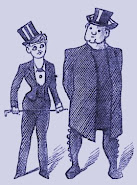
Showing posts with label Jack Johnson. Show all posts

Wednesday, August 25, 2021

Crossing the Color Line –

 Stanley Ketchel's Challenge for 

Jack Johnson's Heavyweight Crown


Crossing the Color Line is the result of impressive and exhaustive research, whereby we follow Stanley Ketchell, Jack Johnson, and Ketchells manager Willis Britt’s movements almost day by day, leading to the big fight on October 16, 1909 in San Francisco and its immediate aftermath. Ketchell would be murdered less than a year later and Johnson would go on to beat heavyweight James J. Jeffries in Reno, Nevada on July 4, 1910. 

The background details on the managerial negotiations, with accurate figures of the money spent and lost, is meticulously unearthed. Crossing the Color Line honestly and fairly documents a part of boxing history that is usually neglected in favor of the more sensational slant taken by several Ketchell biographers. A great addition to boxing history, richly illustrated with vintage photographs and cartoons.


Above is the trailer for the upcoming release Crossing the Color Line: Stanley Ketchel's Challenge for Jack Johnson's Heavyweight Crown (Valigor Press, 302 pages, 8x10, paperback, photos).

This book will be issued in paperback and as an eBook on both Amazon and Barnes & Noble.


Barnes & Noble link

Amazon link


Friday, April 9, 2021

Sambo Remo Rastus Brown –


Just as it seemed I was about to make my fortune on a twenty-five-dollar-a-week shift, and that I could go back home and claim the girl I was convinced every fellow with a grain of sense was trying to steal away from me, the half-tone picture came along and kicked the feet from under newspaper artists. It looked like the end of the world then, but it proved to be exactly the thing we needed. Now we were compelled to use our imaginations, our inventiveness. - Seven Men Who Draw Funny pictures – And Large Salaries, Literary Digest, Aug 14, 1920

WHEN Negro boxer Jack Johnson was about to fight the great White Hope James Jeffries for the world heavyweight boxing championship in 1910 at Reno, Nevada cartoonists flocked to cover the fight. Clare Briggs created Sambo Remo Rastus Brown, neighbor and friend to Jack Johnson, and followed him cross country. After many adventures SRRB finally arrived in Reno and became Johnson's sparring partner and second. In 1912 Sambo Remo reappeared in the comic strip Dandy Dreamer, Sr. and Sambo Remo Rastus Brown.


Sept 19, 1926


JKA


Tuesday, January 30, 2018

Rube Goldberg — Sporting Days in San Francisco

             
1910s  1  Cartoonists Rube Goldberg (right) & Harry Hershfield (left).

“Reuben L. Goldberg draws pictures with his funny bone and can write as freshly as he draws. He is now in Reno, and will write and draw of the great fight today for The Call.” — The San Francisco Call, July 4, 1910
            
by John Adcock
            
RUBE. Reuben Lucius Goldberg, previously sporting cartoonist on the Chronicle in San Francisco, where he had started at $8 per week in 1904, was hired to replace Tad Dorgan as the Bulletin’s sporting cartoonist. (Tad had left the San Francisco Bulletin for New York on March 31, 1904, to drew cartoons and write sporting columns for Hearst.) “One of my secret ambitions, which I never had dared confess,” Goldberg recalled, “was to learn to write — which I had never attempted. Now I commenced to write in the vein of the pictures; a sort of mild, semi-sarcastic ridicule, not of individuals but of situations and action.” At the Bulletin he was often teamed up with writer Bill McGeehan, who once described boxing as “the cauliflower industry.”

1907  2  ‘Fitz In Role Of Sculptor’s Model.’ Denver Post, Sep 24.
            
TEX. George Lewis “Tex” Rickard, following a career in the Klondike as a prospector, gambler and dancehall king pulled up stakes and headed to a new boom town at Goldfield, Nevada where he got in to the boxing promotion business. There he convinced the town big shots that a championship boxing event would put the place on the map. Pugilists Oscar “Battling Nelson” (34) and African-American Joe Gans (24) took him up on the offer. The prize of $30,000 in twenty-dollar gold coins was put on view in a shop window.
             
1909  3  ‘Many Forces At Work To Arouse Jeffries To Action.’ Denver Daily News, Jan 15.

“I had no idea that the big newspapers of the country would pay any attention to us. I knew it would attract sportsmen, and that we might have a chance to break even. But we weren’t concerned about profit and loss. We figured to lose. I got my first big shock when two young fellers came up to me and said they represented the San Francisco Bulletin. They looked so young that I thought that somebody had sent them in to kid me. But when young Bill McGeehan and Rube Goldberg, the cartoonist, showed me their credentials, I nearly fell down. And I got shock number two when they hired a hole-in-the-wall on the main street and stretched a banner across the street announcing to the world that here was the San Francisco Bulletin’s headquarters for the great $30,000 ‘Battle of the Century’” — Tex Rickard quoted in ‘Yes, “Tex” Gave Them a Great Show Until the End,’ in the Literary Digest, Jan 26, 1929
1910  4  ‘Anything To Help The Big Fight Along.’ Rube Goldberg sporting cartoons in the Denver Daily News, April 5.
1910  5  DRAMATIC PHOTOGRAPH. This week’s front page of The San Francisco Dramatic Review — ‘A Group of Notables Who are Interested in Theatricals and Well Known in Business Circles’ — presents Jack Kipper, Walter Kelly, Hector D. McKenzie, Nat C. Goodwin, James J. Jeffries, Sam Berger, and Tex Rickard. March 12.
            
WINNER JOE GANS. The fight took place on Sept 3, 1906 and was filmed. Battling Nelson lost on a foul, disqualified for low hitting in the forty-second round. It was America’s first national boxing spectacle.

“Bill McGeehan and Rube Goldberg received a wire from their editor instructing them to meet a lady reporter at the train. They looked anxiously for her all night. Between waits they bathed their patience at Tex Rickard’s bar. The lady writer arrived at 7 A.M. and got a very incoherent welcome from two wobbly young men. Bill and Rube sat down to write their stories for the paper. Rube’s hands floundered over the typewriter keys, his eyes became glassy, and darkness closed in around him. He fell forward, dead to the world, using the exclamation mark as a pillow. McGeehan deposited him in a convenient waste basket, re-wrote Rube’s entire story and sent it to the paper signing Rube’s name. when Rube woke up, he was handed the following telegram: ‘Best story you ever wrote. Send us more of the same stuff. Fremont Older, Editor.’” — ‘In One Ear,’ in Collier’s, Dec 22, 1928
1910  6  ‘In The City Of Sagebrush And Divorce.’ The San Francisco Call. June 24.
            
BULLETIN. Goldberg worked for the San Francisco Bulletin as both cartoonist and sporting columnist until 1907.

“From the Chronicle, I went to the Bulletin, where the cartoonist was given a better show. Here I developed a New York bug. The editor offered me $50 a week to stay put, but it was the big town or nothing. Arrived in the city of my dreams, I peddled my drawings to every paper. I ended with the Mail and there I landed. That was thirteen years ago (1907). I’ve been on the Mail the entire stretch.” — Seven Men Who Draw Funny Pictures — and Large Salaries,’ in the Literary Digest, Aug 14, 1920
1910  7  ‘Reno Is As Reno Does.’ The San Francisco Call. June 25.
            
WINNER JACK JOHNSON. Goldberg took a train to New York in 1907 and hit every newspaper office in the city before landing a job on the New York Evening Mail. In 1910 he took a vacation from the Evening Mail to cover the fight between Johnson and Jeffries at Reno, Nevada. His coverage of the match appeared in the San Francisco Call. On July 3, one day before the match Goldberg wrote that “asking a man to pick a winner in the Jeffries-Johnson battle is like requesting a condemned felon to choose between the electric chair and the gallows.” Nonetheless, based on a week of studying the two fighters in the training camps, Goldberg took “the fatal Brodie” and chose the Negro boxer to win.
            
1910  8  ‘Writers and Fighters Who Will Describe the Big Battle for The Call,’ full sporting news page in The San Francisco Call with mugshots of the 11 men-strong crew. Writer and cartoonist Rube Goldberg. Writers Fred R. Bechdolt, Edward F. Cahill, Robert Edgren, Joe Murphy, Ashleigh Simpson, William J. Slattery, and James W. Coffroth. Prize fighters Bob Fitzsimmons, Battling Nelson, and Tommy Burns. July 4.

“I drew and wrote sports until around 1914, when I was working on the New York Evening Mail. I created Boob McNutt, my principal character, in 1915, and continued a human-interest daily cartoon, both of which I am still doing for the Hearst papers and others round the country.” — Rube Goldberg, looking back in 1933, in the Literary Digest.
1910  9  ‘The Last Page Of The Johnson-Jeffries Story.’ The San Francisco Call. July 6.
Picture [1] photo source: Harry Hershfield Collection (Billy Ireland Museum).


Saturday, September 5, 2015

George Herriman’s Sporting Cartoons


1 [1909] August 10
Champion Jeffries Says He is Willing to Take On the Big Smoke. NEW YORK, Aug. 4, 1909 — Upon the eve of his departure for Europe tomorrow. James J. Jeffries issued a statement tonight through his manager Sam Berger, saying that everything now depends on Jack Johnson as far as a fight was concerned. He did not seem to consider seriously Johnson’s posting of $5000 in Chicago this week…

American Sporting Cartoons.
by John Adcock

 JACK JOHNSON.   Cartoonist George Herriman (1880-1944), without showing his subject’s face, captured Jack Johnson's mood perfectly in this sporting cartoon — triumph, elation, longing and an intense yearning. Johnson holds a bouquet of flowers in one hand and Jeff’s forfeit in the other. His feet barely touch the ground. The cartoon first ran in Hearst’s Los Angles Examiner on August 6, 1909. On July 4, 1910, Johnson met James J. Jeffries, a former miner and boilermaker, at Reno, Nevada and saw his dreams become reality.

2 [1904] May 26
 CHALLENGERS.   On June 9, 1899, James J. Jeffries had taken the American Heavyweight Champion title from Bob Fitzsimmons, a middleweight who won the heavyweight title from Jim Corbett in 1897 at Coney Island Athletic club in Brooklyn, N.Y. After fights with Sharkey, Ruhlin, Corbett, and a rematch with Fitzsimmons Jeff ran out of serious challengers except among the Negro fighters.

3 [1904] June 26
 COLOR LINE.   Jeffries had fought black fighters before but drew the color line to protect the heavyweight title from several clever Negro pugilists. After beating Nova Scotian boxer and coal miner Jack Munroe he retired in 1905, an undefeated champion. Jeffries designated Marvin Hart his successor and on February 23, 1906, the title passed to Canadian fighter Tommy Burns. On December 26, 1908, Tommy Burns lost the title to Jack Johnson in Australia.

4 [1904] August 3
 BEAT IN 14 ROUNDS.   The next year Johnson successfully defended the title against five white challengers leading sporting columnists and cartoonists to begin clamoring for Jeffries to come out of retirement and put the Negro upstart in his place. Jeffries was reluctant but, just as he had with Burns, Johnson began dogging the footsteps of the retired white hope and finally Johnson met Jeffries on July 4, 1910, at Reno, Nevada where he decisively beat the out of shape former champion in 14 rounds. Johnson finally lost the title to the Pottawatomie Giant, Jess Willard, in 1915 at Havana, Cuba. Willard was not an impressive boxer and it was believed by many that Johnson took a dive.

5 [1904] August 4
 REPORTERS.   When Jack Johnson battled White Hope James L. Jeffries for the championship of the world at Reno, Nevada on July 4, 1910, former champions and reporting writers and artists from east and west flocked to the small desert town. Present there was Canadian Tommy Burns who lost the title to Johnson in Sydney, Australia, as was Bob Fitzsimmons, who had fought both Johnson and Jeffries (Jeffries twice). Present as writers and cartoonists were Rube Goldberg, TAD, A.D. Condo, Jimmy Swinnerton, Bud Fisher, Clare Briggs and Bob Edgren. George Herriman did not attend, having been summoned to New York by Hearst.

The sporting cartoons shown here are all created by George Herriman.

6 [1904] October 23
7 [1904] November 27
8 [1909] August 16
9 [1910] April 26
10 [1910] June 19
11 [1910] June 21
12 [1910] June 28
13 [1910] July 12
14 [1917] Photo of George Herriman

Sunday, April 1, 2012

The Fight of the Century, July 4, 1910


When Jack Johnson battled White Hope James L. Jeffries for the championship of the world at Reno, Nevada on July 4, 1910, former champions, writers and artists from east and west flocked to the small desert town. Canadian Tommy Burns who lost the title to Johnson in Sydney, Australia was there, as was Bob Fitzsimmons, who had fought both Johnson and Jeffries (Jeffries twice). Rube Goldberg, TAD, A.D. Condo and Bob Edgren served as writers and cartoonists.


Edgren had his start on San Francisco newspapers before becoming the sporting editor at the New York World. He studied at the Hopkins Institute of Art in San Francisco. Edgren “possessed a rare skill in throwing the 16 pound hammer, which brought him fame, medals and many records.” He began newspaper work as a sports illustrator in San Francisco, subsequently turning to text columns and moving to New York.

The San Francisco Call wrote

“A close student of Jeffries and his condition, Edgren can watch the work of the white man and can tell when he is under the stress of ring conditions, whether it is the old Jeff that has come back, or whether a mere muscular shell of a once great fighter is pounding futile blows on the ebony hide of a younger and better man.

Familiar with the work of Johnson, Edgren will watch the Texan’s every motion and will know if the black is showing the “white feather” or the “yellow streak.” Whatever color scheme prevails on next Monday, Edgren the artist will detect it in its incipiency and readers of The Call can follow the battle from the pen of the premier sporting editor of the east.”


Edgren took several photographs of the fight which he sold through advertisements in the New York Clipper.

Archival footage from the famous fight can be seen HERE.


More on Jack Johnson and the Cartoonists HERE.

Bob Edgren’s print showing highlights of the fight courtesy Tony Manning, political cartoonist for the Meriden Record-Journal in Connecticut. Read an article about Tony Manning’s collection HERE.

Wednesday, February 2, 2011

Jack Johnson Remembers


One thing that surprised me when I was putting together the blog post Jack Johnson and the Cartoonists was the discovery that Johnson had paid his respects at Tad’s funeral of 5 May 1929. Dorgan was unusually tolerant for the times; he had two adopted Chinese children named Duck and Spensi. Jack Johnson on the other hand was one of the most hated men in America. When he had a championship bout with a ‘Great White Hope’ the promoters had to frisk the audience at the gate for guns. In 1929 a retired Jack Johnson wrote a newspaper series under the title Jack Johnson’s Own Story. The last column was a tribute to his old friend and mentor Tad Dorgan.

Jack Johnson’s Own Story,

Saskatoon Star-Phoenix,
8 May 1929.

In concluding this series of 18 articles which have given me a great deal of thorough pleasure, the pleasure that any veteran would get from probing his memory and jotting down the reflections that come to the surface, you will pardon me if a tear comes to my eye at the passing of one of the grandest fellow I ever knew, Tad, the one and only T. A. Dorgan.

Day after day, through the earlier installments of this life story, I would call Tad on the phone and ask his advice and opinion as I laboriously constructed my thoughts and whipped them into newspaper shape.

He liked this series immensely because he felt as I felt that the old time fighters were greater than the present day performers. I am sorry that he missed the last articles that I wrote. He asked me to show him all of them at once but I wouldn’t do it. “You read the next one tomorrow.” I’d kid him and he did. I wish now that I had let old Tad go all the way through them.

Tad Dorgan was a great fellow and a loyal, fearless friend. He either liked you or didn’t want any part of you and it was fortunate that he and I always hit it off in fine style. He was the writer who first called me “Li’l Artha.” And he was the one writer who always asked for a fair deal for me. He gave me credit for everything I did and although many men tried to split us apart, Tad always stuck to me. His loyalty was wonderful and I have never forgotten all the nice things he did for me.

Sporting writers of the present school should find a moral in Tad Dorgan’s whole life.

He never had to turn to cutting remarks to make his point. He was gentle-humored and he accomplished more with sugar than any writer has ever accomplished with vinegar. I commend similar loyalty and similar good humor to the youngsters who have taken the typewriters of the men who wrote in my day.

Above all, Tad neither indulged in self-pity or took himself too seriously.

Nationally noted and nationally respected, he was as easy to approach as the youngest writer. The bigger they are the easier they are to approach, and Tad proved this to be a fact.

He wrote stirring stories and made great cartoons of game fighters and yet none of the fighters he pictured was half as game as the gallant fellow who, facing death for ten years, went along calmly, thinking up situations and remarks to make other people laugh.

I had intended to make this last installment a complete review of the old and the new in the ring but “Li’l Artha” does not feel in the mood to do that now. I have lost one of the finest friends I ever had and in the presence of death, Tad’s death, you must excuse me while I go to my scrapbook and thumb the pages which Tad adorned for me.

May the gallant Tad Dorgan find the reward he is entitled to. May he rest in peace!

(THE END)

*See HERE for more on Tad Dorgan, HERE for Johnson's 1910 Fight of the Century.


Tuesday, January 11, 2011

Jack Johnson and the Cartoonists

   
TEXAS NATIVE Jack Johnson had traveled as far as he could fighting Negro boxers, and the reigning champion in 1903, Jim Jeffries, refused to fight a colored boxer. When Jeffries retired the championship went to Tommy Burns, a tough scrapper born near Hanover, Ontario. For two years Johnson chased Burns round the world by automobile, railroad, and tramp steamer, until the champion agreed to fight him in Sidney, Australia in 1908. 

After 14 grueling rounds, on 26 December, the police reluctantly ended the fight to avoid Burns being beaten to death. Jack Johnson was the first black heavyweight champion of the world. Johnson was no obsequious champion, he considered himself the equal of any white man in the world, and he rubbed their noses in it every time he opened his mouth. He dressed like a king, flaunted his white girlfriends, and drove all over the country in expensive automobiles. He was a godsend to the cartoonists from the day he began coveting the hitherto all-white championship of the world.
On 5 May 1929 cartoonist Tad Dorgan was escorted to his grave by about 40 people, mostly from the newspaper profession. Also accompanying him were Duck and Spensi, his two adopted Chinese boys, Jack Doyle, head of the National Billiard Association, Gene Buck, songwriter, Philadelphia Jack O’Brien, a boxer, and ex-champion Jack Johnson. This was so unusual for the time that Johnson’s presence topped Dorgan’s name in many of the headlines over accounts of the funeral.


26 Dec 1908 by unknown cartoonist
26 Dec 1908 by Bob Edgren
31 Jan 1909 Bow
13 Mar 1909 Fitzmaurice
March 1909 Leet
1 July 1910 Condo
12 Nov 1912 Cory

See also 
Jack Johnson Remembers HERE 
and  
The Fight of the Century HERE.