Wednesday, August 28, 2024

RIP, John Adcock. Statement by Yesterday’s Papers new Administrator Rick Marschall


A Message About Yesterday’s Papers Founder John Adcock
And This Essential Web Magazine

Statement by Yesterday’s Papers New Administrator Rick Marschall


Faithful followers of Yesterday’s Papers will have learned by now – but scholars, fans, and researchers might only now discover – that the founder of this incredible resource, John Adcock, has passed away on June 1, 2024.

John's work in several fields of popular culture was widely known, died after a long battle with cancer. He left this life just after entering his 74th year, and died at his home in Edmonton, Alberta, Canada.

John Kenneth Adcock was born in 1950 in Nelson, BC, Canada; and grew up in Trail, BC. He was a cartoonist, illustrator, storyteller, and blogger. As a professional and amateur scholar he shared his love and fruits of research in the areas of comics and cartoons; dime novels and “penny dreadfuls” and various genres of folk music.

In recent decades John devoted himself to this web magazine In its electronic pages he published thousands of articles (many by himself but also by scholars from around the world) and illustrations. It commenced in 2008 with an article about Walt Kelly's Ten Ever-Lovin' Blue-Eyed Years with Pogo. At the time of John's death there had been 5,562,010 page views of the Yesterday’s Papers site.

Yesterday’s Papers is widely respected as the internet's premier site for scholarly essays; news and analysis; reviews and commentary on the history and heritage of the comic-strip art form. It is a reflection of John's personality and priorities that, when he was asked before he died what was among his proudest achievements with Yesterday’s Papers, he wrote, “I was happy about two posts, one about George W. Johnson, known [in that era] as ‘the Whistlin' Coon,' the first black man to record for Edison; and another post about a forgotten sports cartoonist named Dan Leno on the San Francisco Bulletin. Both died with unmarked graves, and both now have markers.”

Significant for scholars, John maintained a meticulous cross-reference index to Yesterday’s Papers contents; and provided links to hundreds of related sites and reference sources, all of which you may see on this home page.

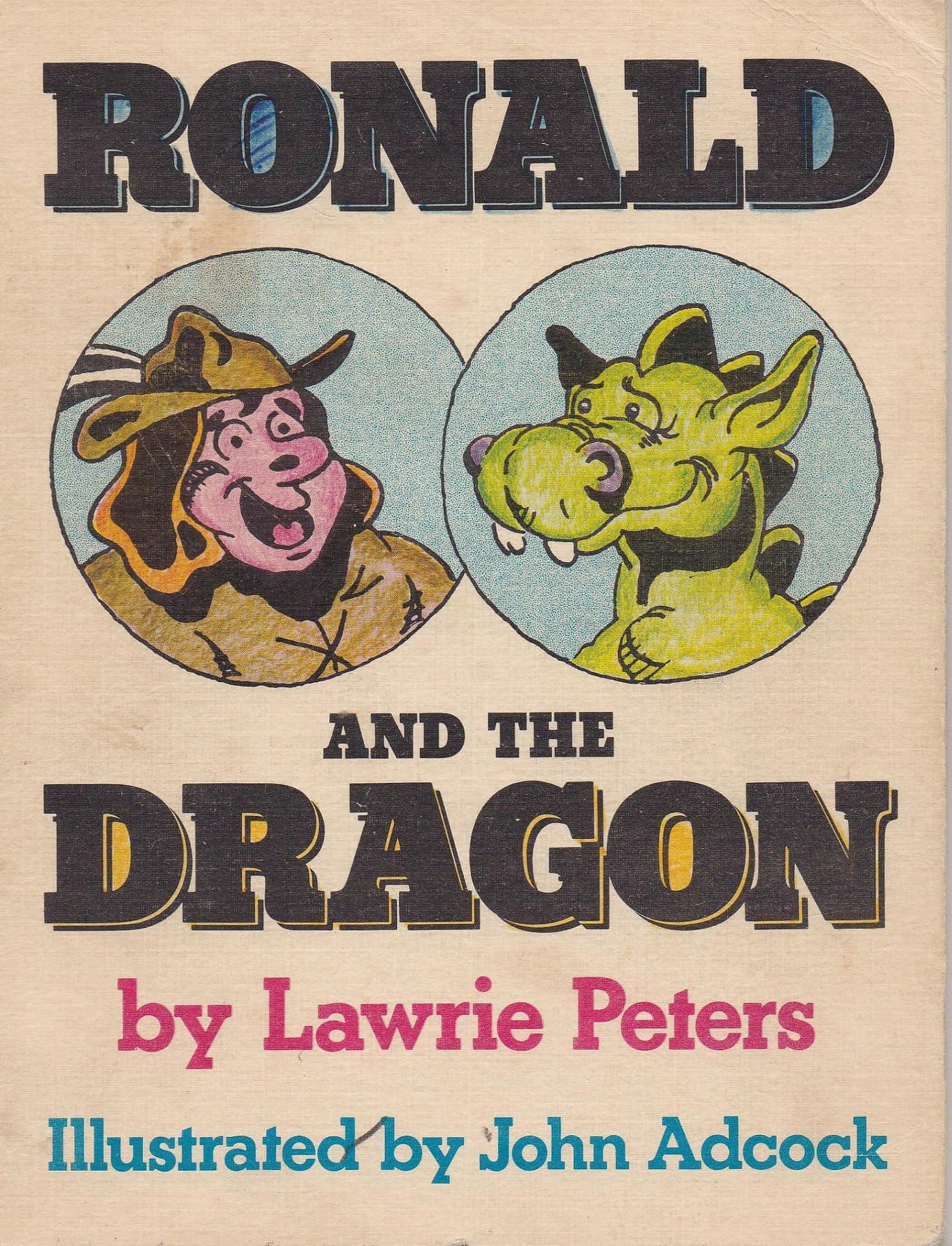
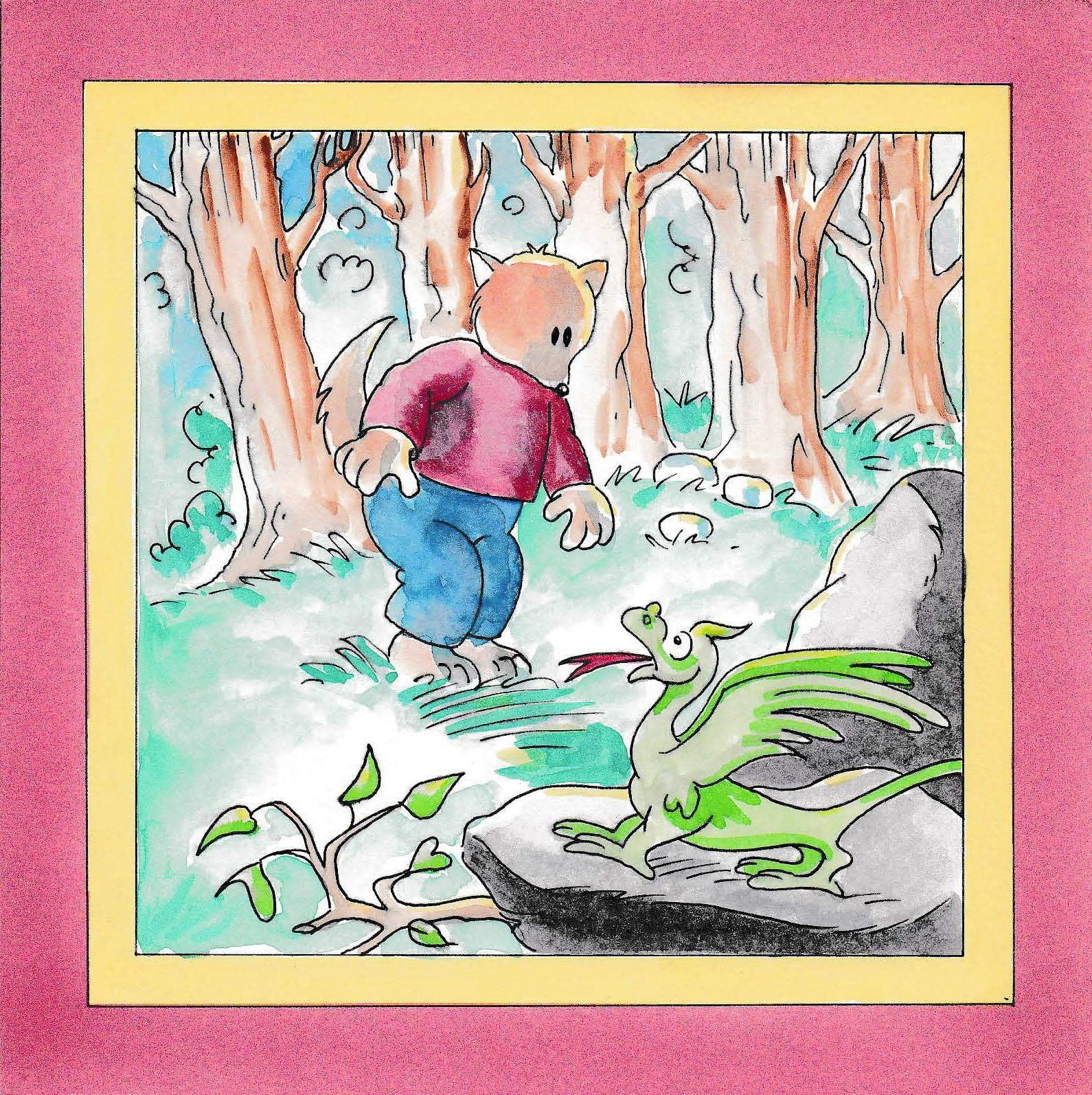
John was a talented cartoonist; among his modest list of published work was illustrations for the children's book Ronald and the Dragon (written by Lawrie Peters; Tree Frog Press, Edmonton, 1975). He contributed to the fanzines Chronicle, Weirdom, and Visions. In Yesterday’s Papers and other venues he extensively wrote on subjects beyond comics history: country, bluegrass, and roots music; animated cartoons; silent films, and Penny Dreadfuls. He had written about the work of Harold Furniss and Ferdinand Fissi for the British magazine Ripperologist.

John worked for years on a major book-length, illustrated history of Penny Dreadfuls, the boys' magazines of the 19th century. He also had recently completed a major treatment of the corporate and creative work of the Chicago Tribune and New York News and their syndicate's classic strips for the revival of NEMO Magazine, a magazine of comics history that initially ran for 32 issues that was and will be published by Fantagraphics.

As NEMO's Editor in Chief, I recruited John to serve as Associate Editor of the new incarnation alongside Jon Barli and John Kelly. John Adcock's book on Penny Dreadfuls and dime novels never was published; and it is my intention to help it see print. At the least, this work will be serialized in NEMO.

John also arranged for me to succeed him as the Administrator of Yesterday’s Papers. I humbly assert and reassure uncountable fans and scholars around the world that to the extent I am able, I will maintain John's standards and integrity. Yesterday’s Papers likely will be a web adjunct of NEMO but firmly retain John Adcock's identification, spirit, and appearance as you see it here. It will continue to publish articles and images from the “yesterdays” of comics, cartoons, and animation.

John Adcock was survived by his daughter Lana (Rick) and son Bryan (Donna); his grandchildren Zachary, Cody, Taylor, Dustin, and Samantha; his great-grandchildren Brantley, Ayla, and Oaklen; his brother Richard (Sheila); niece Roxanne; and his friend Andrea Schmidt. Readers of his many FB posts will know of John's affection for his family dog Gracie. A Celebration of Life service was conducted in Edmonton.


On a more personal note, I represent uncountable people around the world who were touched by John. Family and neighbors knew him, I reckon, as a gentle man – and a gentleman, with a soft voice, devoted to his interests and passions. The legatees of his amazing scholarship no less sensed his gentle spirit and fierce integrity.

I wrote more than a hundred articles through the years for Yesterday’s Papers, and provided many images. John's contributors (and faithful readers) included some of the most prominent comics scholars and popular-culture critics from around the world. Their names (maybe yours among them) are listed in the left sidebar on this home page. After John's death one of his followers, Miron Murcury, wrote that John had been particularly flattered and encouraged that I wanted to write for Yesterday’s Papers. However I surely was not alone in, rather, being grateful to appear in these pages: the web magazine is an essential archive of information and insights, thanks to John's tutelage.

Therefore I am proud that I will be the next captain of the good ship Yesterday’s Papers. I fervently urge contributors from past years – and any scholars interested in contributing to this essential scholarly archive – to submit articles, news, essays, and vintage artwork to me. Contact me through the site or at RickMarschall@gmail.com

During John's last months we managed weekly phone chats. After he had vouchsafed his medical prognosis and imminent death we were liberated, so to speak, to discuss more than comics – life; people we have encountered; faith; the “adventures” of collecting and researching; the magic of our beloved art form; and his legacy.

Like many of his friends, I assumed he had a massive collection, a mountain of documentation and paper archives that populated the columns of Yesterday’s Papers. No. Astonishingly, and admirably, most of his thousands of illustrations and even more facts and data, were gleaned through research and the modern miracle of the internet and screen-captures. This was a lesson for other scholars, and (trust me) likely a boon to his budgets. He amassed an astounding visual archive by hard work, initiative, and imagination. He set a standard.

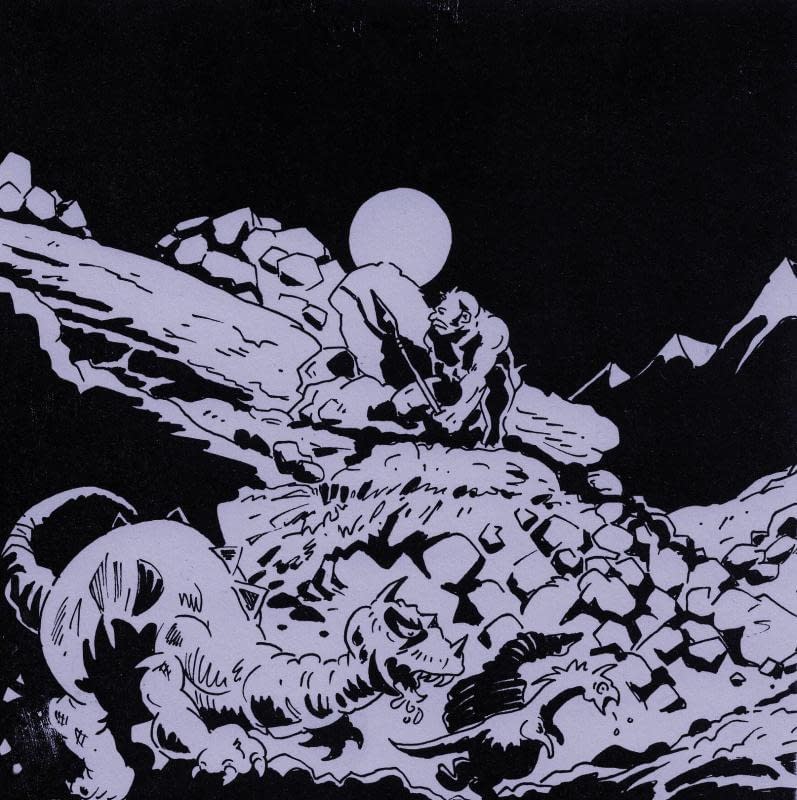
I have wondered whether John was proudest of his drawings, his cartooning talent. I think so. He was a very good artist. Creative, engaging, and accomplished. He was published a bit – not enough! – and he occasionally shared his drawings, whether “finished” or sketchbook-art, on the web and in letters; unfailingly charming. In turn, I share some here (all copyright, Estate of John Adcock).

For the moment, Yesterday’s Papers can still be accessed at https://john-adcock.blogspot.com. I will try to make it even easier to find through search engines.

There can be no greater acknowledgment of John's scholarship and devotion, and tribute to him, than for me to keep Yesterday’s Papers alive as he would have continued it; and for fans, scholars, and researchers to continue their reliance on it. If I may pledge: it will be Tomorrow's Papers too. Godspeed, John. 

                              
Sketchbook drawing 


Thursday, May 16, 2024

Dixon and White Fight A Draw

One of the few Homer Davenport sporting cartoons with vignettes I have found. Davenport was really the first popular Americana newspaper sporting cartoonist, before Swinnerton, Dorgan and all the rest. George Dixon was a Canadian pugilist. He was the first black world boxing champion in any weight class (the heavyweight champion title was strictly reserved for white men until the era of Jack Johnson), while also being the first ever Canadian-born boxing champion. Ring Magazine founder Nat Fleischer ranked Dixon as the #1 Featherweight of all-time. New York Journal, Sept 26, 1896

—♠—

Friday, January 26, 2024

RAOUL BARRÉ FOUNDATION SCHOLARSHIPS

PRESS RELEASE                                                    OCT0BER 26TH 2024


TO UNDERLINE THE 150 YEARS OF RAOUL BARRÉ’S BIRTH

THE RAOUL BARRÉ FOUNDATION ANNOUNCES THAT IT

WILL ADD A 10,000$ SCHOLARSHIP  IN 2024


Gaspard Fauteux, founding president of the Raoul-Barré Foundation and grandson of the Quebec multidisciplinary artist Raoul Barré, is proud to announce that in order to worthily celebrate the 150th birth anniversary (January 29, 1874) of the painter and pioneer of animated film, the Foundation will award an annual grant of $10,000 starting in the fall of 2024. The recurring grant aims to reward a project in order to support its development and completion.


The Foundation aims to be a development agent to encourage research and creation in the different artistic disciplines in which Barré has been interested throughout his career, particularly animated films and comic strips. This grant is in addition to assistance amounting to $4,000 per year over five years, for the holding of the” Sommets du cinéma d’animation,” an international festival dedicated to animation in all its forms. Under this agreement, the award for best Canadian student film is now known as the Raoul-Barré Prize.


Gaspard Fauteux founder of the Raoul Barré Foundation mentions 


“Otto Messmer, creator of Felix the Cat, remembers some of his prophecies which in 1914, fifteen years before the advent of sound and eight years before that of color, could only have passed for futuristic daydreams. "Barré once offered a big dinner to the animation filmmakers. It was the only time that all the animators from New York were together. Until then each studio remained in its own corner. At dessert they forced him to make a speech. Although cartoons were still in its very early stages. Barré predicted that they would soon speak and use sound effects. The entire audience burst into loud laughter. Everyone thought that he must have been completely crazy to imagine that. He even added that the cartoons would all be in color. And everyone still started laughing at this idea as if it were a crazy dream. all this was achieved relatively quickly.


John Harbour, Doctoral student in cinema at Laval University Member of the board of directors of the Raoul Barré Foundation mentions


“Raoul Barré can be a source of inspiration and, above all, motivation for Quebec filmmakers. Indeed, if being a French-speaking person in a predominantly English-speaking country can represent a difficulty and can sometimes be a source of discouragement, Barré showed (like Xavier Dolan or Monia Chokri in contemporary times) that it was possible to go as far as our dreams allow us and that imagination and talent are two notions that know no boundaries. »


ABOUT RAOUL BARRÉ

Raoul Barré was born January 29th 1874 in Montreal. He led a career as a painter until the end of his days, some of his paintings being today kept in prestigious institutions. He made his debut in caricature and illustration in various Quebec newspapers in 1894. Also a cartoonist, he published “Pour un dinner de Noël” in La Presse (1902), the first Quebec comic strip published in a major newspaper, and the series Les contes by Father Rhault in La Patrie du Samedi (1906-1908). However, it is as a pioneer of American animated cinema that he is most recognized internationally today. Indeed, Barré settled in the United States in the early 1910s and founded one of the very first animation studios in the world in New York. There he directed and produced several animated short films from the series Animated Grouch Chasers (1915-1916), Phables (1916) and Mutt and Jeff (1916-1920). He briefly reappeared in the animated film industry around 1926-1927 to work at Pat Sullivan's studio on the Felix the Cat series. He died in 1932.


ABOUT THE RAOUL-BARRÉ FOUNDATION

The Raoul-Barré Foundation's mission is to ensure the sustainability of the legacy of the artist Raoul Barré by contributing in particular to the development of knowledge about cinema, comics, painting and caricature. Painter, illustrator, filmmaker and cartoonist, Raoul Barré marked the beginning of the 20th century with his innovative ideas. The spirit of this versatile artist will thus be able to influence the young animation directors of tomorrow.


To learn more, visit raoulbarre.ca.


Media contacts:

For the Raoul-Barré Foundation

Gaspard Fauteux

Founder and President

Raoul-Barré Foundation

514-578-9561

gasparfauteux@bell.net


John Harbor

Member of the Board of Directors

1 (581) 307-3065

John.harbour.1@ulaval.ca


Friday, January 5, 2024

Hearst’s International –

 ANIMATED CARTOONS

Goldwyn Bray Releases, Walt Lantz, Feb 14, 1920

By John Adcock

“Into this period [1917] entered the International Feature Syndicate, formed by William Randolph Hearst. He placed Gregory La Cava in charge, who immediately set about improving the cartoons. He increased the number of drawings from the 2,000 of the average cartoon of the time to 3,500, resulting in smoother animation. Further, he changed the animation of the characters from the stiff, angular movements of the legs and arms to a smooth “rubbery” animation such as is used at present. La Cava also discontinued the “bubble” title for the conventional title of the silent days.” – ‘The History of the Animated Cartoon,’ Earl Theisen, International Projectionist, Vol.6 No.2, November 1933

Walt Lantz, 1924

In 1915 Walter Benjamin Lantz (April 27, 1899 - March 22, 1994) joined the staff of Hearst’s New York Sunday American as an office boy, sweeping floors, washing brushes and “rushing the beer cans” for the cartoonists. In 1917 he was taken under the wing of Gregory La Cava, director of Hearst’s animation studio, beginning at a $10 weekly salary. Animator Bert Green recalled the top salary at the time was $300 weekly).

International had been producing animated films since 1915 based on the best-selling comic strips from the Hearst papers. In Dec 1917 they announced the cartoons would be bigger and better, “as many pains will be taken with them as a five-reel feature – Katzenjammer Kids Features Ready.” Gregory La Cava (March 10, 1892 – March 1, 1952), who had previously worked with Raoul Barré and John R. Bray, would direct the department under the supervision of Edgar B. Hatrick.

Gregory La Cava, May 25, 1918

Lantz recalled to British comic historian Denis Gifford in 1972: “The characters moved very swiftly. We animated them like human beings, from the joints. They had elbows and knees. Then Gregory La Cava had an idea. He conceived what we came to call hose-pipe animation. He eliminated elbows and knees. Arms and legs became rubber tubes, they were flexible, they flowed. If Happy Hooligan wanted to reach across and pick up a pie his body would stay put and his arm would stretch out like elastic!” – ‘Woody Woodpecker’s La-ha-ha-hah-antz,’ Denis Gifford, Arts Guardian, July 4, 1972

Beginning in 1917, the International Syndicate released such cartoons in series as Jerry on the Job, drawn by Walt Lantz; Katzenjammer Kids, by John Foster; Tad’s Indoor Sports, drawn by Bill Nolan and released at the end of the International Newsreel. Happy Hooligan, drawn by Jack King; Bringing Up Father, by Bert Green; Krazy Kat, drawn also by Bill Nolan and Leon Searle; and the best of the Internationals, Silk Hat Harry, were the principal cartoons released at this time by that company. This last named was drawn by Walter Lantz and La Cava and was first released in 1918.” – ‘The History of the Animated Cartoon,’ Earl Theisen, 1933

Tad Dorgan's Judge Rummy Joins the Stars of the Screen (with Silk Hat Harry,), Film Fun, January 1919. Art work probably by Walter Lantz.

“I started ‘Judge Rummy,’ ‘Bunk,’ and the other dogs during the trial of Harry Thaw; they sort of ‘kidded’ the case and became popular. I have been drawing these characters ever since. The 'Indoor Sports’ I thought of about seven years ago (1912), when I was confined to my home with rheumatism. I thought what a lovely indoor sport it was, this sitting around the house looking llke the wreck of the Hesperus. Other Indoor sports suggested themselves and this series has been going on ever since… I might add that It was Judge Rummy who first called the Ford car a “flivver.” – TAD Dorgan, ‘Are Cartoonists Doleful?,’ The Sun, May 25, 1919

It was reported in the Boston Sunday Post in 1929 that Dorgan’s “Indoor Sports” was syndicated to 20,000,000 readers daily. His salary was well over six figures yearly…

Tad Dorgan's Judge Rummy and Silk Hat Harry on the left of the page, FB Opper's Happy Hooligan on the right, Educational Films Corp., NY, Motion Picture News, August 9, 1919 (signed Walt Lantz)

On Feb 22, 1919, Educational Films Corporation announced it would be distributing all Hearst cartoons world-wide. EFC had been distributing Internationals animated cartoons before the outbreak of the Spanish influenza but “when the situation reached a critical stage the Educational ceased releasing these cartoons, and subsequently the International Film Service Inc., stopped making them.” This was followed by an announcement on October 21, 1919, that Bray Pictures Corporation had secured production of all Hearst cartoons. The cartoons would be released through Goldwyn and included Judge Rumhauser, Happy Hooligan, Krazy Kat, Jerry on the Job, and the former Katzenjammer Kids renamed Shenanigan Kids.

John R. Bray was the son of a Methodist minister. He worked as a cartoonist on the Detroit News before moving to New York. He was hoping for a job on Life or Judge but ended up in the art department of the Brooklyn Daily Eagle (1911) where he worked alongside Max Fleischer and Earl Hurd. He had one successful Sunday strip called the Teddy Bears and a Little Nemo inspired comic, Mr. Scrapple of Philadelphia, also know as Mr. Sleeper. His first animated cartoon, The Artist’s Dream was announced June 12, 1913, followed by a widely popular series beginning with Colonel Heeza Liar in Africa, in Dec 1913. In 1928 Bray released Dinky Doodle and his Wonderful Lamp, animated by Walter Lantz. It was said to be the first of the “combination films,” where the actor (Walter Lantz) appeared on film simultaneously with the animated character of Dinky Doodle.

Col. Heeza Liar, 1919

By the end of the teens Hearst’s International Film Service was out of the animation business. Bray closed shop in 1929 leaving the field to Walt Disney, Paul Terry, Max Fleischer, and Pat Sullivan. Sound and color brought new vistas to the screen, and new techniques. Animation evolved from crude “moving comic strips” to fully realized worlds of fluid motion giving the illusion of life.