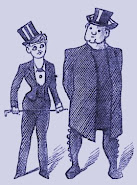
Showing posts with label Comic Cuts. Show all posts

Monday, August 3, 2020

American Comic Cuts –


⭐ Jake Geller on Comic Cuts, The Windsor Star - ‎Oct. 13, 1981. ⭐

– Our first issue of Comic Cuts, The National Comic weekly carried a cover date of May 19, 1934. It sold for a nickel and had 24 pages of color comics. The front-page comic strip was called ‘Simple Simon Scores Again This Week.’

How it happened is told here in Jake Geller’s own words, recorded in personal interviews, and taken, with his permission from the text of It’s Jake with Me, Geller’s unpublished autobiography. His is the true story of Canada’s own comic book hero.

“My Windsor News Company handled a series of English comic papers published by Lord Northcliffe’s Amalgamated Press in London, England. Every so often, a gentleman from Detroit would show up in my shop and buy 15 or 20 back issues of these papers. One day, out of curiosity, I asked him what he did with them. He told me, “When I was a boy I lived in Hamilton, Ontario. I used to read these English comics all the time. There is nothing like them available in Detroit, so whenever I’m in Windsor I pick up a few for my kids.”

“THAT GAVE ME an idea. I had my brother Maurice take the rest of the back issues to Detroit and set them up at a variety store which was located near a school. The papers cost two-and-a-half cents each and we sold them to the retailer for three-and-a-half cents, giving the retailer a cent-and-a-half profit on each five-cent sale. Boy were we ever surprised when Maurice returned the following week. Every copy had been sold and the storekeeper was clamoring for more.

Finally, it occurred to me that if I bought the American rights to these strips, I could issue my own publication and make it any size I wanted. I could also control the number of titles the retailers would have to handle.

I APPROACHED Wilbert Smith, president of Select Magazines, and asked him to be our national distributor in the United States. He was enthusiastic. Harry Baker, a friend of mine from New York, agreed to put up some of the money. We opened an office in New York and started to hire our staff. We hired a couple of big names to begin with. A.F. Cole joined us as our advertising manager from Popular Science, and Robert Ament, the former art director of the late lamented New York World, was hired as editor.

Our first issue of Comic Cuts, The National Comic weekly carried a cover date of May 19, 1934. It sold for a nickel and had 24 pages of color comics. The front-page comic strip was called ‘Simple Simon Scores Again This Week.’

You know, the World Encyclopedia of Comics (edited by Maurice Horn, published in 1976 by Chelsea House) gives credit for the first comic book where it isn’t due. Look at this.” Geller takes the book down from his shelf and reads, “In May 1934 the Eastern Color Printing Company issued the first comic book, Famous Funnies, a monthly (Geller again repeats ‘monthly’) collection of newspaper strip reprints.” There is no mention of Geller. Or of Comic Cuts.

GELLER CLOSES the book and says, “Why, we were a weekly. And we had six issues out before they were ever on the stands!

“You know who Eastern Color Printing was. They were the first printer we contacted for a price quote to print Comic Cuts. We didn’t go with them because they were in New England. Instead we chose a printer in Buffalo. But they sure must have liked the idea.

 ⭐⭐⭐


Tuesday, December 31, 2013

Cutting labels

           
[a] 1890, Comic Cuts (detail).

Yesterday’s Papers. Today’s Views.
by Huib van Opstal

[10] print labeling
Seduced by better printing, most artists, painters and others, sooner or later started using print too. The label ‘picture’ for ‘properly the art of painting’ was there first — in particular for paintings done in oils and in colour, profiled as single works and marketed as ‘high art.’ But today the word picture is a common word and simply refers to anything pictorial.

‘Sculpture’ is a label with a similar history. It began as a description for making classical sculpture and then for similar other ways of working. Metal engravers in the 1600s, able to resculpt their grooves like sculptors do, also began to sign their work-for-print in copper or steel ‘sculpture’ or ‘sc’ for ‘sculpsit,’ carved it. For a long period of time labels like ‘plate’ and ‘engraving’ solely meant work that’s done in metal. A new label begins to spread around the year 1800: ‘litho’ or ‘lithography’ for work that’s done via stone. Confusing in the mid-1700s remains that a ‘cut’ can refer to both metal and wood.

Since the 1800s the bulk of printed illustration is produced via wood and stone; afterwards, the three general terms used for a picture remain ‘cut’ or ‘block’ or ‘litho.’ In the 20th century they all refer either to the pictures themselves or to master films for printing.

[b] 1884-85, Choice Chips.
‘Cut.’ Up to the year 1900 printing via wood — via woodcut blocks, woodcuts, wood engravings — remains the cheapest and most used method.

‘Cut-workes.’ In London in 1632, a selection of stock woodblocks with illustrated ornaments is presented in book form, in the scrapbook way. On the title page described as ‘Certaine Patternes of Cut-workes: and but once Printed before.’

‘WITH THIRTEEN CUTS’ is how in 1819 London publisher William Hone subtitles his satirical pamphlet The Political House that Jack Built, illustrated in woodcut by George Cruikshank. ‘With a Cut’ is how he in 1821 advertises his ‘Works nearly out of Print,’ pamphlets which are each embellished with a single, rather crude woodcut.

‘By means of Wood-cuts’ is how in 1832-33 publisher-editor Charles Knight (b.1791) of the Society for the Diffusion of Useful Knowledge explains the success of his small-page weekly — his ‘little work’ — The Penny Magazine (s.1832) in England, together with his steep claim to have reached a weekly sale of 200.000 copies in its first year.

[c] 1898, Illustrated Chips.
Cut versus Engraving. But the ‘woodcut’ label gradually fades away. Under the mock alibi engraving tools are used on end-grain instead of side-grain wood, ‘woodcut’ is replaced by the more posh sounding ‘wood engraving.’ As distorting a label as the shortened cut and engraving. A cut, or an engraving, via metal or wood? Carved, cut, chiseled, incised or excised, or etched with acids? (Much to the regret of those who consider woodcuts cheap and vulgar, the artsy name ‘xylography’ for woodcut doesn’t catch on in English.)

‘With Comic Cuts’ is the wording used in December 1831 when The Mirror of Literature, Amusement, and Instruction reviews the latest comic annuals in a second supplementary number, titled ‘The Spirit of the Annuals for 1832’ — duplicating three woodcuts from The Comic Annual and The Comic Offering; or Ladies’ Melange of Literary Mirth. The reuse of these illustrations is talked about with great excitement.

‘Amusing cuts.’ In 1832 the small-page The Comic Magazine (subtitle: ‘Intended For The Risible Muscles’) offers an ‘amazing number of amusing cuts of the punning order’ and lots of wordplay, often in the form of just a short pun with a crude woodcut illustrating it. (Cuts presented on the cover as ‘Engravings by Dank, Esq.’) Editors in different years were Gilbert Abbott à Beckett (b.1811) and artist Alfred Crowquill (b.1804, penname of Alfred Henry Forrester). The typesetting is so large, the white between the lines so high, that most pages of The Comic Magazine carry only the shortest amount of text.

[d] 1890s, Comic Cuts.
‘COMIC CUTS.’ In 1833 The Comic Magazine advertises: ‘SPLENDID NOVELTY !!! This Week, Price only Threepence, A BROADSIDE OF COMIC CUTS, printed on fine paper, the size of “The Times,” presenting nearly ONE HUNDRED FIRST RATE ENGRAVINGS, By Seymour and — Dank, Esq. Selected from the early Numbers of THE COMIC MAGAZINE.’

‘Highly Humorous Cuts.’ The 1834 New Comic Annual is ‘Illustrated with One Hundred Highly Humorous Cuts.’

‘Illustrated with Designs on Steel and Wood by George Cruikshank’ is how editor-writer W. Harrison Ainsworth, Esq. (b.1805) launches Ainsworth’s Magazine in 1842 (subtitle: ‘A Monthly Miscellany of Romance, General Literature, and Art’) — for sale ‘On the 29th of January (…) price Eighteenpence (…) Orders received by all Booksellers and Newsmen.’

[e] 1890, Funny Cuts.
‘Saucy and Spicy Cuts.’ In the summer of 1855, New York publisher Garrett & Co. publishes a new strip book — by an author kept anonymous — titled The Wonderful and Amusing Doings by Sea & Land of Oscar Shanghai advertised in August as ‘… All told in a series of nearly TWO HUNDRED of the most RISIBLE, QUIZZIBLE, PROVOKING, PECULIAR, SAUCY AND SPICY CUTS ever gathered within the leaves of any one book …’ Earlier ideas by Swiss stripmaker Rodolphe Töpffer are quietly recycled in it.

‘Comic Cuts.’ In Victorian times the woodcut roots of papers with comical illustrations often show up in their titles and bookish spinoffs — Cuts… Amusing Cuts … Funny Cuts … Comic Cuts… Cheap comic weeklies carry grand cover banners and subtitles like ‘150 comic and humorous cuts for one penny’ … ‘A Journal of Humour, Romance, Comic Cuts, And Answers On Everything.’ Funny Cuts (1890) is subtitled: ‘JOKES, PICTURES, STORIES & TALES.’

[f] 26 July 1890, Illustrated Chips, nr 1, Vol. 1.
‘Chips.’ In America, a joke book is titled Chips from Uncle Sam’s Jack-knife. From New York comes a comic monthly titled Chip Basket in 1869. England has its weekly ILLUSTRATED CHIPS in 1890 (with the cover price lettered as large as its title, twice). The penny-paper Choice Chips has its title pictured in bent wood chips; the squibs in it are done under titles like ‘Quaint Chips’ or ‘Illustrated Chips.’ (A shortish satire in words may be called a ‘squib’ or a ‘skit’ or a ‘quip’ or a ‘chip.’) In 1897, the work of American illustrator Frank P.W. Bellew, Jr. (1862-94) — whose penname was ‘Chip’ — is titled “Chip’s” Old Wood Cuts. 

[g] 1890, Illustrated Short Cuts.
Stock blocks. In London many comic papers are assembled the scrapbook way, for the larger part assembled from years-old stock blocks, and sold for as little as posible. (In the 1880s swiping by photographic means picks up speed too.) Papers with titles like: Illustrated Short Cuts (1890)… Snap-Shots (1890, subtitle: ‘Humorous Pictures, chiefly from Advance Proofs of this Week’s American Comic Papers. With Useful, Entertaining, and Amusing Reading’)… Comic Pictorial Sheet (1891)… Comic Pictorial Nuggets (1892)… The Comic Home Journal (1895, subtitle: ‘The Friday Edition of Illustrated Chips’)… Comic Bits (1898)… The World’s Comic (1892, subtitle: ‘Edited by Grandad Twiggle’)…

[h] 1890, Comic Cuts.
Real and fictional editors — some with large scissors in hand — have names like ‘Mr. Chips,’ ‘Chips Esq.,’ ‘Mr. Comic Cuts,’ ‘Mr. C.C.’ or ‘Mr. Clarence C. Cutts,’ and begin to figure as funny men in strips themselves, even in their papers’ front-page top titles (‘mastheads’ or ‘nameplates’).

Price cut. In 1890 a young London editor-publisher, Alfred C. Harmsworth (b.1865), in business with his younger brother Harold, targets readers of all ages. English comics in the late 1800s cost no more than a penny, still an amount only to be spent by adults. They publish papers under their trade names ‘“Answers” Company’ and ‘Pandora Publishing.’ On 17 May 1890 — with the launch of their weekly Comic Cuts, carefully captioned ‘Amusing Without Being Vulgar’ and subtitled twice: ‘Pictures, Prizes, Jokes,’ and ‘A Penny Illustrated Paper for One Halfpenny’ next — the cover price is lowered to half a dime. Four of its eight pages are filled with picture cuts, the other four with short texts. Cuts from other publishers are quietly recycled in it. Jokingly plugged as ‘The Poor Man’s Punch,’ it is noticed by readers of all ages in the 90s — ‘Comic Cuts… One Hundred Laughs for One Halfpenny!…’ — and commercially so successful, that all competitors followed, making the ha’p’orth (half-penny worth) paper the new standard.

A little later, the top title on the cover gets a new standard caption: ‘CLEVER ARTISTS SHOULD SUBMIT WORK TO THE EDITOR OF “COMIC CUTS,” Enclosing large stamped envelope for return, in case of rejection.’

In May 1892, in prominent advertisements Harmsworth claims — for its first four weekly titles together — a circulation of over a million sold copies per week.
“A WORLD’S RECORD. (…) Figures certified by Chartered Accountants (…) The largest circulation not only in the United Kingdom but in the whole world. In less than four years (…) The HARMSWORTH Journals, “ANSWERS,” “COMIC CUTS,” “ILLUSTRATED CHIPS,” and “FORGET-ME-NOT,” 1,009,067 Copies Weekly. (…) Circulations are not gauged by the sale of a holiday issue.

Why have the “ANSWERS” journals achieved so vast
a sale? Because they were the first cheap papers to recognize the fact that the day is passed when the public will be satisfied with clippings from American newspapers and old books, and because their literary and artistic expenditure is, per journal, five times as great as that of any of their imitators.”
Answers (s.1888, initial titel: Answers to Correspondents) is profiled as ‘a high-class penny weekly magazine.’

Forget-Me-Not (s.1891) is profiled as ‘a ladies’ paper’ and ‘a ladies’ journal’ and described as ‘charmingly written and illustrated, and printed in the style of the six-penny magazines.’

Comic Cuts is profiled as ‘an illustrated comics paper’ with a ‘circulation (…) equal to all the cheap illustrated weeklies combined. It is practically a penny paper sold for 1/2 d. among its artists are the best men of the “Graphic,” “Illustrated London News,” an “Black and White.”’

Illustrated Chips (s. 26 July 1890) is profiled as ‘an illustrated paper’ and ‘another penny paper sold for 1/2 d. Its circulation is one of the most remarkable features of modern periodical journalism.’

[i] 1897, Illustrated Chips.
Most famous reader. In an 1890s Comic Cuts series of poster parodies that picture VIPs reading it, the one titled ‘Famous Comic Poster No. 6’ shows an amused British Queen — ‘What would the nation do without its Queen? Worse: What would the Queen do without her Comic Cuts?’

Huib van Opstal

[ to be continued ]

Click up next or preceding paragraphs here:

[1-8] Roughly, eye shock 1800

 [9] The text, the type, the visual

[10] Cutting labels
  
[11] The Hogarth-Doyle Punch foundation


Wednesday, February 24, 2010

14 Comic Cuts


14 Comic Cuts from Henry Hetherington's Odd Fellow 1839 and 1840.


Tuesday, February 23, 2010

Poor Man's Guardian


June 18, 1831. Voice of the People:

“Almost every large town has its Trades Herald, Workman’s Advocate, Workers’ Guardian, or some other equally zealous and useful publication, all strenuously advocating the necessity of duly rewarding labour, and of improvement in the conditions of the working classes.”

Saturday, July 9, 1831. Henry Hetherington, publisher. Quoted in The Poor Man’s Guardian:

“But if the Court is determined to confirm the conviction, then I here unhesitatingly declare, that I will set the law at defiance; - that law which the present Attorney-general himself declared was so odious - so iniquitous - so tyrannical , that it never could be carried into effect without holding “a dagger at the throat, and wresting the pen from the hand of every man who could write;” and yet the representative of the very man who used these words is now holding a dagger at my throat, but he shall strike it in before he wrests the pen from my hand, or prevents me from publishing a penny paper for the people every week, which I will do in defiance of this odious law, be the consequences what they may.”

Henry Hetherington was born in 1792 in Compton-street, Soho and apprenticed as a printer with the father of Luke Hansard. He found himself unemployed and went to Belgium where he worked at his trade for a spell before returning to London. His first published work was a pamphlet titled “Principles and Practice contrasted; or, a Peep into “the only true church of God upon earth,” commonly called Freethinking Christians” in 1828.

He helped found the Mechanic’s Institute and kept a shop at 13 Kingsgate-street, Holborn from whence he issued the first number of the Poor Man’s Guardian in 1831. He wrote a document that was the basis for the trade union “National Union of the Working Classes” which eventually led to the formation of Chartism.

With three convictions against him for publishing the Guardian he went into hiding in Manchester, but was taken by the Bow-street runners when he returned to London to visit his dying mother. He was lodged in Clerkenwell gaol for six months but managed to continue clandestine publishing of the newspaper. Over 500 men and women connected with the publishing of unstamped newspapers were gaoled including John Cleave and his wife who bravely carried on publishing when her husband was in gaol.

In 1833 Hetherington moved to the Strand where he published “The Destructive” and “The London Dispatch,” which reached a circulation of 25,000 copies sold weekly. When the government finally reduced the newspaper stamp to one penny (originally 4 pennies) in 1836 he published the “Twopenny Dispatch” and the “Odd-Fellow.” The “Odd-Fellow” was not the first paper to have political and gag cartoons on the front page but one of several which found the printing of cheap comic wood-cuts a great circulation booster. Cartoonists included Robert Seymour, William Harvey, and Kenny Meadows. Radical press-men John Cleave and Benjamin Davey Cousins also made great use of the front-page “comicalities.”

The “Twopenny Dispatch” promised an abundance of “Murders, Rapes, Suicides, Burnings, Maimings, Theatricals, Races, Pugilism, and all manner of moving accidents 'by flood and field'. In short, it will be stuffed with every sort of devilment that will make it sell.”

Hetherington was jailed three times for “blasphemy” and in his last will and testament specified a non-religious burial. He did not believe in “the popular notion of the existence of an All-mighty, All-wise, and Benevolent God -- possessing intelligence, and conscious of his own operations; because these attributes involve such a mass of absurdities and contradictions, so much cruelty and injustice on His part to the poor and destitute portion of His creatures, -- that, in my opinion, no rational reflecting mind can, after disinterested investigation, give credence to the existence of such a Being.”

Henry Hetherington died August 24, 1849 aged 57. G. J. Holyoke ended his graveyard oration saying that “when in future times the pilgrims of industry shall visit this shrine, they will exclaim --

‘HERE LIES A POOR MAN’S GUARDIAN!’

And poor men will drop tributary tears over his grave.”


*All comic cuts from the Odd Fellow

Monday, February 22, 2010

Comic Cuts 1839


The Odd Fellow was a weekly satirical newspaper which lasted from 5 Jan 1839 - 10 Dec 1842. The publisher was Henry Hetherington, a radical pressman famous for his Poor Man’s Guardian. Front-page political and gag cartoons by Robert Seymour, William Harvey, and Kenny Meadows were run weekly. See more HERE and HERE.


Saturday, October 11, 2008

Sunday, October 5, 2008

The Boy Jones


Few characters caught the Victorian imagination quite like "The Boy Jones," whose audacious escapades in Buckingham Palace made him an unlikely hero of newspapers, comic periodicals, cartoons and penny dreadfuls. The cartoon above was from the Odd Fellow, 24 April 1841. His entertaining story was told in All the Year Round on 5 July 1884.


Friday, October 3, 2008

Queen Victoria's Parrot


A series of related cartoons from The Odd Fellow Feb-June 1841


Monday, September 29, 2008

Comic Cuts


The British newspaper cartoon had its origins in the Sunday sporting newspaper Bell's Life in London and its supplemental Gallery of Comicalities. Bell's example was followed by the penny press in such publications as Cleave’s Gazette and Cousin’s Penny Satirist. The Odd Fellow was a weekly satirical newspaper which lasted from 5 Jan 1839 - 10 Dec 1842. The publisher was Henry Hetherington, a radical pressman famous for his Poor Man’s Guardian.

The cartoons appeared always on the front page of the Odd Fellow and were hung up in bookseller’s windows to feed the interest of passers-by. While today we would describe such fare as ‘single-panel cartoons,’ in 1839 these woodcut caricatures were known as ‘cuts,’ sometimes ‘comic cuts.’ The cartoons of the later Punch followed a well-worn trail, basing their publication on the penny Figaro in London, and their cartoons on the popular front-page caricatures of the penny press.


The Editor wrote a mission statement in the first issue of the Odd Fellow;

“We are determined to be an Odd Fellow: and, though it may appear strange to cut a friend, yet we are determined to give our readers a cut every week; but, at the same time, desire them to understand that we wish them to laugh at our designs. We shall not attempt to set the Thames on fire, as we intend to have no match.”

Each number was “illustrated by wood-cuts, characteristic of the ups and downs of the Political World and the manners, customs, and foibles of society.”


The earliest publications containing comic cuts I have found was The Original Comic Magazine: No. 1, With Seven Cuts which cost 6d and was published by another radical pressman, J. Duncombe in 1832. The famous penny blood publisher Edward Lloyd published a penny paper called The Weekly Penny Comic Magazine; or, Repertory of Wit and Humour, edited by Thomas Prest and featuring the cuts of the prolific C. J. Grant, also in 1832.


Comic cuts were soon being published on newspaper sized broadsheets with single and multi-panel cuts similar to the stories issued in comic albums by the Swiss caricaturist Rodolphe Töpffer, although it is doubtful that many of the cartoonists for the radical press would have been familiar with his name or work.


One example of the broadsheets featuring comic cuts was Cleave’s Comicalities, of 1844, advertised as LOTS OF FUN FOR ALL CLASSES One Hundred and Fifty Comic and Humourous Cuts For One Penny. “Each number of this “gallery” is a full-sized newspaper sheet, filled with laughter-provoking caricatures and comic hits.” These popular collections were sold in Fleet-street, Manchester, Glasgow, and Birmingham.


The comic cuts tradition had a long life. Even after the innovations of the coloured American comic supplements with experiments in continuity and the use of word balloons, the old caption strip style continued to be in use into the early days of the 20th century and survives to this day in the form of the modern gag cartoon.


*I'm inclined to credit the illustrator of some of these cuts to C. J. Grant although his work was usually signed CJG. Note also the use of a recurring character in "Joey," a cove with an impressive hat.