

 Posts
Posts


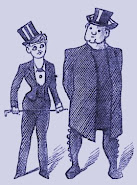


Frank Tousey and his brother Sinclair Tousey Jr. were nephews of Sinclair Tousey founder of the American News Company. Sinclair Tousey was born in New Haven in 1815 and founded the American News Company in 1864. With a near total control of newspaper and book distribution in the United States Tousey became the richest and most powerful man in American publishing. Frank Tousey was born 24 May 1853 in Brooklyn. Frank Tousey started in the publishing business in 1872 with Norman L. Munro & Co.
Frank Tousey founded Our Boys in 1876 and published the periodical from Norman Munro's address at 74 Beekman Street. In 1877 Frank Tousey and George C. Small soon hired a couple of rooms at no. 116 Nassau Street and began publishing cheap boys' story papers like the New York Boys Weekly and Young Men of America. He next started an up-market illustrated paper called American Life which was not a great success.
Canadian Norman L. Munro had published Boys of New York from its beginnings on August 23, 1875 to July 13, 1878. Tousey & Small took ownership with Volume III, No. 153, on July 20, 1878. The notorious publication came to an end at No. 1000 in 1894, although Small’s name eventually disappeared from the masthead.
Touseys’ New York Boys Weekly was incorporated in the Boys of New York, and Boys Weekly serials were continued in that paper from No. 153 on. The Boys of New York was replaced in 1894 with a new story paper called Happy Days.
Tousey was the first publisher to issue a dime novel featuring Jesse James, The Train Robbers; or, a Story of the James Boys, which appeared in No. 440 of the Wide Awake Library. The dime novel was written by John R. Musick under the name ‘W. D. Stevens.’
On 29 October 1881 Tousey and Small founded the comic periodical The Judge, a sixteen page quarto with chromolithographs for covers and centre spread, price ten cents. Wales edited until 1886 when Tousey abandoned Judge which was to prove more successful under William J. Arkell and his editor Isaac M. Gregory. In 1888 the Judge Publishing Company was operating from 38 Park Row.
In 1882 Tousey made an assignment and his business was carried on for the benefit of his creditors. His debts were soon paid off, however, and Tousey moved shop to a seven story building on North Moore Street where he published the 5 cent Brookside Novels which had a brisk sale until on March 15 1885 smut crusader Anthony Comstock had him arrested and sent to the Tombs for publishing G. W. M. Reynolds’s Mysteries of the Court of London. He was bailed out by his uncle, Sinclair Tousey senior. Tousey’s defense, that the Mysteries of the Court had been in constant publication for over thirty years, fell on deaf ears. The prosecution was dropped when Tousey promised to destroy the plates. Tousey’s lawyer claimed the raid was in retaliation for caricatures of Comstock published in Judge.
In March of 1885 Tousey was still publishing Boys of New York, Young Men of America, and the Arm-Chair when he made the mistake of crossing the Typographical Union, who, with the co-operation of newsagents across the country, boycotted his business for allegedly discharging union men and refusing to reinstate them. The boycott lasted from February 1 to March 21, 1885 ending with a completely unionized shop.
Norman Munro was also boycotted in January 1884 for discharging 100 union printers and hiring scabs to replace them. In a short two weeks Munro was brought to his knees and acceded to the union demands.
Frank Touseys' uncle, Sinclair Tousey, president of the American News Company, died on 16 June 1887 of apoplexy.
Frank Tousey was a member of the Press Club, the Larchmont Yacht Club, and the Columbian Yacht Club. His own yacht was called the Navana. Frank Tousey died of pleurisy at his apartments in the Van Corlear, no. 201 West Fifty-fifth Street 7 September 1902.
When Frank Tousey died his brother Sinclair took over as head of the Frank Tousey Company with his brother’s widow the majority stockholder of the corporation. When Mrs. Tousey died while on a honeymoon trip her husband George Gordon Hastings, a New York lawyer gained control of the company. Sinclair Tousey contested the will but lost the suit. Sinclair junior’s last publication was a periodical called Tip, which lasted a mere three weeks.
*Young Klondike artwork at top by Albert Berghaus, famous for his illustrations for Frank Leslie's Illustrated Newspaper during the Civil War.


