

 Posts
Posts




♠— by John Adcock —♠
The amusements of these youths are the low theatres, the
dancing saloons, and entertainments of a like description. Many of the penny
theatres are frequented only by boys and girls who are already thieves and
prostitutes. “Jack Sheppard,” “Dick Turpin,” “Claude Duval,” and other
exhibitions of dexterous and daring crimes attract the attention and ambition
of these boys, and each one endeavours to emulate the conduct of his favourite
hero. — An Inquiry into the Extents and
Causes of Juvenile Depravity, Thomas Beggs, 3 Mar 1849
Thomas
Begg’s inquiry into juvenile delinquency, and numerous other statistical
inquiries undertaken throughout Britain by clergymen and missionaries, regarded
destitute, homeless, juvenile boys and girls as heathens, lost in depravity,
and in dire need of religion. “Heathenism is the poor man’s religion in the metropolis,”
wrote R.W. Vanderkiste, a London City Missionary, in 1852. Vanderkiste took
seriously his forays into Clerkenwell to save its children from “the heathen
darkness.” Missionaries and Ragged School employees, armed with religious
tracts, also targeted the slums of Spitalfields, Bethnal Green, and Whitechapel
Road. Even the title to Vanderkiste’s travelogue sounds as foreboding as a trip
to Darkest Africa; Notes and Narratives
of a Six Year’s Mission, Principally Among the Dens of London. As to the efficacy
of religious tracts G.W.M. Reynolds, in his Political
Instructor, had this to say in 1850.
Those who talk so much about religious education, and
deprecate secular education, have for many years been in the habit of
circulating tracts, small pious stories about deathbed repentance, and such
like, which tracts are seldom read. They contain no healthy nutriment for the
minds of up-grown men, and are taken in and returned by the cottagers to the
tract distributors as part of their duties. These tracts are seldom read, and
when read are so silly and uninteresting, as to render a re-perusal impossible.
Sir Harry Inglis and the sanctified Mr. Plumptre, as well as all pious rectors,
curates, and others who feel an interest in such matters, may rest assured that
such religious teaching is a waste of time and money, and that it would be of
service to the state that their pious intentions received a more healthy
direction.[i]
Reynolds,
at least, proposed more useful ways to combat poverty — in his opinion secular
education and a fair day’s wages for a fair day’s work were preferable to pious
homilies. The Chartists maintained that “to secure to labour all its just
reward, is to increase in the same proportion the ability to purchase, and to
lessen the weight of pauperism and crime.” Walter Cooper, on behalf of the
Associative Tailors, addressed their brother toilers of all trades in 1850.
“You will not pay living wages? Look to see your poor rates increase, and your
streets swarm with prostitutes and beggars!” Reynolds did not romanticize the
lower classes in his novels but he understood their vice, criminality, and
degradation as the inevitable result of extreme poverty. To Reynolds the law
was a system designed for the rich, intended to keep down the poor. Justice was
a façade. As for the poor, it was their own damned fault.[ii]
And this is the prospect for the poor of England who live in
great towns and cities. Prospect! did we say? It is the actual reality. It is
here where the impulses which all men and women – even the worst of them – to
do good, if it be but for once in the course of a feverish life, are strangled!
It is here that honesty goes forth shame-stricken, and bold, brazen dishonesty
flaunts it and is applauded. It is in these terrible lazar spots that the pure
are polluted and the chaste are compelled to sell their innocence for bread! It
is from homes skulking in the forbidden corners in these localities that
mothers come forth and sell their bodies in order that their children shall
live, and hence it is that the widows of labourers and artisans are forced to
surrender every vestige of matronly dignity, to traverse the streets with
drunken and delirious steps, and maddened with the remorse of a crime for which
they should surely remain guiltless (…)[iii]
The selling of children for sex was rife in the slums. One prostitute related her story to Henry
Mayhew for a series of articles in the Morning
Chronicle. She was an orphan who could neither read nor write, placed in a
small tradesman’s family, where her mistress beat her black and blue with hands
and sticks. She ran away and took up residence in low penny or two penny
lodging-houses filled with children. “During this time, I used to see boys and
girls from ten to twelve years old sleeping together (…) I saw things between
almost children that I cannot describe to you – very often I saw them and that
shocked me.” At twelve she lived with a fifteen-year-old boy as husband and
wife. She soon turned to prostitution. She described accommodations in a low
lodging-house in Kent Street where no adults were present.
They were all thieves and bad girls. I have known between
three or four dozen boys and girls sleep in one room. The beds were horrid
filthy and full of vermin. There was very wicked carryings on. The boys, if any
difference, was the worst. We lay packed on a full night, a dozen boys and
girls squeezed into one bed. That was very often the case – some at the foot
and some at the top – boys and girls all mixed. I can’t go into all the
particulars, but whatever could take place in words or acts between boys and
girls did take place, and in the midst of the others. I am sorry to say that I
took part in these bad ways myself, but I wasn’t so bad as all the others.
There was only a candle burning all night, but in summer it was light a great
part of the night. Some boys and girls slept without any clothes, and would
dance about the room that way. I have seen two dozen capering about the room
that way; some mere children – the boys generally the youngest.
The
boys in the lodging-house sent the girls out on the streets to engage in
prostitution. If this proved unsuccessful the girls would steal something
rather than return empty-handed and face a brutal beating.
I have seen them beaten, often kicked and beaten until they
were blind from bloodshot, and their teeth knocked out with kicks from boots as
the girl lays upon the ground. The boys, in their turn, are out thieving all
day, and the lodging-house keeper will buy any stolen provisions of them, and
sell them to the lodgers.[iv]
As
early as 1841 the Sixth Report of the
Inspector of Prisons in England found that a “vast number of boy
malefactors, when examined, were found to have been misled by witnessing the
performance of such plays as Jack Sheppard.” Chamber’s Edinburgh Journal covered the report under the title Felon Literature and quotes numerous
boy’s testimony to their influence. An eighteen-year-old said “I have seen Jack
Sheppard performed; I thought he was a capital example for those who followed
the trade.” A fourteen-year-old thought Jack Sheppard was “very nice, and if I
was only as clever I would be thought the very best of thieves.” Another; “I
had his life, some boy took it from me; most boys have his life.” A
twenty-one-year-old said “(…) I noticed them picking one another’s pockets on
the stage; it gave everyone a great insight how to do it. If I did not know how
to do such tricks when I went into the theatre, I am sure I could when I came
out.”
One
eighteen-year-old identified as J. H. had just entered the fifth year of his
apprenticeship when he came across a “Life” of Jack Sheppard. He then saw the
play, probably in a penny gaff. It “excited in my mind an inclination to
imitate him; the part was well acted at the play. I read how he got into
places; and I had a wish to try if I could do the same. The play made the
greatest impression on my mind. A few weeks after I saw the play, I committed
the first robbery. When the scene is hoisted, he is carving his name upon a
beam which goes across the shop. I wrote ‘Jack Sheppard’ on the shop-beam, just
as it was in the play. It occurred to my mind that this trade was like my own
– a carpenter. I often thought about it
when I was at work.”
There
is no reason to doubt the boy’s testimony. On the other hand, James Greenwood,
“The Amateur Casual,” writing in 1869 in The
Seven Curses of London, cautions against taking juvenile prisoner’s tales
at face value. “A talent for gammoning “Lady Green,” as the prison chaplain is
irreverently styled, is highly appreciated among the thieving fraternity.”
Greenwood toured the boys’ wing of the gaol with a governor known by the boys
to blame penny dreadfuls for their pernicious influence. All boys when asked
would say “It was them there penny numbers what I used to take in, sir,” and
receive a pat on the head and a homily for his troubles. Considering the
terrible lives they led boys really had no reason to blame the penny dreadfuls.
The Bee-Hive, a working man’s
newspaper reported the following sad story in 1870.
BOW-STREET. James Anderson, a ragged little urchin, of about
eight years of age, was charged with stealing money from a till. A corn
chandler disposed that he saw the prisoner crawl into his shop and creep behind
the counter. He put his hand into the till and went out of the shop. Prosecutor
followed, and ultimately captured the prisoner, who by this time had thrown the
money away. Prosecutor lost altogether about four shillings. Some of the money
was picked up by the boys in the street. – The father of the prisoner here
stepped forward, and said that his boy had become corrupted by bad companions
amongst whom he had fallen, and who frequently enticed him into a “Penny Gaff”
in the Euston-Road. The money was doubtless stolen on purpose to visit that
place. He (the father) had often beaten his boy with a strap for going to the
place, which was the resort of thieves and bad girls. – Mr. Vaughan said, that
a similar case to the one now before him, the “Penny Gaff” in the Euston-Road,
had been alluded to. He should request Mr. Balding (the inspector on duty at
the court), to report the frequent complaints that had been made concerning the
latter place to the Chief Commissioner of Police immediately. – Mr. Vaughan (to
the prisoner): Who told you to go to that place? – The prisoner: No one, Sir, I
went with another boy, a cripple. I have been there about six times. – Mr.
Vaughan: Were there many people there when you went? – The prisoner: Yes, Sir,
it was always crowded. – Mr. Vaughan:
And what do you see there, little boy? –The prisoner: “Oh, they give us about
three songs; then there’s some actin’, then they puts down the blind, and
that’s all you see.” (Laughter.) – Mr. Vaughan: What kind of acting was it? –
The prisoner: Eh? – Mr. Vaughan: What kind of acting was it? –The prisoner: Oh; murdering and that. – Mr.
Vaughan at this stage remanded the prisoner for a week.
It seems that penny bloods and penny dramas did encourage the homeless, impoverished, and children of the honest working classes to crime. The sensational texts provided would-be boy-burglars, boy-pirates, and boy highwaymen with the appropriate chap-book heroes to emulate. Oscar Wilde said “The boy-burglar is simply the inevitable result of life’s imitative instinct. He is Fact, occupied as Fact usually is, with trying to reproduce Fiction, and what we see in him is repeated on an extended scale throughout the whole of life.”[v]
Poverty,
drink and fractured family life were a more direct cause of juvenile crime. A
report in The Times of December 30,
1847 is a startling example of the fatalistic attitudes carried about London by
neglected children:
Mansion House. – A boy of about twelve years of age named
William Lipley, was brought before the Lord mayor on the charge of stealing a
piece of beef. From the statement of the officer it appeared that the prisoner
belonged to a most dangerous gang of little boys, who were very much practised
in robbing women in Bishopsgate-street and Leadenhall-market, and whose
diminutive size gave them facilities unknown to children of larger growth. The
charge was proved.
The Lord Mayor. – Do
you say that this boy is an old hand at thieving?
The Officer. – Certainly, my lord. He has been often in
custody. When I caught him, I asked him where he supposed he should at last get
to?
“Go to,” said he, “why to the gallows, to be sure.”
The Lord Mayor. – Did you say so, prisoner?
The Boy. – Yes; the man’s right enough. I did say so.
The prisoner was then committed to trial.
The
strongest street Arabs tormented the weakest — small children, drunks,
cripples, and imbeciles. One tiny girl was arrested carrying a baby which she
had been tormenting by cutting its flesh with a blade, a pitiful public cry for
help. Accidents, fires, and public hangings attracted riotous mobs of swearing
children of “tender years.” The publisher Charles Gilpin spoke to a group
engaged in lewd, obscene, and filthy conversation outside the Debtor’s door.
The juveniles had spent the night in the street to secure a good view of the
morning’s hanging. Young people were “children in years, but old in vice
profligacy and debauchery.” Mr. Roberts of Bristol visited 167 prisoners
awaiting sentence of death, of that number he claimed 165 had attended previous
executions.
Not only the children. G. W. M. Reynolds wrote in his Political Instructor, under the heading A LESSON FOR THE PEOPLE,[vi] “Then what of the aristocracy? Why, at the public strangulation of the Mannings, there were present numerous scions of that oligarchical class. One “noble lord” paid ten guineas for a seat and drove down in his cab at six o’clock on the fatal morning, alighting in great Suffolk-street and repairing on foot to the house where “a window” was reserved for his special behoof (…) “gentlemen of fashion” were as plentiful on the occasion as ‘gentleman of the swell mob.”[vii]
[i] Reynolds’s Political Instructor, Vol 1, No. 20, March 23, 1850, p.159
[ii] Reynolds’s Political Instructor, Vol 1, No. 21, March 30, 1850, p.168
[iii] The Rookeries, Reynolds’s Political Instructor, Vol 1, No. 21, March
30, 1850, p.162
[iv] The Confessions of an Unfortunate Girl, Reynolds’s Political
Instructor, Vol 1, No. 16, February 23, 1850, p.122
[v] The Decay of Lying, Oscar Wilde, The Nineteenth Century, January
1889
[vi] Dec 8, 1849
[vii] In Dec 1849 The Trial of the Mannings, with their portraits was
published, price three pence, “but you must ask for “Lloyd’s Edition,” as all the
other editions are not sold under sixpence.”
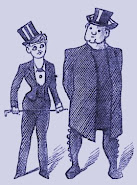
Top of the page image is from The Street Waif by E. Harcourt Burrage, woodcut illustration by Harry Maguire, c.1884
—♠—


