Showing posts with label Damon Runyon. Show all posts

Friday, June 17, 2022

Jack’s Sporting and Literary Society –

 THE NIGHT THEY BUMPED OFF HERMAN ROSENTHAL.

by John Adcock

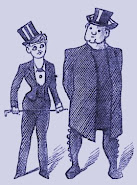
Boardman Robinson, New York Tribune, July 20, 1912

“We take him to a dago joint down on the east side and let him eat a lot of ravioli and listen to the wops. He always got a kick out of that… then we take him up to the McAlpin and set him up in a window on the top floor where he can look straight up Broadway. He just sits there and looks at the lights and traffic and talks about the old mob up at Jack’s café.” — Ike Dorgan about his brother’s last days, to Westbrook Pegler in ‘Death Claims Tad Dorgan, Phrase Maker’ in the Chicago Tribune, May 3, 1929

THE ROARING FORTIES

The term “roaring forties” designated both a region and a glamorous era in time specific to New York. Geographically they started (roughly) at 40th Street and extended northward on Broadway to 42 Street and on to 50th Street. Damon Runyon recalled

Twenty years ago, the era of the Roaring Forties was commencing to pass. It had succeeded the era of the Gay Nineties and the Broadway South of 42nd street. Some of the Gay Nineties lapped over briefly into the era of the Roaring Forties, as one area always laps over into another for a spell. Lillian Russell, “Diamond Jim” Brady, the Hoffman House, Martin’s, Sherry’s, Delmonico’s, Shanley’s and Mouquin’s still were going concerns and bright memories of Manhattan Island.

The Roaring Forties era brought on the glamor, that was to become tradition, of the Knickerbocker hotel and Enrico Caruso and Jack’s restaurant and the Hippodrome and Murray’s, with the revolving glass dance floor, and the Castle’s and Healy’s and Releenweber’s and the Follies and Churchill's and Rector’s. It was the era of Wilson Mizner and Irving Berlin, and George Cohen and of the Harry Thaw trial and the Herman Rosenthal murder and the old Waldorf. – ‘The Brighter Side of News,’ Damon Runyon, Times-Union, Oct 3, 1939

THE PRINCE OF REPORTERS

O’Malley was known around town simply as “O’Malley of the Sun.” Despite the veil of anonymity — the old Sun did not use “by-lines” — O’Malley became widely known as a reporter and humor columnist. The brilliance of his style identified him to all who commonly read the paper. O’Malley’s reign as the prince of reporters began in 1906 and ran on until 1920, when he resigned to contribute to magazines and publishers.

Frank Ward O’Malley, Tad Dorgan, Hype Igoe, Benjamin DeCassares, Wilson Mizner, “Spanish” Jack O’Brien (cable editor on the old NY Sun), Tom Geraghty, Ring Lardner, Damon Runyon, George Luks the cartoonist, Stuffy Davis, Jim Huneker of the Sun, Vince Barton, and Jack Francis were members, some regular and some on the periphery, of ‘Jack’s Sporting and Literary Society’ who met at Jack’s restaurant with its famed Battling Nelson grill during the Roaring Forties.

That was a year—1912—notable for many things. So much happened that our great major Broadway sport of all night discussion and tableside debate hit a new high for all time. For one thing newspaper men will tell you that 1912 was the greatest year for news in journalistic history, at least in variety. Early in the year the Titanic went down, one of the very greatest news stories of all time. Then, just before 2 o’clock the morning of July 16 gunmen procured by Police Lieut. Charley Becker murdered Herman Rosenthal thereby beginning a murder yarn that held the front-page attention of readers for months. – ‘Back on Broadway – Golden Era of Indoor Sports,’ Frank Ward O’Malley, Buffalo Evening News, Aug 23, 1930.

Hype Igoe, 1938

Hype Igoe was a cartoonist and sporting columnist on the staff of the San Francisco Examiner. The year following the earthquake he came to New York and worked on the New York American’s art staff for a few years, thence to New York Sun as a writer of boxing, later to the Tribune, and finally a member of the World’s sports staff. Igoe was on the scene of the Rosenthal killing:

THE NIGHT THEY BUMPED OFF HERMAN ROSENTHAL

‘O’Malley Greatest of All, Igoe Tells Bill Corum,’ Albany Times-Union, New York, Nov 30, 1932

Dear Bill Corum: When Frank Ward O’Malley passed on in Paris a few weeks ago, I got me the sinks. Sad, because Time, greatest of all the line buckers, had taken another of the disappearing old guard.

I don’t know that you ever knew him. Not to have been in his company at some time or another in your newspaper career was to have missed a gentle genius of his kind. Our (Arthur) Brisbane always called him “the greatest reporter in the world.” Chronicling was only one of his sidelines. He played at being a human being better than anyone I had ever met. He wrote with tremendous sweeps of English, yet each line seemed leavened with the sweet wit which dominated his soul.

For twenty years or more O’Malley, with Tad (Dorgan), Ben De Casseres, Wilson Mizner, “Spanish” (Jack) O’Brien, Harry Pollock, Vernie Barton, Corse Payton, Jack Francis, Arnold Rothstein, Jack Shaughnessy, Freddie Griesheim, and the bold bad boys of “wire tapping” and “the boats,” made Jack’s eating and drinking shebang our ole swimmin’ hole. That was before the camel prohibition came.

Herman Rosenthal

Bill, the night they bumped off Herman Rosenthal! It was maddening in the whirl of its excitement. Charley Meeghan, the then sports editor of the Morning Telegraph, and myself, had sauntered into George Considine’s New Metropolis, in 43rd, to gas and read “copy” on Charley’s printed story of a bout we had just seen in old Madison Square Garden.

Charley had wired his story from the ringside and here we were, 20 minutes later, reading it in type that couldn’t have been cold in the printing.

Charley, who is no more, Bill, looked up and said “Great age, Hype, great age. The fight isn’t half an hour old and it–” Charley never finished that sentence.

Bang-bang-, bang, bang, bang!!!

Five shots, Bill, two fast, then three.

“Backfire, Charley?’ I said.

“Backfire, hell,” said our waiter as he did a standing, sitting dive under the table. Before he disappeared, he pointed one long great cloud of powder reeking finger at the big open window. A smoke was floating into the room.

With the five shots came the piercing voice of Artie Hall, a famous blues singer. She was sitting at a table with Billy Atwell and Lieutenant File of the police department. From a rear seat, facing the door, Artie Hall had jumped to her feet and hit high C in a scream which still rings in my ears.

Miss Artie Hall, June 1900

File, in light civvies, his back to the door, whirled around, whipped out a long blue service gun and was through the door like an antelope. They brought him up on charges of negligence afterwards and Charley and I testified on his behalf. We told how he had gone “out in the smoke” not knowing what fate had in store for him.

Charley and I ran to the front door. A figure lay sprawled on the sidewalk, face downward. The fallen man’s right hand was stretched out full length and between the first two fingers, standing straight up, there was a half-consumed cigar. A little ribbon of blue smoke curled upward from it, which through some strange miracle, had not been disclosed from the man’s fingers as he crashed, stone dead, to the sidewalk. The maddening whirl in its beginning!

“Herman. It’s Herman,” whispered big “Judge” Crowley.

“Herman who?” I asked.

And from over my shoulder came the answer- “Herman Rosenthal, by God!”

I whipped around and there stood Frank Ward O’Malley. Always the “greatest reporter.” He had beaten Swope and Hill and the others in from the ole swimmin’ hole. He hadn’t waited for night editor’s orders. He had started with the first crack of the four gunmen’s gats. Indeed, a reporter, Bill.

Charles Becker

The strange death watch we kept in Jack’s that night. Becker was electrocuted for that slaying. O’Malley had gone up to Sing Sing as our and the old Sun’s representative. As the dawn came, we, Mizner, Tad, De Casseres, O’Brien, Payton, Barton, (Arnold) Rothstein, old Jimmy Wakely, Francis, Shaughnessy, (Jack) Dunstan himself, Henry M. T. Beekman, the great barrister, who coined the famous “old age is the death of enthusiasm” line, myself and one or two others, sat around a big table with our watches in the palm of our hands.

Each, in ghastly fashion, was trying to picture what Becker was doing. What his last moments were like. Each trembled in the strange excitement of that weird death vigil. Three minutes to go and it would be 5:30 of the morning, going away time in the big house in those days.

O’Malley came with the story. We clung to his Poe-like tale as ivy to an old oak. Bill, you’ll probably remember that Becker collapsed so pitifully that they asked a Negro companion in death to “wait on Charley.” Charley’s nerve was gone, Bill, and the Negro said he’d “sit it out until Charley had it over with.”

Breathlessly we waited for O’Malley’s return. Mizner got in the first word.

“Well?” he quizzed?

“Bill, the black man showed the “Czar of the Tenderloin” how to die,” said O’Malley.

“Then why the hell didn’t you lead off your story with that line?” stormed the exacting Broadway wit.  One of O’Malley’s better lines, which never got into type until now.

Frank Ward O’Malley! His lute laid aside for all time, Bill. I can see him now, black silk cords hanging from his nose glasses, handsome, kindly, sweet singer of prose! He was the only great reporter of my time who never talked of himself. I often wonder if Frank Ward O’Malley ever knew Frank Ward O’Malley.

Odd thing, Bill, they never put him on a big fight story. How he could have garnished the tragedy of the crushing of the Orchid Man at Boyle’s Thirty Acres or the malleting of the ox-like Willard at Toledo! A reporter!!

Hype Igoe.

Lt. Charles E. Becker, a brutal cop on the take, was convicted of Rosenthal’s murder and electrocuted on July 13, 1915, at Sing Sing prison.

THE BRAIN

Power of the Press, even when the Power was only half a horse. Arnold Rothstein, who came into Jack’s every morning, was one of the most delightful beer companions with whom I have ever sat out a session. He impressed me as being a great executive who simply took the easiest way in a country where craft and graft are all ye need to know. – ‘Jack’s,’ Benjamin De Cassares, American Mercury, Nov 1932

The man who ran the gambling parlor on the second floor of the Metropole at the time of Rosenthal's demise was the gambler Arnold Rothstein. He took over where Rosenthal left off, soon running New York’s drug and gambling rackets. His fate was the same, shot in the abdomen outside the Park Central Hotel on Nov 4, 1928. Rothstein was one of the peripheral members of ‘Jack’s Sporting and Literary Society.’ In a ‘Hollywood Day by Day’ column in New Movie Magazine, by NEMO (O. O. McIntyre), the author wrote.

I had dinner with Jack the other night and he told me what I didn’t know before: that Arnold Rothstein, the murdered gambler, used to join that famous restaurant round table, and that no one around the board had a more razor-like wit.

Damon Runyon called him “The Brain.” Runyon recalled “He was the villain in a Fitzgerald novel. He carried on where Becker left off after Rosenthal’s murder; introduced the modern gangster; served crime as pay off man; taught politician and crook how to work profitably together.”

Arnold Rothstein, financier of the New York Underworld – Lindy’s restaurant on Broadway was his favorite hangout, and it was from there that a telephone call summoned him to his death. Frequently he sat all night in Lindy’s. drinking cup after cup of coffee and swapping gossip and wisecracks with such figures as Damon Runyon, the reporter; T.A. “Tad” Dorgan, the cartoonist; Jack Lait, Con Conrad, and Harry Hershfield. – ‘The Murder of Rothstein,’ Chicago Tribune, April 28, 1940

––To be Continued––

Miss Artie Hall, 1903

Artie Hall was a white "coon-shouter" from Georgia who first appeared on the stage in 1899. She mixed her own brown make-up and at the end of her act she would lower her blouse to show the white skin beneath the cloth. Newspapers hectored her for showing too much torso at the reveal, and for showing her underwear while dancing. By 1912 language had changed, and she was now known as a "blues-singer."


Saturday, September 10, 2016

South of Market Street — Memorials to TAD


[1] “Fitz trains and trains and trains —”, Tad, July 18, 1904.

Millions knew him. He analyzed human nature in pictures as well as Dickens did in words (…) Prize fight enthusiasts with half an inch of forehead, or Charles Dana Gibson, with a brow like the dome of St. Peters will tell you
“Tad was a great man.”
Arthur Brisbane
   
by John Adcock
     
THOMAS Aloysius Dorgan, “born south of Market Street,” was one of several people who “went West” on May 2, 1929, and was memorialized the same month in San Francisco’s South of Market Journal. Five pages by three authors — Newspaper Pals Throughout Country Mourn “TAD” As Real Friend.

[2]
THE MOST interesting thing about these tributes is the information about his close relationship with Arthur Brisbane, editor of Hearst’s New York Journal. Seemingly TAD’s writing was inspired by “Big George.” 

THE TEMPLATE for the comic sporting cartoon was invented by Jimmy Swinnerton, when he was a young staff artist in the 90s at the Hearst Examiner where his sparring partner was Homer Davenport. But it was TAD Dorgan who was the greatest inspiration, artistically and verbally, on all sporting cartoonists, and many later acquaintances like Milt Gross (TAD’s 1912 office boy). Among well-known TAD-inspired sporting cartoonists that turned into daily strip artists — scores of others are footnotes now, or completely forgotten in that field — were George Herriman, Bud Fisher, Harry Hershfield, and Rube Goldberg. All gifted cartoonists who mostly wrote their own scenarios.


[3] Newspaper Pals Throughout Country Mourn “Tad” As Real Friend, 5-page in memoriam feature in South of Market Journal, Vol. 4, No. 6, May 1929, with texts by Edgar T. Gleeson, Damon Runyon, and Pat Frayne. Page Ten.
[4] Page Eleven. “…He made the world laugh when his heart was breaking…”
[5] Page Twelve. Stories of Tad by Damon Runyon.
[6] Arthur Brisbane (b.1864), New York Journal editor, ca. 1904 photo. Brisbane was called ‘Big George’ by Tad.
[7] Page Thirteen.
[8] In Soft? — Beware. Tad, Washington Times, Dec 12, 1920.
[9] Page Fourteen. Sports Figure Passes by Pat Frayne
[10] Tales about “Tad.” Miss Laura Foster of the San Francisco Bulletin discovered ‘Tad” about seven years ago. The Wasp, April 2, 1904.
[11] Did You Ever take Notice? Tad double cartoon, BEFORE — and AFTER the boss arrives, San Francisco Examiner, Feb 12, 1909.
[12] South of Market Journal (subtitled: ‘Official Organ South of Market Boys, Inc.’) is published monthly. Headquarters: Whitcomb Hotel, San Francisco. Cover illustration, Vol. 4, No. 12, Nov 1929. There’s also a sister organisation, the South of Market Girls.


In memory of TAD — Thomas Aloysius Dorgan
April 29, 1877, San Francisco, California – 
May 2, 1929, Great Neck, Long Island, U.S.A.


[NOTE] South of Market is the name of a downtown San Francisco district. Market Street was a main artery which William Randolph Hearst picked for his Examiner building at the North-East corner of Market and Third streets, right in the center. One opened in 1898 and went down in the earthquake of 1906. And one opened in 1911, which can still be visited at 5 Third Street.

Sunday, June 28, 2009

Runyon on Herriman – 1939


‘The Brighter Side,’
by Damon Runyon
January 25, 1939

Just for the purpose of the record, we want to say that nearly all the funny fowl, insect and animal characters, and the fantasy thereof that you see in movie shorts and in newspaper comic strips trace to one man.

We mean as far as the idea is concerned, and of course it is the idea in a thing of this kind that is important. Without the idea what have you got? The answer is nothing.

George Herriman is the man we are talking about. He is a slightly built, self-effacing chap, so mild that he would not say boo to a crawfish, and he has considerable fame in his own right as the author of well-known newspaper comic strips which appear in what children call the funnies.

George is probably comfortably fixed in this world’s goods but we venture to say that if he had a royalty of 1-2 of 1 per cent on the gross “take” from ideas that stem directly from his ideas, he would be an enormously rich man. That “stem” is putting it mildly for some cases.

We do not say that George originated the insect or animal or even the fowl comic character. They are older than the hills in humorous drawings but what we do say is that he was the daddy of fantasy in this field and certainly he was the originator of certain specific characters that others have used to greater financial advantage than George.

“Krazy Kat” is one of the more familiar of George’s characters, this being a cat that has the most fantastic adventures and is often coupled with “Ignatz Mouse.” We are pretty sure that George was the first to employ the lowly mouse as a character and to give it a definite, living personality, but after “Ignatz” came other mice to achieve greater fame than George’s brain child, which was alright, perhaps, except that we have never yet seen any of these other mice labeled “with a bow to George Herriman.”

Probably George himself has never paid any attention to the matter, but we just think that when laurels are being passed around for ideas there ought always be a sprig for the fellow who had the idea first, even though he may not have capitalized on it to the same extent as someone else.

The trouble with George has always been that he is too prolific in ideas. He has so many that he never misses one when it is borrowed from him. It is his admiring friends, like us, who burn up when they hear someone being exploited as the originator of an idea that George thought of first.

It must have been nearly 30 years ago that big, bluff Charley Van Loan, who loved Herriman as a brother, walked into the art room of the American and Journal, then in the old Rhinelander building on North William street, and growled at an artist who afterwards became famous and who was not noted for not being choosey where he got his ideas:

“Well, I see you grabbed Herriman’s duck this morning. Why don’t you take his cat and then you’ll have it all?”

That was the end of a speaking acquaintance.

It shows you how long ago Herriman was using a duck as a character in his strips, and it was that long ago that he was using “Krazy Kat” and “Ignatz Mouse.” The artist that Van Loan addressed that day did not take Herriman’s cat, too, but another artist did. He made an entire comic strip of the cat and for a long time it enjoyed considerable popularity.

The artist is dead now. He never had much standing as a creative artist among his fellows with that cat strip because they all knew where it came from.

If you ask the average comic artist of today his idea of an artist he will probably tell you George Herriman. He is what might be called an artist’s artist.

That is to say, his work is more appreciated by his fellows than by anyone else. He may not be the greatest draughtsman in the world but he has the imagination of a Grimm and the lyrical expression of the poet.

Dogs, coyotes and all kinds of animals have been endowed with amazing individuality by Herriman in his drawings. Generally he makes them humorous, but sometimes he makes them sad, and always through their lives run a curious streak of fantasy. Herrriman was probably a man born to be a teller of fairy tales for children. The exigencies of life put him to work as a newspaper cartoonist.

He lives out in California somewhere, probably in the southern end of the state. It is our impression that he is a native born. We used to see him in New York occasionally but he always looked so sad and lonesome that we would be glad when we heard that he had gone back west. Those Californians away from home are enough to break your heart.

If you do not know George Herriman’s work, look it up right away and take off your hat while inspecting it. You will be looking at the work of a genius.

Saturday, May 9, 2009

Hype Igoe Cartoons


Herbert Anthony Aloysius (‘Hype‘) Igoe, “probably the best informed writer on boxing that ever lived,” according to Damon Runyon, and a swell cartoonist, was born 13 June 1877 in Santa Cruz, California. He and his best friend’s Rube Goldberg and Thomas Aloysius “TAD” Dorgan, (1877 -1929), attended Polytechnic High School where they were taught art.

San Francisco was the birthplace of the daily comic strip, with Bud Fisher’s Mutt and Jeff. The city was full of sports cartoonists and supplement illustrators. There were Charley Arcanne, Charlie Edwards, Jimmy Swinnerton, Homer Davenport, Tad Dorgan, Hype Igoe, Rube Goldberg, Merle “Bug” Johnson, Jules Pages, Bob Carter, Haydon Jones, Harrison Fisher, Bob Edgren and Dan Smith.

Hype Igoe started his newspaper career at 15 as an office boy (along with Tad,) for Jimmy Swinnerton and Homer Davenport on Hearst’s San Francisco Examiner. It's been said that he got Bud Fisher his first job, on the San Francisco Chronicle. In 1905 Swinnerton, famous for the “Little Bears” cartoons , brought the inseparable pair to New York. Brisbane only wanted Tad, who refused to make the move without Hype Igoe. Both were hired and moved to the Hearst newspaper building at 238 William Street. Hearst was publishing two newspapers from the plant, the Morning American and the Evening Journal.

One of Igoe’s best friends was Damon Runyon, sports writer on the Morning American, who had a deep admiration for the older, legendary writer. They were introduced by Tad, who drew cartoons for the American. Hype Igoe was the boxing writer for the other paper, the Evening Journal. Damon Runyon kept a trunk load of new shoes, which Igoe broke in for him with the result that he never had to buy new footwear for himself. Hype’s ukelele was confiscated by the proprietor of Jack’s busy restaurant because the resulting sing-a-longs slowed down the trade.

Igoe was a confidant of boxing champions from the times of Gentleman Jim Corbett. He covered every boxing match from the Fitzimmons/Corbett fight down to Joe Louis’s battle with Abe Simon in 1942, and with the exception of Gene Tunney he predicted every winning heavyweight champion. He was a pallbearer at the funeral of Bat Masterson, knew Wyatt Earp, Tex Rickard and Jack Dempsey. He had once managed the brutal middleweight boxer Stanley Ketchel, who was murdered by a jealous husband in Conway, Missouri. Runyon compared Igoe’s boxing writings to those of Pierce Egan, the London historian of pugilism.

There were a lot of stories as to the origin of the name “Hype,” Here’s one of them from a previous post:

“It was Dorgan who helped popularize the label “Hype”, which Igoe had hung on him by a 300 pound Negro elevator operator. The operator took one look at the slender 15 year old copy-boy back in the days when he was working for the San Francisco Examiner and observed: “Mr. Igoe, yo ain’t no bigger than a hypodermic needle.””

Hype himself originated the phrase "to hype," as in standing behind his fighters "hyping" them up for the slugout.

Hype Igoe, 67 year old fight expert for the New York Journal American, died of a heart ailment 11 February 1945, leaving a widow and four children.

*Cartoons courtesy of Kevin Igoe.