|
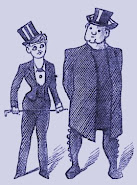
| Once A Week, December 11, 1859 |
October 26, 1901.
SWEENY TODD (9th S. vii, 508; viii. 131, 168, 273). – If this gruesome topic is not yet quite exhausted, it may be as well, by way of completion, and in confirmation of the conclusions of myself and MR. CLAYTON, to add the late Mr. Sala’s own words:
“He [an editor] lived long enough to see my first story in print, and mildly to reproach me for some slight grammatical error of which I had been guilty. That was in the year of grace eighteen hundred and forty-six.” – ‘Dead Men Tell No Tales, but Live Ones Do’ (the first of nine stories entitled ‘That Man’s Life; the Story of an Old-fashioned Editor’) by George Augustus Sala. London: John Dicks, &c., n. d.
I have always been under the impression that the legend of ‘The Demon Barber of Fleet Street’ was suggested to the “penny shocker” of the 1830s by the incidents of the cause célebrè in Scotland of the sixteenth century, the revolting trial of Sawney Bean and his associates, introduced by Mr. S.R. Crockett in his powerful romance of ‘The Grey Man of Auchinleck,’ the scene in ‘Sawney Bean’ transferred to London and Fleet Street, where, to my personal knowledge, a penny pie-shop carried on its business in the forties of last century on the very site attributed to it in the tale under discussion. Whether the adjacent house (at that date thriving as a cook-shop, conspicuous for that succulent kind of Yorkshire pudding described by Dickens in ‘David Copperfield’ under the name of “spotted covey,” from the raisins liberally adorning its greasy surface) was a barber’s shop once I do not know.
These two apparently very ancient houses stood about the centre of a group extending from the east corner of St. Dunstan’s Church-yard to the south-west corner of Fetter Lane. Many readers will remember them, for they were demolished but a very few years ago; their upper stories were of wood, and they were surmounted by a peculiar wooden parapet or balustrade gallery overlooking the busy thoroughfare below. When the pie-shop discontinued purveying its special comestibles (and I have, as a boy, many, many times ‘sampled’ its excellent wares), it was carried on as a bookseller’s business under the conduct of a dealer of extremely peculiar views named Truelove, who also long ago disappeared. The house was said to be formerly occupied by the celebrated Mrs. Salmon’s waxworks, when that exhibition early in the 19th century was transferred from “over the way.”
I take the opportunity of adding that the “melodramatic playwright named Saville Faucit” mentioned by MR. CLAYTON, was also an eminent melodramatic actor, Edward Faucit Saville, a predecessor in the ‘breezy’ line of jeune premier, of which an able modern representative of the London stage was the lamented William Terriss, whose tragical death at the hands of an assassin appalled us but, as it were, the other day. To those who fondly remember in the days of their boyhood a partiality for Skelt’s “penny plain and twopence coloured” theatrical portraits, pleasant memories will be recalled by the limned likenesses of E.F. Saville as the pirate king, the bold smuggler, the heroic naval officer, &c. but all will be interested in identifying this player-playwright as the brother of one of the most accomplished actresses that ever with resplendent talents adorned the annals of the British stage, the venerated and respected Lady Martin, whom we all in youth, maturity, and middle age warmly appreciated under the name of Helen Faucit.
GNOMON.
Temple.
(The Athenaeum of 29 April, 1899, mentioned that “Mr. Truelove, the publisher, formerly of the Strand, and latterly of Holborn, has died at an advanced age.”)
November 16, 1901.
SWEENY TODD (9th S. vii, 508; viii. 131, 168, 273, 348). – I trust the Editor and readers of ‘N.&Q.’ will not think me too troublesome if, before this subject is finally wound up, I venture, speaking as a “hack-artist” (descended from a long line of artist-hacks), to say a few words in the hope of saving from total oblivion the name of W. Hornigold, who was the champion artist of the “penny dreadful,” “penny plain and twopence coloured,” school during the forties. In his day he was regarded as unequalled in this line. Vile drawings, extravagant attitudes, overdone action; still there was life, spirit – what you will – let us say, the old Coburg method. Unfortunately he was even better known as a victim of the ubiquitous drink fiend than as an artist. He was, in short, a vulgar modern edition of Richard Savage or Mitford. But I prefer not to say too much about the career of this ill-starred genius. During the later fifties he was sent to the wall by the superior talents of the late Robert Prowse, who combined the dash of “old Horny” with good drawing and a more brilliant style. Thirty or forty years ago publishers who could not afford to pay “Bob” Prowse’s terms used to employ an artist of nearly equal talents named Clifton. Robert Prowse the Younger is, I am glad to say, still “in the thick of the fight.” Hornigold died somewhere during the sixties. I last remember hearing of him as an artist on active service during the winter of 1861-2, when he designed a record poster for Sanger’s (Astley’s) Christmas pantomime. It represented an elephant (the living original of which used to be trotted up and down the Westminster and Kennington roads during the season as an advertisement.) The poster was cut on soft wood and roughly coloured by hand. I would like to add that it was not through ignorance, but through fear of giving offence, that I refrained from mentioning the relationship between Saville Faucit and Lady Martin. Before concluding may I, as an old enthusiast in old china, draw attention to what one might style “criminal crockery”? Some few months back there was a loan collection of old English china at Bethnal Green. I have stupidly forgotten the name of the collector, and the collection has since been removed. But one special feature was a glass case filled with specimens of crude, vulgar, coarsely coloured china-ware, representing murder subjects, such as “The Murder in the Red Barn,” “Stanfield Hall and J.B. Rush,” and so on. Now and then one may see samples of this sort of old crockery in the shop windows; sold for but a few pence fifty years ago; chiefly got up to be hawked through villages and usually swopped for old clothes. Nowadays specimens of this art fetch, I believe, far better prices than they did in the last century. In conclusion, I would wish to thank GNOMON for his kindly references to myself- and to the late G.A. Sala.
Herbert B. Clayton.
The Melodramatic actor referred to by GNOMON was named Edmund (not Edward) Faucit Saville. Mr. Truelove, unless I am mistaken, was in the British Museum Reading-Room a few days ago.
Wm. Douglas.
125, Helix Road, Brixton Hill.


 Posts
Posts