Showing posts with label Comics Criticism Criticised. Show all posts

Sunday, February 5, 2017

The Respectable Papers of Boston and Mr. Obadiah Oldbuck, 1842


Gloucester Telegraph, Sep 16, 1842

EXTRA, NO. IX. The Adventures of Mr. Obadiah Oldbuck, often labeled “the first American comic book”, first issued to subscribers as a 40-page ‘Extra, No. IX’ issue of Brother Jonathan weekly in New York, and dated September 14, 1842, was a reworked bootleg version in English of Swiss cartoonist Rodolphe Töpffer’s comic strip Les Amours de Mr. Vieux Bois or Histoire de Mr. Vieux Bois (1827, Geneva album published 1837). 

If Oldbuck might be called the first American comic book, the following short newspaper quip might be called the first criticism of comic books in America,
Does the “Brother Jonathan” often humbug the public with such trash as the “Adventures of Obadiah Oldbuck”? The respectable papers of Boston should not become a party to such impositions by puffing them. — Gloucester [Massachusetts] Telegraph, Sep 16, 1842


Rodolphe Töpffer (1799-1846), self-portrait
  
8§8

Tuesday, March 26, 2013

Comics Criticism Criticised


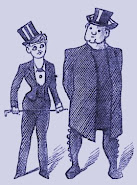
“Wind!,” cartoon by Charles Keene, in Punch, April 30, 1870.
    
by John Adcock

A recent tongue-partly-in-cheek post by Eddie Campbell at The Comics Journal, ‘The Literaries,’ took note of ‘a new species of critic who demands that comics be held to the standards of LITERATURE.’ Comics critics took note as well, first in the comments section of TCJ and then on to other blogposts inspired by Eddie Campbell’s cheeky opening shot.

Comics criticism is a world-wide phenomenon with early contributions in Europe like Claude Moliterni’s 1966 critical revue Phénix. Five years later the Smithsonian Institution in Washington put on an exhibit honoring Seventy-Five Years of the Comics (also its title), showing the growth and development of the American newspaper comic strip. In 1967 in Paris an international exposition on comic strips and their creators was held at the Musée des Arts Décoratifs / Palais du Louvre, hosted by Moliterni, then director of SOCERLID (Société civile d'études et de recherches des littératures dessinées). In attendance were American cartoonists Burne Hogarth, Mell Lazarus and Lee Falk.

The exhibition traced the evolution of figurative drawings from carved Trojan columns to space-age comic strips using slide projections and panel blow-ups of comics from America, Europe, Argentina and Mexico.
‘The psychological and political orientation of most American comics is virtually unknown in France. French comic strip thinking is at least 40 years behind the American counterpart’
Moliterni told an American reporter at the time. All that would change with the eye-opening influence of the American comic strip (and later the Undergrounds) on European cartoonists. Claude Moliterni died January 21, 2009.

In the United States comics criticism accelerated when The Comics Journal, with fanzine antecedents, published its first issue in magazine format in December 1977 (No. 37) with the notion of using criticism to elevate the status of comics to that enjoyed by art and literature, as ‘a bonafide art.’ Unfortunately there was a schism from the start between TCJ, the Direct Market, comic book fans, and fanzine publishers who weren’t critical enough for TCJ’s taste.

In 1978 Will Eisner’s A Contract with God was published and marketed as a ‘graphic novel’ and we were well on our way to the situation we find today with scholarly journals deconstructing comic books, Graphic Novels Studies at Universities, and pistols at dawn between rival professors of comicology at our revered educational institutions.

There are basically two types of critics, the ‘gentleman amateur’ and the professional. The professional is usually (though not always) employed by a University, or has a University education. The amateur might be called an ‘Independent Scholar,’ meaning he had a high school education and maybe some college, and probably (not always) emerged from science fiction or comic fandom. Some involved in comic criticism are successful career cartoonists or (as some prefer to be known) ‘artists.’ Scratch any one of them and you will find a fan under the skin.

Comics criticism is meant to be published but, like comic fans they have a strong and verbal online presence, a fandom of their own, based on mutual admiration, devoted to hashing out definitions (a failure so far) and debating whether comics are art, literature, man or beast. The Comics Journal came up with its own approved canon, which means code, rule, laws, to decide what is acceptable and what is outside the artistic fence so to speak. The controversy over superhero comics in the canon points to a major schizophrenic flaw in comics criticism. TCJ voted to include Captain Marvel, Spiderman, The Fantastic Four, and Jack Kirby’s Fourth World, all produced, written, and drawn by industry ‘hacks,’ side by side with graphic novels Maus, Palestine, Acme Novelty Library, and City of Glass. Who knew Buddy Bradley and Sugar and Spike were art?

It might be worth considering what the lists’ comic-strips, comic books, and graphic novels have in common. I don’t have to scratch my head over it – what they have in common is that they’re all comics. Even the staunchest graphic novel fan must, while searching for a defining definition, admit ‘graphic novels,’ ‘comic strips,’ and ‘comic books’ are marketing terms which don’t describe what they most obviously are – just comics in different marketing formats. 

As to what exactly defines a comic I won’t hazard a guess – except to note that ‘I knows one when I sees one…’ Art Spiegelman might have agreed with me, in the 1988 book The New Comics; Interviews from the Pages of The Comics Journal he described the packaging of RAW as a ‘deceit,’ comics masquerading as graphics to attract people who held their noses at comics.

In the same book Gary Groth vented his spleen on comic book ‘hacks’ although he admitted there was an occasional comic book artist who was brilliant (like Carl Barks or Harvey Kurtzman). He accused the comic book profession of having both a lack of artistic standards and lacking a moral spine. To be fair that was a long time ago and his thinking has probably matured since 1988. The funniest thing was the follow-up by Robert Fiore, Comics for Beginners; Some Notes for the Newcomer under the term ‘Graphic Novels.’ He described them as ‘a reflection of the industry’s yearning for unearned status … through semantic jiggery-pokery.’ He might have been describing The Comics Journal.

One of the godfathers of the comics critics canon is Will Eisner, who surely would not have approved of including Spiderman or The Fantastic Four. Eisner, as early as 1972 thought of himself as a ‘visual-writer’ rather than a cartoonist, and was quite pompous about it when talking to James Steranko (in History of Comics 2): ‘To achieve the name, or to be worthy of the name, of creator, a man should be both writer and artist.’ He would have measured Jack Kirby by ‘his contribution to the script.’ In other words Jack was no creative artist, he was a hack cartoonist. Ditto Stan Lee, Steve Ditko and C.C. Beck. I said ‘one of the godfathers,’ the other two, Kurtzman and Crumb, two brilliant cartoonists, were not as comfortable with the term ‘artist.’

TCJ’s comics criticism is not a bad thing, a lot of it is thoughtful commentary, some is entertaining, some thought-provoking, but at its worst it is a form of condescending cultural superiority reminiscent of the suffocating nineteenth century French and British Royal Academies, elite groups who decided what was art and what was dreck, meanwhile starving deserving groups like the French Impressionists. It also seems a very insular community, rife with obfuscation, quick to take umbrage at critics, and prone to denigrate the lower class ‘fan-boy.’ Comics criticism’s saving grace is the unintentional hilarity it produces in the skeptical reader.

Who reads comic criticism? Why comic critics of course, and many have little to offer but verbal verbosity and a mental dexterity with the witty riposte. Who wouldn’t rather read a comic book than look at art? Why do comics have to mean anything? What’s so great about art? Why call comics ‘graphic narratives’ or ‘sequential art’? Why should ‘cartoonist’ be a dirty word? And in what mad universe does Karl Marx explain the world-view of Carl Barks’ comical Donald Duck?

[The original of this article – dated Friday, March 22, 2013 — was subjected to an inadvertent deletion. Mr. Brown apologizes for the inconvenience.]